

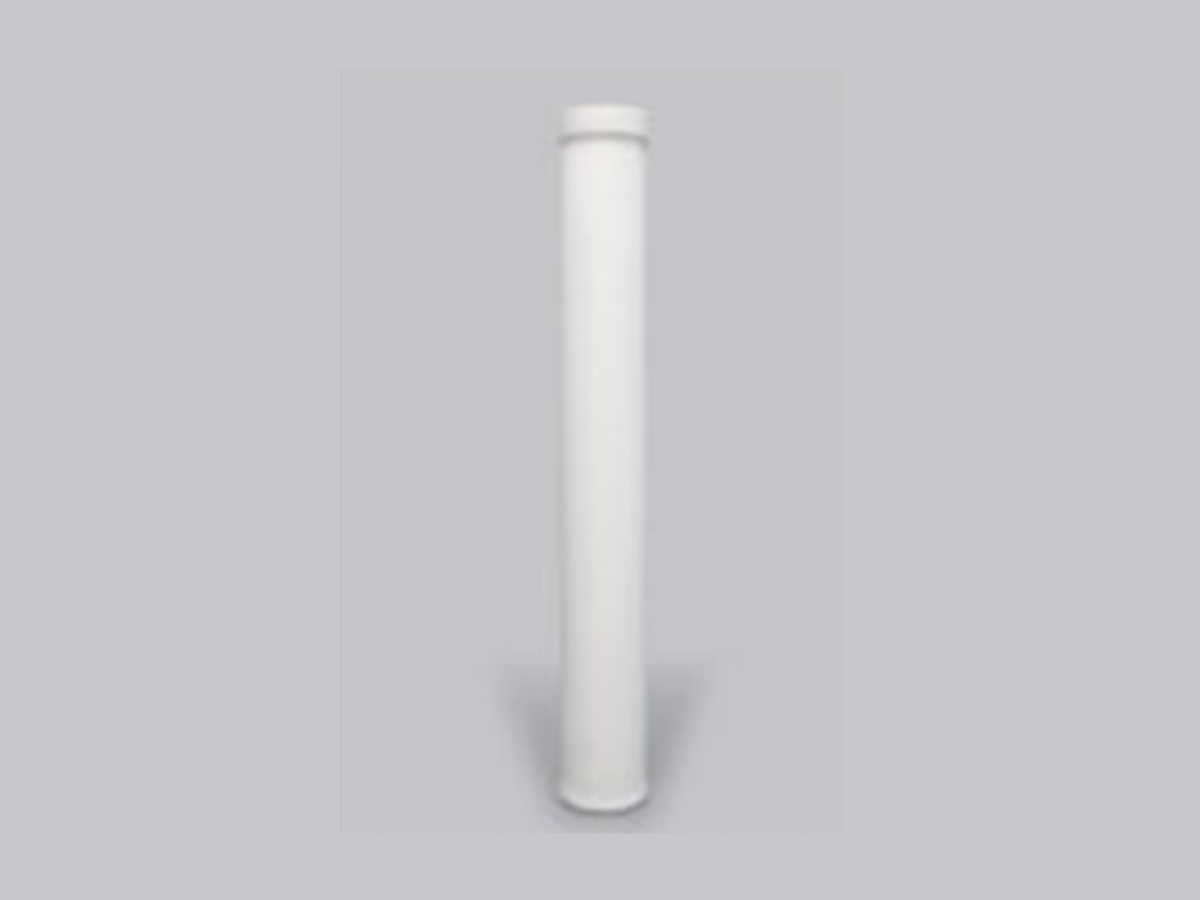
LFD high-flow pleated Filter Cartridges utilize deep-layer fine membrane materials and a multi-layer gradient pore size filtration structure design to achieve higher efficiency.
High dirt and dust holding capacity; single opening; fluid flow from the outside to the inside. Large 6.7-inch diameter effectively increases the filtration area.
This increases the dirt holding capacity, reduces the number of filter cartridges needed, and lowers costs. Appropriate models can be selected based on different filtration needs.
Product Specifications
Material Structure | Streamline | polypropylene |
Center rod, outer casing | polypropylene | |
sealing ring | EPDM, nitrile rubber, etc. | |
Working conditions | Operating temperature | 80℃ |
Withstands pressure differential | 0.54 MPa | |
Maximum working pressure difference | 70m³/h | |
Design flow | (50-50) m3/h (40” length) | |
External conditions | outer diameter | 6” |
length | 40” |
Interface type
LFD | 40 | PP | 0050 | E | S |
LFD | length | Material | accuracy | sealing ring | Interface |
20=20" | PP | 0010 = 1 μm | E = EPDM | S = skeleton | |
40=40" | GF | 0050 = 5 μm | S = Silicone rubber | W = Exposed Net | |
60=60" | 0050 = 5 μm | F = Fluororubber | |||
0100 = 10 μm | N = Nitrile rubber | ||||
0.150 = 15 μm | |||||
0250 = 25 μm | |||||
0400 = 40 μm | |||||
0700 = 70 μm |
Typical application scenarios
Filtration of power plant makeup water, condensate, and stator cooling water |
Reverse osmosis (RO) system pretreatment |
Seawater Desalination pretreatment |
Deionized water pre-filtration |
Filtration of process water in petrochemical and other industries |
LFD Series High-Flow Pleated Filter Cartridge
When I design or recommend a filtration stage for an industrial water treatment system, I do not look at the filter cartridge as an isolated component. I look at the complete process first: where the water comes from, how much water needs to be treated, what is in the water, what equipment comes next, and how the system will be maintained after installation.
That practical approach is also how I view the LFD Series High-Flow Pleated Filter Cartridge. It is designed for liquid filtration applications where flow capacity, filtration area, stable operation, and convenient maintenance all matter.
A high-flow pleated cartridge uses a folded filtration structure to create a larger effective filtration area within a relatively compact element. This basic design idea is widely used in industrial filtration. For example, Pentair describes its large-diameter pleated cartridges as a way to maximize flow, service life, and efficiency, while 3M's high-flow products use large-diameter pleated depth media for applications with large flow requirements.
For our customers, the LFD Series can be considered for applications such as Seawater Desalination pretreatment, industrial water treatment, process water filtration, wastewater treatment, and other liquid filtration processes. The final configuration should always be selected according to the actual water quality, flow rate, filtration target, pressure, temperature, housing, and downstream process.
At Qingdao Yanhui Environmental Protection Technology Co., Ltd., we have been working in water treatment since 2015. Our business covers seawater desalination, high-salinity wastewater treatment, concentration and purification, and industrial wastewater treatment. Because we provide services from R&D and design through manufacturing, installation, commissioning, operation, and maintenance, we understand that a filter has to work as part of a real system, not just look good on a specification sheet.
The LFD Series High-Flow Pleated Filter Cartridge is a high-flow liquid filtration element intended for industrial water and process filtration systems. Its pleated structure increases the usable filtration surface compared with a simple flat filtration layer occupying the same general space.
The idea is quite easy to understand. Imagine a sheet of paper. If you lay it flat, you can only use the surface that fits inside the available space. If you fold that sheet many times, you can fit much more surface into a smaller volume. A pleated filter uses a similar principle.
Liquid flows through the filtration media while suspended particles and other unwanted solids are retained. The filtered liquid then continues to the next treatment stage. The exact filtration mechanism depends on the selected media and cartridge design, but the basic goal remains the same: provide an effective filtration area while allowing the required liquid flow through the system.
High-flow filtration becomes especially useful when a treatment system needs to handle a large amount of liquid. Instead of automatically installing a very large number of conventional small cartridges, engineers can evaluate a large-diameter or high-flow cartridge configuration that may provide a more practical arrangement.
Industry products demonstrate the range that is possible with high-flow cartridge designs. A 3M High Flow HFR Series datasheet, for example, states that its 60-inch filter can reach flow rates of up to 100 m3/h under the manufacturer's specified conditions. Another 3M High Flow Series reference lists certain 60-inch models at 500 gpm. These figures are specific to 3M products and should not be treated as LFD Series specifications. They are useful only as a reference for understanding the scale of high-flow filtration technology.
| Industry Reference | Product Configuration | Published Flow Information | Purpose of Comparison |
|---|---|---|---|
| 3M High Flow HFR Series | 60-inch high-flow cartridge | Up to 100 m3/h under stated conditions | Reference for high-flow industrial filtration capacity |
| 3M High Flow Series | 60-inch high-flow cartridge | Up to 500 gpm for specified models | Reference for large-flow cartridge design |
| Pentair Aqualine | 60-inch pleated cartridge | 150 gpm stated for the cartridge system | Reference for high-flow pleated filtration systems |
Source: Manufacturer-published technical information from 3M and Pentair. These figures are industry reference values only and are not LFD Series rated specifications. Actual filtration performance depends on cartridge construction, media, fluid, pressure, temperature, contamination level, and system design.
For this reason, I prefer to discuss the actual project before confirming a filter configuration. A buyer may tell me, for example, that the system needs to process 100 m3/h. That number is useful, but it is not enough by itself. I also need to know what the water contains, what the filter needs to remove, and what equipment is installed after the filter.
The working principle of the LFD Series is straightforward. Raw or process liquid enters the filter housing and moves through the pleated filtration media. Particles are captured by the media, while the filtered liquid exits and continues to the next stage.
The pleats are important because they provide more usable surface area. More surface area can help distribute the incoming liquid over a larger filtration zone. In a well-designed system, this can support the required flow while keeping the filtration stage reasonably compact.
Some high-flow filtration systems use an outside-to-inside flow path, while others use an inside-to-outside arrangement. The correct flow direction depends on the specific cartridge and housing design. I would never recommend changing the flow direction simply because another cartridge uses a different arrangement.
3M's high-flow technology documentation explains that its pleat structures are designed to maximize usable surface area and distribute process fluid through the filter structure. Pentair likewise describes outside-to-inside flow and large-diameter pleated construction in one of its high-flow cartridge systems. These examples show why flow direction and pleat geometry are important engineering considerations.
The liquid enters the filter housing.
The liquid reaches the outer or inner surface of the LFD cartridge according to the selected system design.
The liquid passes through the pleated filtration media.
Suspended particles and other targeted contaminants are retained by the media.
Filtered liquid leaves the cartridge and enters the next treatment stage.
As contaminants accumulate, the pressure difference across the cartridge may increase.
The cartridge is replaced according to the operating limits and maintenance requirements established for the system.
This last point is important. I do not recommend judging cartridge life simply by looking at the outside of the filter. In an industrial system, operators normally pay attention to pressure differential, flow performance, water quality, and other operating indicators.
One customer may operate with relatively clean process water, while another may be dealing with water containing a high amount of suspended solids. The two cartridges may have completely different service lives even when the flow rate is similar.
The pleated design allows a considerable amount of filter media to be arranged inside a practical cartridge format. This is one of the most important reasons pleated cartridges are widely used in industrial filtration.
For comparison, Pentair's OMNIFILTER RS6 documentation states that its standard 9.75-inch cartridge contains more than four square feet of polyester filtration fabric, while the larger 20-inch version contains more than 16 square feet. Pentair also explains that pleating is used to maximize dirt-holding capacity and extend the period between changes or cleaning. These values are specific to the RS6 product and are not LFD specifications, but they illustrate how pleating can increase usable filtration area.
| Reference Product | Cartridge Size | Published Filtration Area | Source |
|---|---|---|---|
| Pentair OMNIFILTER RS6 | 9.75-inch standard cartridge | More than 4 ft2 | Pentair |
| Pentair OMNIFILTER RS6 | 20-inch cartridge | More than 16 ft2 | Pentair |
Source: Pentair OMNIFILTER RS6 product information. These figures are manufacturer-published data for the RS6 series and are included only to explain the relationship between pleated design and filtration area.
The LFD Series is positioned for applications where the filtration stage needs to handle a relatively large liquid flow. This makes it relevant to industrial water treatment systems, desalination pretreatment, process filtration, and other large-volume liquid applications.
A high-flow cartridge does not automatically mean that every project will require fewer cartridges. That depends on the actual product rating, water quality, housing arrangement, and required flow. I prefer to calculate the requirement instead of making a broad claim.
High-flow cartridge technology can help engineers consider a more compact filtration arrangement. 3M reports that its High Flow filter system can require fewer filter cartridges and a smaller housing for a given flow compared with conventional 2.5-inch cartridge systems.
This can matter when equipment-room space is limited. It is particularly useful to think about this during the early design stage rather than after the plant layout has already been fixed.
Cartridge filtration also offers a relatively straightforward maintenance concept. When a cartridge reaches its replacement condition, the operator can remove the used element and install a new one according to the housing manufacturer's instructions.
For an industrial plant, simple maintenance can save time. For an island hotel or offshore project, it can be even more important because spare parts and maintenance personnel may have to travel a long distance.
Large-flow pleated filtration is used across a wide range of industries. Pentair, for example, lists applications for one of its high-flow pleated systems including desalination, electronics, oil and gas, chemicals, pharmaceuticals, hospitality, and food and beverage.
The LFD Series should still be selected according to the actual application rather than simply because an industry appears on a general application list.
When I talk with engineering customers, I usually avoid making filtration sound more complicated than it needs to be. The real advantage of a high-flow pleated filter is not one magic feature. It comes from several practical factors working together.
The pleated structure makes better use of the available cartridge volume. This can be helpful when engineers need more filtration area without continuously increasing the physical footprint of the filtration equipment.
Industrial systems often process much more water than ordinary commercial systems. High-flow cartridges are designed specifically for this type of situation.
For example, 3M's HFR Series documentation describes a large-diameter pleated depth-media design intended for large flow requirements, with a stated maximum flow of up to 100 m3/h for a single 60-inch filter under the stated conditions.
A larger filtration area and appropriate filter-media selection can help extend service intervals, although the actual result depends on the contamination load and operating conditions.
In a published 3M application brief, one coal chemical plant reported that switching to a particular 3M HFR filter increased reported filter service life from 13 days to 24 days. Another power plant application reported an 85% increase in service life. These are specific customer cases involving specific 3M products and operating conditions, so I would not use them as a promise for the LFD Series. They are useful examples of how cartridge design and media selection can affect operating results in the field.
Filtration is often installed to protect something more expensive downstream.
In a reverse osmosis system, for example, pretreatment helps reduce the particulate load reaching the RO process. The cartridge itself does not replace the entire pretreatment system, but it can be one important filtration stage within that process.
That is why I always ask what comes after the cartridge. If the next component is an RO membrane, a sensitive process unit, a heat exchanger, a polishing filter, or another piece of equipment, the filtration target needs to be considered in that context.
Seawater desalination is one of the applications closely related to our engineering work.
Seawater contains dissolved salts as well as suspended particles and other contaminants. A reverse osmosis desalination system normally needs suitable pretreatment before the water reaches the RO membranes.
The LFD Series can be evaluated as part of the filtration arrangement when its specifications match the process requirements. The exact configuration depends on the seawater source, suspended solids, turbidity, flow, pretreatment design, and RO system.
For island communities, coastal hotels, vessels, offshore platforms, fisheries, and industrial facilities, reliable pretreatment is important because the whole desalination system depends on stable upstream conditions.
Factories may need filtered water for manufacturing, cooling, cleaning, rinsing, or other process steps.
In these cases, the filter is usually not selected simply because the water is called "process water." I need to know what the water contains and what the next process requires.
Industrial wastewater can be much more difficult than ordinary water because its composition changes from one industry to another.
Chemical plants, metal processing facilities, food factories, textile manufacturers, electronics plants, and power facilities may all produce different wastewater streams.
The LFD Series may be considered as one filtration stage within a broader treatment process, but the final choice should be based on actual wastewater analysis and engineering requirements.
Cartridge filtration is commonly used as part of RO pretreatment. Pentair's Aqualine system, for example, specifically identifies its pleated cartridge system for pre-filtration in industrial RO applications.
For an RO project, I would normally look at the entire pretreatment chain instead of asking the cartridge to carry the whole burden. The right combination may include screening, media filtration, chemical treatment, cartridge filtration, and other process stages depending on the raw water.
| Application | Typical Role of Cartridge Filtration | Key Selection Factors |
|---|---|---|
| Seawater desalination | Pretreatment or downstream particle filtration | Seawater quality, flow, RO requirements, pressure |
| Industrial process water | Particle removal and process protection | Liquid characteristics, target cleanliness, flow |
| Industrial wastewater | One filtration stage within a broader treatment process | Suspended solids, chemistry, temperature, contamination load |
| RO pretreatment | Help reduce particulate loading before RO | Upstream treatment, membrane requirements, SDI and particle load |
| Commercial water systems | High-volume liquid filtration | Daily demand, maintenance access, operating schedule |
Source: Application scope is based on Qingdao Yanhui Environmental Protection Technology Co., Ltd.'s stated water treatment engineering activities, supplemented by manufacturer-published application information from Pentair and 3M. Actual suitability depends on the project design.
This is where practical engineering experience becomes important. I do not recommend choosing a filter cartridge simply because it has the words "high flow" in its product name.
First, I want to know what liquid we are filtering.
Is it seawater? Freshwater? Industrial process water? Wastewater? A chemical solution? A cleaning liquid?
The answer affects the media, housing, materials, operating conditions, and expected service life.
Next, I need the required flow. This may be expressed in m3/h, L/min, or another unit.
It is also useful to know whether the flow is constant or changes during operation. A system that operates continuously at one flow is different from a system that experiences large peaks.
What needs to be removed?
This sounds obvious, but it is one of the most important questions. Suspended solids, sediment, rust particles, organic matter, and other contaminants can behave differently inside a filtration system.
The required filtration rating should therefore be selected according to the process objective. I would not automatically recommend a very fine rating just because a smaller number sounds better. A finer filter can also create higher resistance or load more quickly when the incoming water contains a large amount of solids.
Pressure and temperature affect filter performance and material compatibility. These values should be known before the final configuration is confirmed.
If the customer already has a filter housing, I need to know its dimensions, connection arrangement, sealing design, cartridge length, flow direction, and other relevant specifications.
Sometimes the best solution is not to replace the whole system. A compatible cartridge or retrofit approach may be possible, depending on the existing equipment.
I also ask how the customer plans to replace cartridges.
Can operators reach the housing easily? How many spare cartridges should be stored? Is the plant located in a city or on an island? Is the system running continuously? Can the process be stopped for maintenance?
These questions may seem unrelated to the filter itself, but they can strongly influence the practical value of the final filtration solution.
At Qingdao Yanhui Environmental Protection Technology Co., Ltd., we understand water treatment from the project side because our work goes beyond individual products.
Since our establishment in 2015, we have focused on seawater desalination, high-salinity wastewater treatment, concentration and purification, and industrial wastewater treatment. Our service scope covers R&D, process and equipment design, manufacturing, installation, commissioning, operation, and maintenance.
For an industrial customer, that means we can discuss a filtration product within the context of the wider water treatment system.
We first look at the project requirements. Water quality, required production capacity, operating conditions, site limitations, and equipment configuration all need to be understood.
Where required, filtration is considered together with other treatment stages. This helps avoid choosing a cartridge that looks suitable on paper but does not fit the complete process.
After the technical requirements are confirmed, equipment manufacturing and assembly are carried out according to the agreed configuration.
Before delivery, equipment is assembled, commissioned, and inspected according to the project requirements. Technical documents and operating instructions can also be provided according to the contract.
International water treatment equipment often has to travel long distances. We can arrange road transportation, sea transportation, or multimodal transportation according to the project.
Depending on equipment size and transportation conditions, wooden cases, pallets, or containerized packaging can be used to secure the equipment and reduce the risk of movement or damage during shipment.
For projects that require engineering support, our service scope can extend to installation and commissioning. The specific arrangement depends on the project contract and site requirements.
| Project Stage | Our Main Focus | Practical Result |
|---|---|---|
| Requirement analysis | Water quality, capacity, site and process conditions | Clearer equipment requirements |
| System design | Filtration and treatment process integration | Better equipment matching |
| Manufacturing | Fabrication and assembly | Project-specific equipment preparation |
| Testing | Commissioning and quality inspection | Equipment checked before shipment |
| Delivery | Packaging and transportation planning | Safer international shipment |
| Installation | Site installation and commissioning support | Smoother project start-up |
| After-sales support | Operation and maintenance assistance | Longer-term technical support |
Source: Qingdao Yanhui Environmental Protection Technology Co., Ltd. project and service information supplied for this product page.
The LFD Series is intended for high-flow liquid filtration applications. It can be evaluated for industrial water treatment, seawater desalination pretreatment, process water filtration, wastewater treatment, RO pretreatment, and other liquid filtration systems where its final configuration matches the process requirements.
Yes, it can be considered as part of a seawater desalination filtration system. The exact filtration position depends on the seawater quality, flow rate, pretreatment process, RO system, and other project conditions.
Cartridge filtration is commonly used as part of RO pretreatment. However, the cartridge should be selected together with the complete pretreatment system. The actual filtration rating and configuration depend on the raw water and the requirements of the downstream RO process.
No. A high-flow design can provide a larger effective filtration area, but actual cartridge life depends on water quality, contamination level, flow, filtration rating, pressure, temperature, and operating conditions.
The replacement point should normally be based on the system's operating data. Pressure differential, flow performance, filtered-water quality, and the manufacturer's operating recommendations can all be considered. The exact replacement limit should be established for the specific application.
I recommend providing the liquid type, required flow rate, filtration target, water quality information, operating pressure, operating temperature, existing housing information, and installation conditions. If the cartridge is being used before an RO system, information about the RO process is also helpful.
Yes. Qingdao Yanhui provides customized water treatment equipment and integrated engineering services. We can evaluate filtration requirements together with the wider water treatment process and discuss equipment configuration based on the project.
The production period depends on the project scale and equipment configuration. Standard equipment generally has a shorter delivery period, while customized projects require additional time for technical confirmation, process design, manufacturing, assembly, testing, and inspection.
Transportation can use road freight, sea freight, or multimodal transportation. Depending on equipment dimensions and shipping requirements, wooden cases, pallets, or containers can be used to secure the equipment during transportation.
Yes. Our overall engineering service scope includes installation, commissioning, operation, and maintenance. The exact service arrangement can be confirmed according to the project contract, equipment configuration, and site conditions.
The LFD Series High-Flow Pleated Filter Cartridge is built around a practical filtration concept: use a pleated structure to provide a large effective filtration area while supporting the flow requirements of industrial liquid filtration systems.
For me, the most important point is not simply the word "high-flow." The cartridge needs to match the water, the flow, the filtration target, the housing, the operating conditions, and the equipment that comes next.
That is especially true in seawater desalination and industrial wastewater treatment. A filter is only one part of the process, and its real value comes from how well it works with the rest of the system.
At Qingdao Yanhui Environmental Protection Technology Co., Ltd., we approach filtration from this wider engineering perspective. We can work with customers on water treatment equipment and integrated projects covering design, manufacturing, installation, commissioning, operation, and maintenance.
If you are sourcing an LFD Series High-Flow Pleated Filter Cartridge for seawater desalination, industrial water treatment, process water filtration, wastewater treatment, or RO pretreatment, send us your required flow rate, water quality information, filtration target, and existing equipment details.
With these basic details, we can discuss the filtration requirement and work toward a configuration that fits the actual project rather than simply selecting a cartridge from a general product list.
Third-party data used in this article is included for industry comparison and educational purposes only. The published flow rates, filtration areas, service-life results, and other performance figures belong to the respective manufacturers and specific products or applications. They should not be interpreted as performance claims for the LFD Series.
3M High Flow HFR Series technical information: large-diameter pleated depth-media cartridges and published flow information.
3M High Flow Filter System brochure: pleat structure, surface-area utilization, compact system design, and maintenance information.
Pentair Aqualine product information: high-flow pleated cartridges and industrial RO pretreatment applications.
Pentair OMNIFILTER RS6 product information: example of filtration area and published cartridge flow data.
3M customer application brief: published examples of high-flow filter service-life performance in specific industrial applications.
This website uses cookies to ensure you get the best experience on our website.
 Portugues
 Pусский
 Français
 العربية
 ไทย
ไทย Indonesia
 Melayu
 Tiếng Việt
 中文
中文 қазақ
қазақ עִברִית
 မြန်မာ
 ພາສາລາວ
 Filipino
 o'zbek
 Кыргызча
 тоҷикӣ
 ខ្មែរ
ខ្មែរ Türkmenler



 Phone
Phone