

| Product Model | Water Production Capacity (m³/d) | Recovery Rate (%) | Permeate Water Standard | Permeate Water Conductivity (PPM) | Operating Power (kW) | Overall Dimension L×W×H (mm) | Weight (kg) |
| YH-HD-001 | 1 | 8 | GB5749-2022 | ≤700 | 1.18 | 800X440X500 | 88 |
| YH-HD-003 | 3 | 20 | GB5749-2022 | ≤700 | 1.36 | 800X440X1500 | 140 |
| YH-HD-005 | 5 | 25 | GB5749-2022 | ≤700 | 1.74 | 900X500X1600 | 179 |
| YH-HD-010 | 10 | 28 | GB5749-2022 | ≤700 | 2.98 | 900X840X1700 | 210 |
| YH-HD-015 | 15 | 32 | GB5749-2022 | ≤700 | 3.76 | 1200X840X1700 | 249 |
| YH-HD-020 | 20 | 32 | GB5749-2022 | ≤700 | 4.85 | 1200X950X1800 | 260 |
| YH-HD-030 | 30 | 32 | GB5749-2022 | ≤700 | 7.19 | 1700X1100X2100 | 349 |
| YH-HD-050 | 50 | 35 | GB5749-2022 | ≤700 | 10.89 | 1700X1100X2100 | 530 |
| YH-HD-100 | 100 | 40 | GB5749-2022 | ≤700 | 19.79 | 6000X2300X2400 | 1250 |
| YH-HD-150 | 150 | 42 | GB5749-2022 | ≤700 | 22.96 | 6000X2300X2400 | 1580 |
| YH-HD-200 | 200 | 45 | GB5749-2022 | ≤700 | 26.44 | 6000X2300X2400 | 1700 |
| YH-HD-250 | 250 | 45 | GB5749-2022 | ≤700 | 29.93 | 6000X2300X2400 | 1700 |
| YH-HD-400 | 400 | 45 | GB5749-2022 | ≤700 | 44.79 | 12000X2300X2600 | 3900 |
| YH-HD-500 | 500 | 45 | GB5749-2022 | ≤700 | 59.26 | 12000X2300X2600 | 5500 |
| YH-HD-800 | 800 | 45 | GB5749-2022 | ≤700 | 97.4 | 12000X2300X2600 | 24000 |
| YH-HD-1000 | 1000 | 45 | GB5749-2022 | ≤700 | 101.6 | 12000X2300X2600 | 36000 |
Note: The models listed above are for reference only. All models can be customized according to your requirements.
Small and Medium-Scale Seawater Desalination Equipment for Reliable Freshwater Supply
Freshwater can be hard to find in coastal areas, islands, offshore facilities, and remote industrial sites. At the same time, seawater is usually close at hand. This is where Small and Medium-Scale Seawater Desalination Equipment becomes a practical option.
At Qingdao Yanhui Environmental Protection Technology Co., Ltd., we design and manufacture Seawater Desalination equipment based on the actual conditions of each project. We started our business in 2015, and our work covers seawater desalination, high-salinity wastewater treatment, concentration and purification, and industrial wastewater treatment.
We have learned something important from working on water treatment projects: there is no single desalination system that is suitable for every site. Seawater from different locations can have different salinity, temperature, turbidity, suspended solids, organic matter, and biological activity. The required freshwater quality can also be completely different from one customer to another.
For this reason, when we design a small Seawater Desalination System or a medium-scale seawater desalination system, we look at the complete project rather than only the RO membrane. We consider the seawater source, required capacity, pretreatment, pressure system, membrane selection, controls, installation space, power supply, freshwater use, concentrate handling, and maintenance requirements.
Our goal is simple: build a system that is suitable for the customer's actual working conditions, easy enough to operate, and practical to transport, install, maintain, and expand when necessary.
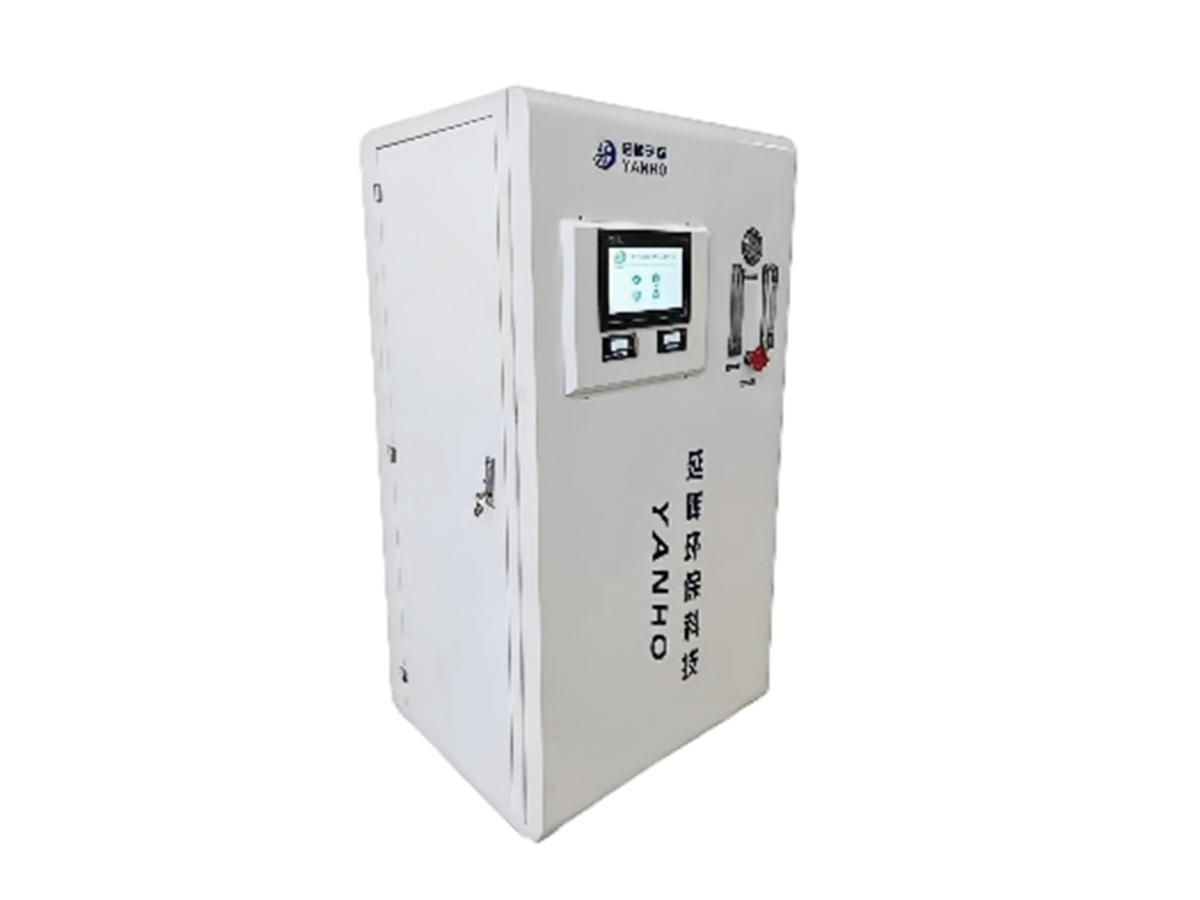
Small and medium-scale seawater desalination equipment is designed to convert seawater into freshwater at a capacity suitable for relatively small communities, marine facilities, hotels, ships, industrial sites, islands, and other locations that do not need a large centralized desalination plant.
In many of our projects, we use seawater reverse osmosis (SWRO) as the main desalination process. The basic principle is easier to understand than the name may suggest.
Normally, water naturally moves through a semi-permeable membrane from a lower concentration solution toward a higher concentration solution. This is called osmosis. In reverse osmosis, we apply pressure to the seawater side and force water in the opposite direction through the membrane.
The membrane allows part of the water to pass through while retaining a large proportion of dissolved salts and other substances. The water that passes through becomes the product water, while the remaining water becomes a more concentrated reject stream.
The U.S. Environmental Protection Agency describes RO as a pressure-driven membrane process that produces a treated-water stream called permeate and a reject stream called concentrate or brine. EPA also identifies RO as a technology that can be used to remove salts from brackish water and seawater.
WHO guidance likewise identifies reverse osmosis as one of the main technologies used for desalination. It notes that desalination plants can have a relatively small physical footprint and that modular designs are increasingly available.
That compact and modular nature is particularly useful for the type of projects we usually work with.
| Process Section | Main Function | Typical Equipment |
|---|---|---|
| Seawater Intake | Bring raw seawater into the treatment system | Intake pipe, strainer, pump and related components |
| Pretreatment | Reduce suspended solids and protect RO membranes | Filters, cartridge filters, dosing equipment or other pretreatment units |
| High-Pressure Section | Provide pressure required for reverse osmosis | High-pressure pump, valves and pressure instruments |
| RO Section | Separate freshwater from dissolved salts | Seawater RO Membranes and pressure vessels |
| Post-Treatment | Adjust final water quality when required | pH adjustment, disinfection, remineralization or other equipment |
| Control System | Monitor and control equipment operation | PLC, control cabinet, instruments and alarms |
Source: Process structure summarized from WHO and U.S. EPA technical information on desalination and reverse osmosis. Actual equipment configuration varies according to feed-water quality and project requirements.
For us, “small and medium-scale” does not mean that the equipment is simply a smaller version of a large desalination plant. The design has to be adjusted to the actual flow, operating conditions, available space, power supply, and maintenance capability.
When we design a small and medium-scale seawater desalination system, we normally divide the process into several stages. Each stage has a specific job, and the whole system needs to work together.
The first job is to bring seawater into the system in a stable way.
This sounds simple, but the intake conditions can have a big effect on the rest of the system. Nearshore seawater may contain sand, suspended solids, algae, organic material, or other particles. Conditions can also change with tides, weather, seasons, and local marine activity.
We therefore look at the actual intake conditions before selecting the pretreatment system. If the raw water contains more suspended matter than expected, for example, the filtration arrangement may need to be strengthened.
Pretreatment is one of the most important parts of a seawater RO system.
The RO membrane is the heart of desalination, but it should not be expected to deal with everything in raw seawater. Pretreatment removes or reduces substances that could cause fouling, plugging, scaling, or other operating problems.
Depending on the raw-water analysis, we may use different filtration and conditioning methods. The exact combination is not fixed in advance.
EPA notes that pretreatment processes are frequently needed for RO to help prevent membrane fouling or plugging.
After pretreatment, the seawater enters the high-pressure section.
Reverse osmosis needs pressure because seawater has a high salt concentration. The pump has to provide enough pressure to overcome the osmotic pressure and the resistance of the membrane system.
WHO's drinking-water quality guidance gives a general operating-pressure range of approximately 15–50 bar for reverse osmosis, depending on the application. Seawater desalination normally requires higher pressure than many lower-salinity applications.
We do not use one fixed pump specification for every project. Pump selection depends on feed-water salinity, temperature, required flow, membrane arrangement, recovery, pressure losses, and other design conditions.
The high-pressure seawater flows through the RO membrane system.
A portion of the water passes through the membrane and becomes permeate. Most of the dissolved salts remain in the concentrated stream.
This is the main desalination stage.
The actual salt rejection and freshwater quality depend on the membrane selected and the operating conditions. For this reason, we normally confirm membrane performance using the actual project water conditions instead of simply copying numbers from another installation.
RO water may not always be the final water used by the customer.
If the water is intended for drinking, for example, additional treatment may be required to meet local drinking-water requirements. If the water is intended for industrial use, the final treatment may be completely different.
Depending on the project, post-treatment can include pH adjustment, remineralization, disinfection, storage, or additional purification.
WHO's guidance on desalinated drinking water emphasizes that source-water management, treatment, final water quality, and monitoring should be considered together when producing drinking water.
There is one point we always explain clearly to customers: desalination does not make salt disappear.
RO produces freshwater and a concentrated reject stream. That concentrate has to be handled according to the site conditions and applicable environmental requirements.
EPA explains that RO concentrate retains salts and other substances rejected from the feed water and may require discharge or disposal.
For coastal projects, concentrate management is therefore considered during the overall engineering stage rather than being left until the equipment is ready to ship.
Seawater is not an easy fluid for equipment. Its high salt content creates a demanding environment for pumps, pipes, valves, fittings, fasteners, and other wetted components.
We pay close attention to material selection in seawater-contact sections. The exact material depends on the equipment position, pressure, salinity, temperature, component function, and customer requirements.
For a long-term project, choosing suitable materials is usually more valuable than trying to reduce the initial equipment cost by using unsuitable components.
A desalination system needs to do more than produce water during the first few days after installation. It needs to remain manageable during daily operation.
We therefore consider pressure monitoring, flow monitoring, conductivity measurement, pump protection, membrane protection, alarm functions, and routine maintenance when designing the system.
Automation can make a big difference, especially when the equipment is installed at a remote location.
Depending on the project, the control system can monitor pressure, flow, conductivity, tank levels, pump operation, equipment status, and alarm conditions.
Automatic start and stop functions and protection settings can also be configured according to the project.
Different customers need different amounts of freshwater.
A fishing facility may need a relatively small amount of freshwater, while a coastal hotel or industrial site may require a larger continuous supply.
We can configure the number of membrane elements, pumps, filtration stages, and other components around the required production capacity.
One of the main advantages of small and medium-scale desalination equipment is that it can be arranged in a relatively compact footprint.
We can manufacture systems as skid-mounted packages or customized modular equipment depending on the project. This can simplify transportation and installation and may also make future maintenance easier.
WHO notes that desalination plants typically have a relatively small physical footprint and that modular designs are increasingly available.
We do not believe that a standard equipment list is suitable for every seawater project.
Raw-water quality, capacity, installation space, electricity, water-use requirements, automation level, and environmental conditions all affect the final configuration.
That is why we provide customized seawater desalination equipment rather than forcing every customer into exactly the same design.
When a customer contacts us about a small Seawater Desalination Plant, the first question is usually about capacity. Capacity is important, but it is not the only thing we need to know.
Before selecting equipment, we normally look at several basic factors.
We first need to know how much freshwater is actually required.
For example, a project may require a certain number of cubic meters per day, but the operating schedule may only allow the system to run for part of the day. Storage tanks may also be available.
So we look at both daily demand and hourly operating requirements.
This is one of the most important pieces of information.
If possible, we prefer to receive a water analysis showing parameters such as salinity or TDS, turbidity, temperature, suspended solids, hardness, silica, and other relevant indicators.
The better we understand the raw water, the better we can select pretreatment and RO components.
Where will the freshwater go?
It could be used for drinking water, washing, hotel operations, industrial processes, cleaning, fishery-related operations, or as feedwater for another treatment system.
Different applications may require different final water-quality targets.
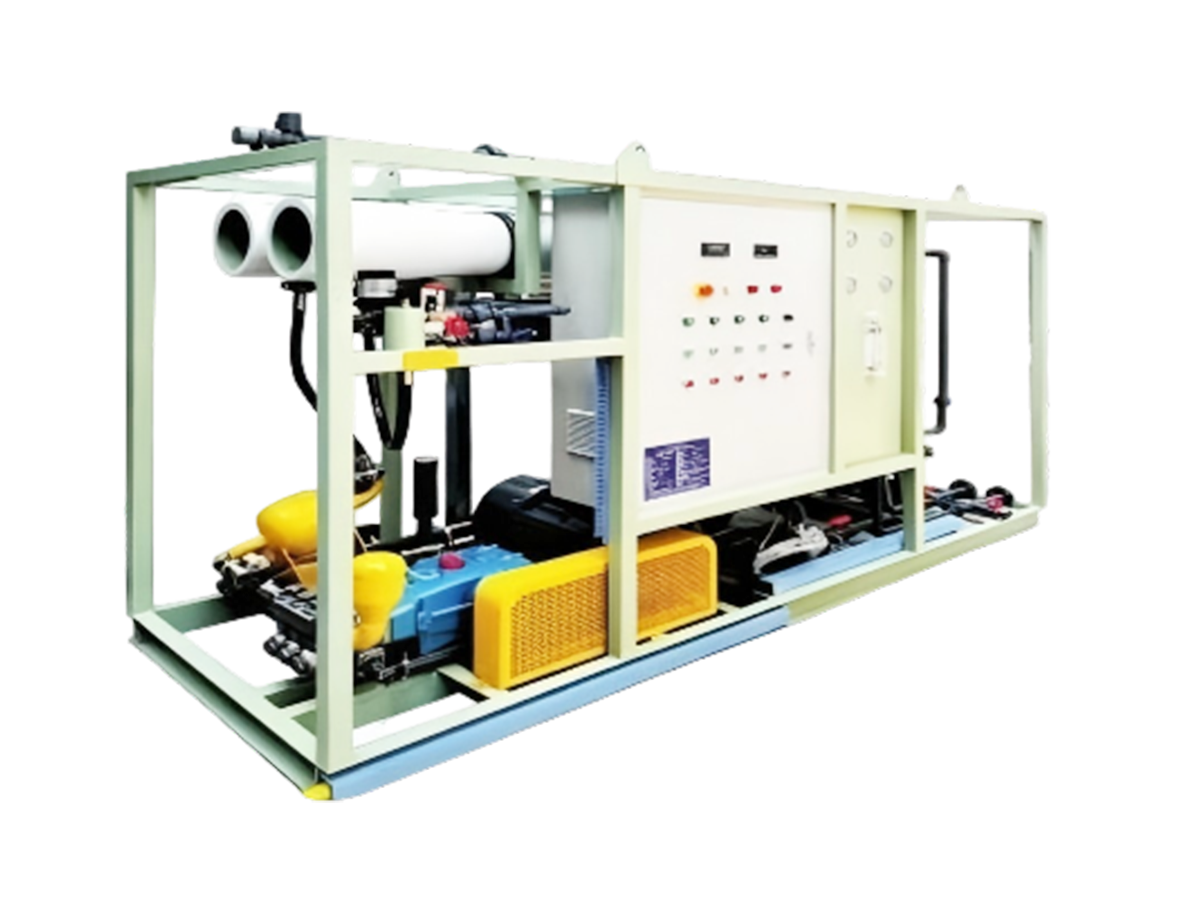
Recovery refers to the percentage of feed water converted into product water.
A higher recovery can mean less feed water is needed for a given freshwater output. But it also increases salt concentration in the reject stream and can increase the risk of scaling under some conditions.
We therefore select recovery as part of the complete process design rather than simply trying to make it as high as possible.
Energy is a real operating cost for seawater desalination.
Reverse osmosis requires high-pressure pumping, and energy consumption can change considerably with seawater salinity, temperature, pressure, recovery, pump efficiency, membrane condition, and energy-recovery equipment.
WHO describes desalination as an energy-intensive technology and notes that economies of scale can be important for overall project economics.
| Factor | What We Need to Know | Why It Matters |
|---|---|---|
| Freshwater capacity | m³/day or m³/hour | Determines general equipment size |
| Raw-water salinity | TDS or laboratory analysis | Affects RO pressure and membrane selection |
| Water temperature | Typical and seasonal range | Influences membrane performance and flow |
| Turbidity | Raw-water turbidity level | Helps determine pretreatment requirements |
| Final water use | Drinking, industrial, cleaning, etc. | Determines final treatment requirements |
| Available power | Voltage, frequency and capacity | Affects pump and electrical configuration |
| Installation area | Length, width, height and access | Determines equipment layout |
Source: Selection factors are based on standard RO/desalination engineering considerations described in WHO and EPA technical guidance. Project-specific values must be confirmed through water analysis and engineering design.
| Parameter | Published Reference | Application Note |
|---|---|---|
| Typical RO operating pressure | Approximately 15–50 bar | Depends on application and feed-water conditions |
| RO membrane pore size | Less than approximately 0.002 μm | General WHO reference for RO membranes |
| Primary application | Brackish water and seawater desalination | Common membrane application |
| RO process output | Permeate + concentrated reject | Concentrate requires appropriate management |
Source: World Health Organization, Guidelines for Drinking-water Quality, membrane processes section. These are general reference values rather than guaranteed specifications for an individual Yanhui system.
We prefer to give customers realistic engineering information rather than promise one number that may not match their seawater conditions.
Our equipment can be used in many locations where seawater is available but freshwater supply is limited.
Island communities often have limited freshwater resources. At the same time, seawater is available around them.
A small-scale seawater desalination system can provide a local freshwater source without relying entirely on water transported from another location.
For island projects, we pay attention to equipment footprint, power supply, maintenance access, spare parts, corrosion protection, and transportation conditions.
Hotels use water for many purposes: guest rooms, kitchens, laundry, cleaning, landscaping, and general operations.
In coastal locations where municipal supply is limited or unreliable, seawater desalination can provide an additional freshwater source.
For hotel projects, we usually pay close attention to automatic operation and stable water production because hotel staff may not have specialist water-treatment training.
Ships cannot simply connect to a city water network whenever they need more freshwater.
A marine desalination system can use seawater available around the vessel and produce freshwater onboard.
The U.S. EPA identifies reverse osmosis and distillation systems among desalination technologies used onboard vessels for applications such as potable water, laundry, food preparation, and boiler feedwater.
Offshore platforms have a special combination of requirements: limited space, seawater exposure, continuous operation, and difficult maintenance access.
For these projects, the system layout and component selection need to consider corrosion, lifting, access, electrical supply, control functions, and maintenance space.
Fishing facilities and aquaculture-related sites may be located far from reliable freshwater infrastructure.
A customized desalination system can provide freshwater for suitable operational needs such as cleaning, processing, staff use, and other freshwater applications.
The exact freshwater quality should be determined from the actual application.
Industrial users may need desalinated water for process water, cleaning, cooling-related applications, production support, or as feedwater for another purification system.
Industrial water requirements can be very different from drinking-water requirements, so we design the treatment train according to the customer's process.
Small communities in coastal areas may also consider desalination where conventional freshwater sources cannot meet demand.
WHO notes that desalination can be used to supply drinking water in water-scarce areas and that modular systems can serve smaller water-supply requirements.
We do not treat equipment manufacturing as a separate activity from engineering. For us, the design and manufacturing stages need to work together.
We start by collecting the information needed to understand the project.
This includes the seawater source, raw-water quality, freshwater capacity, final water use, installation location, power supply, available space, automation requirements, and transportation conditions.
After reviewing the information, we develop a suitable treatment process.
The process may include seawater intake, pretreatment, high-pressure pumping, RO membranes, post-treatment, storage, control systems, and concentrate management.
Not every project needs every treatment stage. We select the process according to the actual water and application.
We then select the main equipment and components.
This includes pumps, membrane elements, pressure vessels, filters, valves, instruments, electrical components, piping, control equipment, and supporting structures.
For seawater applications, corrosion resistance and pressure requirements are particularly important.
After the design and equipment selection are confirmed, we begin manufacturing and assembly.
Depending on the project, the equipment may be supplied as a skid-mounted package, modular system, or customized equipment arrangement.
We aim to integrate as much of the equipment as practical before shipment. This can reduce the amount of work required at the customer's site.
Before delivery, we complete equipment assembly, inspection, testing, and commissioning according to the project requirements.
We check the main operating functions and confirm that the equipment is prepared for transportation and installation.
We provide technical and operating documents according to the project scope.
These can include equipment information, process drawings, operating instructions, electrical documentation, maintenance information, and other agreed technical materials.
We understand that international equipment delivery is not simply a matter of putting the machine on a truck.
The equipment may be moved by truck, container, ship, or a combination of transportation methods before reaching the final site.
Depending on equipment size and transportation requirements, we can use wooden cases, pallets, protective materials, reinforced packaging, or container loading arrangements.
The production cycle depends on equipment capacity, configuration, material selection, automation level, customization, and project complexity.
Standard equipment normally has a relatively shorter delivery cycle. Customized equipment requires additional process design, technical confirmation, component selection, manufacturing, assembly, and testing, so the final production schedule is confirmed after the configuration is approved.
| Project Stage | Our Work | Typical Output |
|---|---|---|
| 1. Requirement Review | Understand water source, capacity and application | Project requirements |
| 2. Process Design | Develop treatment route and configuration | Process proposal |
| 3. Equipment Selection | Select pumps, membranes, filters and controls | Equipment configuration |
| 4. Manufacturing | Fabrication and component integration | Completed equipment |
| 5. Testing | Inspection, assembly and commissioning | Tested equipment |
| 6. Delivery | Packaging and transportation preparation | Shipment-ready equipment |
| 7. Installation & Support | Installation, commissioning and technical support | Operating system |
There are many companies selling RO equipment. We believe the difference is not simply in the equipment list. The real difference is how the supplier understands the project.
Since 2015, we have been involved in water-treatment equipment and engineering projects covering seawater desalination, high-salinity wastewater treatment, concentration and purification, and industrial wastewater treatment.
We do not want to select equipment based only on a requested capacity.
We first want to understand the seawater. If water-quality information is available, we use it to guide the process design and equipment selection.
Our systems can be customized according to capacity, water quality, site conditions, automation requirements, material requirements, and final water use.
This is particularly useful for customers who have unusual installation spaces or special operating conditions.
Our service scope covers R&D, design, manufacturing, installation, commissioning, operation, and maintenance.
This means customers can work with us through different stages of the project instead of having to coordinate every technical issue with a different supplier.
For export projects, transportation can influence equipment dimensions, layout, packaging, and modularization.
We consider these issues before manufacturing rather than waiting until the equipment is finished.
We know that a water treatment system is not useful if the customer cannot operate or maintain it properly.
That is why we pay attention to operating instructions, monitoring instruments, maintenance access, spare parts, and practical control functions.
Water-treatment projects can become confusing when technical information is unclear.
We try to keep the process straightforward: understand the water, confirm the target, design the process, select the equipment, manufacture the system, test it, and support the customer during installation and operation.
It is desalination equipment designed for relatively small or medium freshwater production requirements. It is commonly used for islands, coastal hotels, ships, offshore facilities, fishing operations, industrial sites, and small community water supplies.
For many projects, we use seawater reverse osmosis. RO uses high pressure to push seawater through a semi-permeable membrane and separate freshwater from concentrated reject water. The exact process configuration depends on raw-water quality and the customer's final water requirements.
Yes. We provide customized seawater desalination equipment. Capacity, pretreatment, membrane configuration, materials, controls, layout, post-treatment, and other components can be adjusted according to the project.
We normally need the required freshwater capacity, seawater source, water-quality information if available, intended freshwater use, installation location, power supply, available space, automation requirements, and preferred delivery conditions.
Start with actual freshwater demand. We then consider daily consumption, hourly demand, operating hours, storage capacity, and future demand. This helps us avoid selecting equipment that is either too small or unnecessarily large.
RO membranes can achieve very high removal of dissolved salts, but the actual rejection depends on membrane type, feed-water quality, pressure, temperature, recovery, membrane condition, and other operating factors. We therefore provide project-specific performance expectations rather than assuming one number applies to every installation.
WHO gives a general RO operating-pressure range of approximately 15–50 bar depending on the application. Seawater systems normally operate toward the higher end because seawater has greater osmotic pressure than lower-salinity water. Actual pressure is determined during engineering design.
Energy consumption varies with seawater salinity, temperature, pressure, recovery, pump efficiency, membrane condition, pretreatment, and energy-recovery equipment. We do not recommend using a generic energy figure as a guaranteed project value. A site-specific calculation gives a more useful result.
Yes. RO produces a concentrated reject stream commonly called concentrate or brine. EPA explains that this stream retains salts and other rejected substances and may require appropriate discharge or disposal. The handling method should be considered as part of the overall project design.
Yes, a system can be designed for potable-water applications. However, the complete treatment process and final water quality need to comply with the applicable local requirements. WHO recommends a risk-based approach covering the source water, treatment process, final water, and monitoring for desalinated drinking-water supplies.
Yes. We can design compact marine seawater desalination systems for shipboard applications. The design needs to consider available space, electrical supply, seawater intake, corrosion, vibration, maintenance access, and the required freshwater quality.
Yes. Island projects are one of the typical applications for small and medium-scale desalination equipment. We can consider freshwater demand, seawater quality, available power, installation space, transportation, maintenance resources, and concentrate management during the design stage.
There is no single production period for every project. Standard equipment generally has a shorter production cycle, while customized systems require additional engineering and equipment confirmation. We confirm the final delivery schedule after the technical configuration has been approved.
We select the packaging method according to equipment size, weight, transportation method, and customer requirements. Wooden cases, pallets, protective materials, reinforced packaging, and container loading can be used where appropriate.
Payment terms can be agreed according to the project contract. Depending on the order, the arrangement may include an advance payment, a payment before shipment, and a final payment. Exact terms are confirmed during commercial negotiation.
Yes. Our integrated engineering service covers installation and commissioning according to the project scope. We can also provide technical documentation and operating guidance for customer personnel.
Yes. Routine maintenance is necessary for reliable operation. Filters, pumps, membranes, valves, instruments, electrical components, and other parts should be inspected according to operating conditions and the applicable maintenance schedule.
In some projects, modular design can make future expansion easier. Whether expansion is practical depends on the original equipment configuration, available space, power supply, water demand, intake capacity, and other site conditions. We recommend considering possible future demand during the initial design stage.
We see small and medium-scale seawater desalination as more than simply putting an RO membrane inside a compact frame.
A reliable system starts with the seawater. We need to understand its quality, temperature, salinity, suspended solids, and other characteristics. Then we need to match the pretreatment, high-pressure system, membrane configuration, controls, freshwater treatment, and concentrate handling to the actual application.
That is the approach we take at Qingdao Yanhui Environmental Protection Technology Co., Ltd.
Our Small and Medium-Scale Seawater Desalination Equipment can be customized for island water supply, coastal hotels, marine applications, offshore platforms, fishing facilities, industrial water treatment, and other locations where freshwater availability is limited.
We provide solutions covering seawater desalination equipment design, manufacturing, installation, commissioning, operation, and maintenance. Depending on the project, we can provide standard or customized configurations, with equipment capacity, materials, automation, pretreatment, and layout adjusted to the customer's requirements.
We also understand that equipment delivery is only one part of an international project. Production scheduling, factory testing, technical documents, packaging, container loading, transportation, installation, and commissioning all need to be considered.
If you are planning a small seawater desalination plant, a medium-scale seawater RO system, a modular seawater desalination system, or customized seawater desalination equipment, we recommend starting with two basic pieces of information: your required freshwater production and your raw-seawater quality.
Once these are clear, we can work with you to develop a suitable treatment process and equipment configuration based on the actual project.
World Health Organization, Water and Sanitation Technologies for Health-care Facilities: Selecting options for adoption and scale-up in the Western Pacific Region – desalination technology overview and modularity information.
World Health Organization, Guidelines for Drinking-water Quality – membrane processes and reverse osmosis operating information.
World Health Organization, Safe drinking-water from desalination – risk assessment and risk management for desalinated drinking water.
U.S. Environmental Protection Agency, Overview of Drinking Water Treatment Technologies – reverse osmosis, concentrate and pretreatment information.
Technical note: The reference values and descriptions in this article are provided for general technical and educational purposes. Actual freshwater production, salt rejection, recovery, operating pressure, energy consumption, equipment dimensions, and final water quality depend on raw-water conditions, selected components, process design, operating conditions, and applicable local standards. Project-specific values should be confirmed through engineering calculations and water analysis.
This website uses cookies to ensure you get the best experience on our website.
 Portugues
 Pусский
 Français
 العربية
 ไทย
ไทย Indonesia
 Melayu
 Tiếng Việt
 中文
中文 қазақ
қазақ עִברִית
 မြန်မာ
 ພາສາລາວ
 Filipino
 o'zbek
 Кыргызча
 тоҷикӣ
 ខ្មែរ
ខ្មែរ Türkmenler



 Phone
Phone