

| Product Model | Water Production Capacity (m³/d) | Recovery Rate (%) | Permeate Water Standard | Permeate Water Conductivity (PPM) | Operating Power (kW) | Overall Dimension L×W×H (mm) | Weight (kg) |
| YH-HD-001 | 1 | 8 | GB5749-2022 | ≤700 | 1.18 | 800X440X500 | 88 |
| YH-HD-003 | 3 | 20 | GB5749-2022 | ≤700 | 1.36 | 800X440X1500 | 140 |
| YH-HD-005 | 5 | 25 | GB5749-2022 | ≤700 | 1.74 | 900X500X1600 | 179 |
| YH-HD-010 | 10 | 28 | GB5749-2022 | ≤700 | 2.98 | 900X840X1700 | 210 |
| YH-HD-015 | 15 | 32 | GB5749-2022 | ≤700 | 3.76 | 1200X840X1700 | 249 |
| YH-HD-020 | 20 | 32 | GB5749-2022 | ≤700 | 4.85 | 1200X950X1800 | 260 |
| YH-HD-030 | 30 | 32 | GB5749-2022 | ≤700 | 7.19 | 1700X1100X2100 | 349 |
| YH-HD-050 | 50 | 35 | GB5749-2022 | ≤700 | 10.89 | 1700X1100X2100 | 530 |
| YH-HD-100 | 100 | 40 | GB5749-2022 | ≤700 | 19.79 | 6000X2300X2400 | 1250 |
| YH-HD-150 | 150 | 42 | GB5749-2022 | ≤700 | 22.96 | 6000X2300X2400 | 1580 |
| YH-HD-200 | 200 | 45 | GB5749-2022 | ≤700 | 26.44 | 6000X2300X2400 | 1700 |
| YH-HD-250 | 250 | 45 | GB5749-2022 | ≤700 | 29.93 | 6000X2300X2400 | 1700 |
| YH-HD-400 | 400 | 45 | GB5749-2022 | ≤700 | 44.79 | 12000X2300X2600 | 3900 |
| YH-HD-500 | 500 | 45 | GB5749-2022 | ≤700 | 59.26 | 12000X2300X2600 | 5500 |
| YH-HD-800 | 800 | 45 | GB5749-2022 | ≤700 | 97.4 | 12000X2300X2600 | 24000 |
| YH-HD-1000 | 1000 | 45 | GB5749-2022 | ≤700 | 101.6 | 12000X2300X2600 | 36000 |
Note: The models listed above are for reference only. All models can be customized according to your requirements.
Compact Seawater Desalination System for Reliable Freshwater Production
When freshwater is difficult to obtain but seawater is available nearby, a compact desalination system can make a real difference. At Qingdao Yanhui Environmental Protection Technology Co., Ltd., we design and manufacture Compact Seawater Desalination Systems for customers who need a practical freshwater solution without building a large and complicated water treatment plant.
Since our establishment in 2015, we have focused on Seawater Desalination, high-salinity wastewater treatment, concentration and purification, and industrial wastewater treatment. We do not simply sell a group of pumps and membranes. We look at the water source, required production capacity, installation conditions, operating environment, and final water use before deciding how the system should be configured.
That matters because seawater is not the same everywhere. Salinity, temperature, suspended solids, organic matter, biological activity, and seasonal changes can all affect desalination performance. A system that works well for one coastal site may need a different pretreatment process or membrane configuration at another site.
Our compact Seawater Desalination Equipment is therefore designed around the actual project rather than a fixed one-size-fits-all package. Depending on the application, we can integrate pretreatment, high-pressure pumping, reverse osmosis membranes, monitoring instruments, control systems, and post-treatment into a compact skid or customized equipment package.
The result is a system that is easier to transport, install, operate, and maintain while still providing the core treatment performance expected from a modern seawater reverse osmosis system.
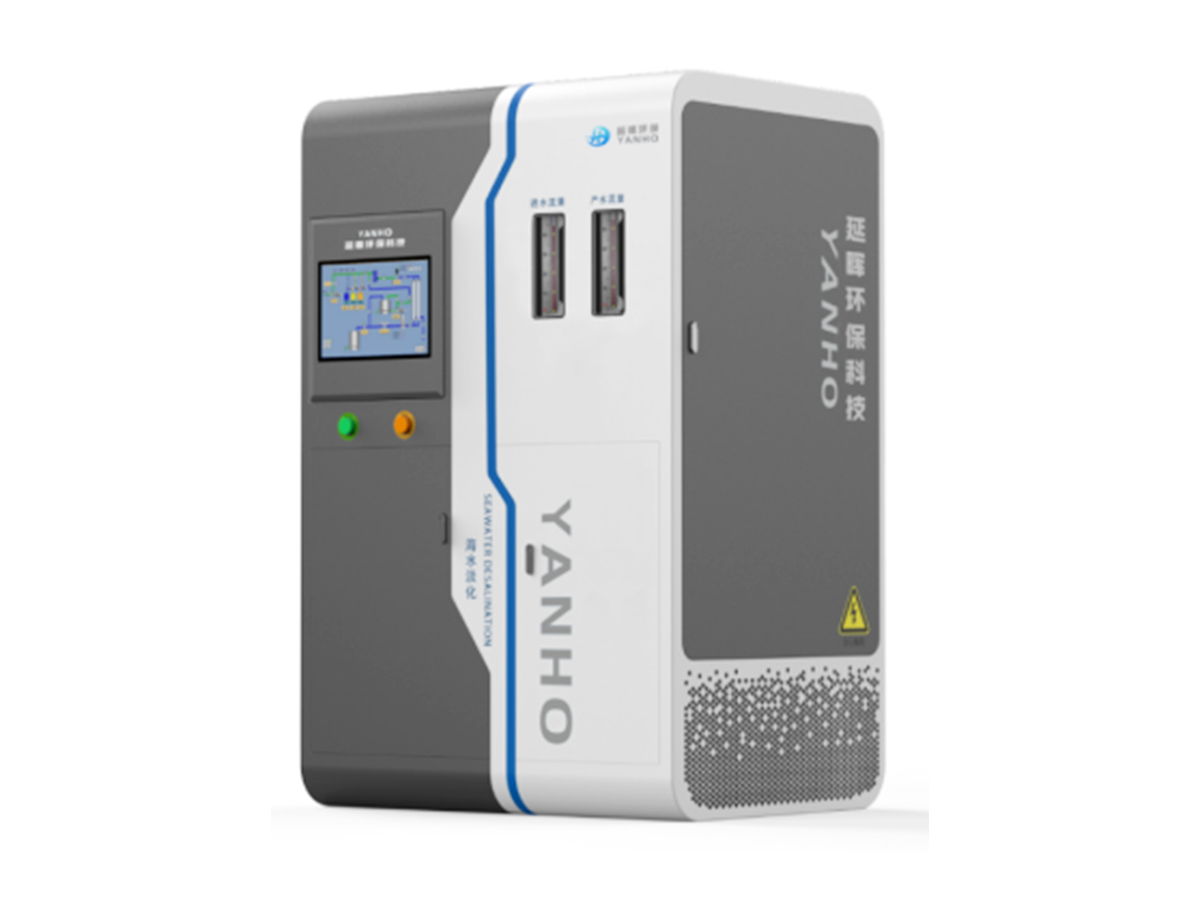
A Compact Seawater Desalination System is a water treatment unit designed to remove dissolved salts and other unwanted substances from seawater and produce freshwater. In most modern systems, we use reverse osmosis (RO) as the main desalination process.
The basic idea is simple. Seawater contains dissolved salts, minerals, microorganisms, suspended particles, and other substances. Instead of trying to boil all the water or separate salt through a thermal process, reverse osmosis uses pressure to push water through a special semi-permeable membrane.
The membrane allows water molecules to pass while rejecting most dissolved salts and many other contaminants. Two main water streams are produced: treated water, often called permeate, and concentrated reject water, commonly called brine.
The World Health Organization describes reverse osmosis as a high-pressure membrane process in which pressure is applied to the higher-concentration side to drive water through a semi-permeable membrane. WHO also identifies reverse osmosis as one of the major membrane processes used for seawater and brackish-water desalination.
For us, “compact” does not simply mean making everything physically smaller. It means making the complete treatment process more integrated and practical. Pumps, filters, membrane housings, instruments, electrical components, piping, valves, and controls can be arranged in a structured package to reduce unnecessary space and simplify installation.
This makes compact Desalination Equipment particularly useful where space is limited. Examples include islands, coastal hotels, ships, offshore platforms, fishing facilities, remote industrial sites, and small municipal water supply projects.
| Item | Typical Function | Why It Matters |
|---|---|---|
| Seawater intake | Brings seawater into the treatment system | Stable intake quality helps protect downstream equipment |
| Pretreatment | Removes suspended solids and reduces fouling risks | Protects RO membranes and improves operating stability |
| High-pressure pump | Provides the pressure required for RO | Drives water through the membrane system |
| RO membrane | Separates freshwater from dissolved salts | Provides the main desalination function |
| Post-treatment | Adjusts treated water quality when required | Allows water to meet its intended end use |
| Control system | Monitors and controls system operation | Makes daily operation easier and safer |
Source: Process structure summarized from WHO guidance on membrane treatment and desalination. Actual equipment configuration varies according to raw-water quality and project requirements.
When we design a seawater desalination system, we normally divide the process into several practical stages. Each stage has a job to do, and the overall performance depends on how well these stages work together.
The first step is bringing seawater into the system. The intake arrangement depends on the project site. Some projects can use a direct seawater intake, while others may need a more carefully designed intake system because of sand, algae, suspended solids, or changing tidal conditions.
We consider the source-water conditions before selecting the pretreatment configuration. This is important because a high-quality RO membrane cannot compensate for poor upstream protection.
Pretreatment is one of the most important parts of the entire system. Its purpose is to reduce suspended solids, turbidity, biological material, and other substances that could cause membrane fouling or damage.
Depending on the raw water, the pretreatment section may include multimedia filtration, cartridge filtration, dosing systems, ultrafiltration, or other suitable processes.
We do not automatically use every possible treatment stage. Instead, we select the process according to actual water analysis. This helps avoid unnecessary equipment while keeping the RO section properly protected.
After pretreatment, the water enters the high-pressure section. Reverse osmosis requires pressure because seawater naturally creates osmotic pressure. The pump supplies enough pressure to push water through the membrane against this natural resistance.
WHO technical guidance notes that RO operating pressure commonly falls within a broad range of approximately 15–50 bar depending on the application. Seawater systems generally operate toward the higher end of the pressure range than many brackish-water systems.
For this reason, pump selection is not something we treat as a simple catalog choice. We consider flow rate, seawater salinity, required recovery, temperature, membrane selection, and operating conditions.
Inside the RO section, seawater flows across the membrane surface under pressure. A portion of the water passes through the membrane and becomes freshwater, while concentrated seawater remains on the reject side.
Modern RO membranes can remove a very high proportion of dissolved salts, but actual performance depends on membrane type, feed-water conditions, operating pressure, temperature, recovery, and system design. We therefore avoid promising one fixed water quality for every project.
RO permeate may require further treatment depending on how the water will be used. Drinking water, industrial process water, cleaning water, and boiler feedwater can have different quality requirements.
For potable applications, we design the final treatment around the applicable local regulations and project requirements. WHO guidance emphasizes that desalinated drinking water should be managed through a risk-based approach covering source water, treatment, final water quality, and ongoing monitoring.
RO does not make the salt disappear. It separates freshwater from a more concentrated reject stream. The concentrate must therefore be handled according to the site's environmental requirements and discharge conditions.
This is especially important for coastal and marine projects. The U.S. Environmental Protection Agency notes that desalination and purification systems can generate concentrated seawater wastewater, and that the discharge can also contain substances associated with treatment and cleaning processes.
| Process Stage | Main Purpose | Typical Design Focus |
|---|---|---|
| Intake | Supply seawater | Intake location, flow stability, solids, marine conditions |
| Pretreatment | Protect the RO section | Turbidity, suspended solids, biological fouling |
| High-pressure pumping | Provide RO pressure | Flow, pressure, efficiency, corrosion resistance |
| RO membrane | Remove dissolved salts | Salinity, temperature, recovery, membrane selection |
| Post-treatment | Adjust final water quality | End use and local water-quality requirements |
| Concentrate management | Handle reject water | Discharge conditions and environmental requirements |
Source: Process description based on WHO membrane-treatment and desalination guidance and EPA information on RO concentrate.
Seawater is a demanding working medium. High salt content can accelerate corrosion if unsuitable materials are used. For this reason, material selection is an important part of our design work.
Depending on the system section and project conditions, we can select corrosion-resistant materials and components suitable for seawater service. The exact material specification is confirmed according to pressure, salinity, temperature, component function, and customer requirements.
We pay particular attention to wetted components, pipework, valves, pump materials, membrane housings, fasteners, and other parts exposed to seawater or concentrated brine.
A desalination system should not only produce freshwater when it is new. It should also remain practical to operate after months and years of use.
Our design therefore considers pretreatment performance, membrane protection, pressure monitoring, flow monitoring, electrical control, alarms, and routine maintenance. A well-designed system makes it easier for operators to see what is happening before a small problem becomes a large one.
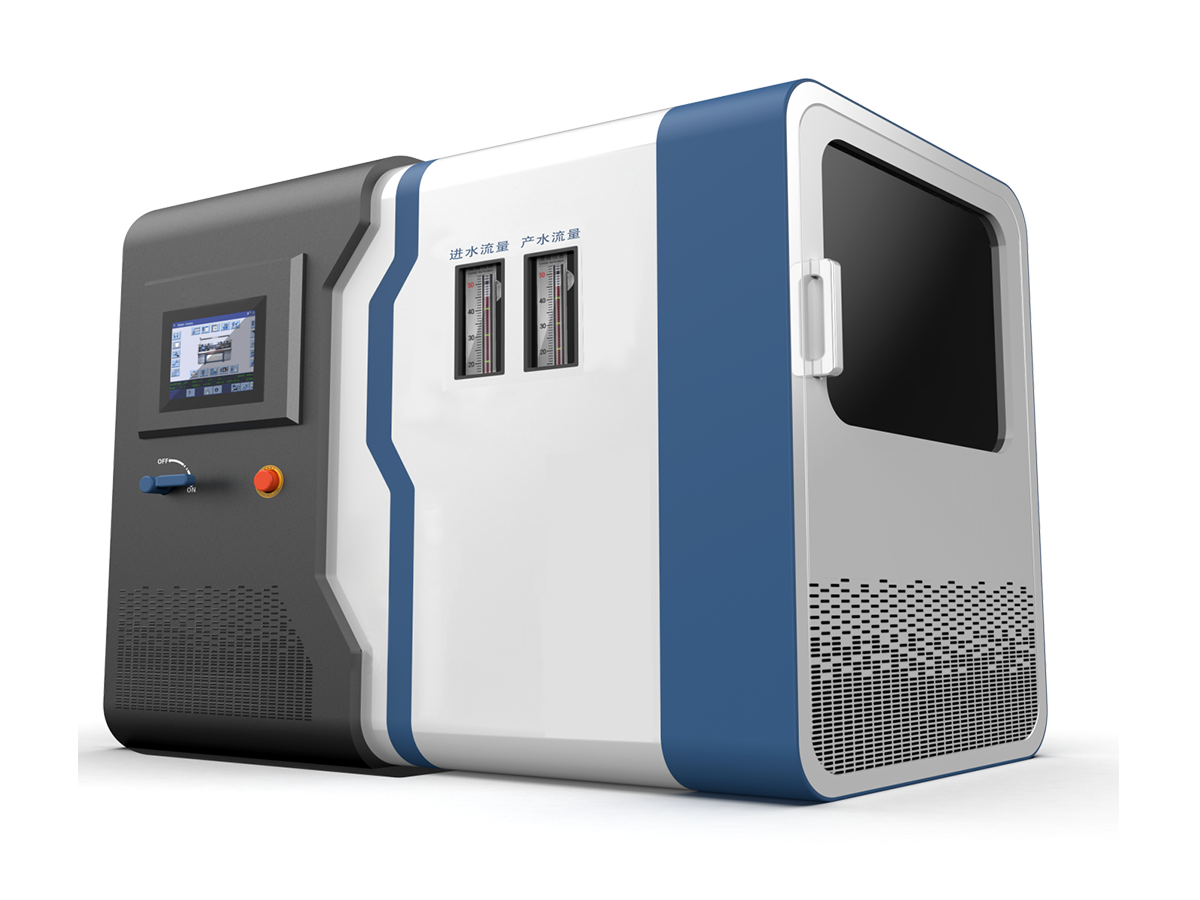
Depending on the project, the control system can monitor operating parameters such as pressure, flow, conductivity, water level, pump status, and other important signals.
Automatic start and stop functions, protection settings, alarms, and interlocks can also be configured according to the project. This reduces the amount of routine manual work required from operators.
We know that every customer does not need the same system. A small island hotel may need a different configuration from a fishing vessel or industrial factory.
We can adjust the system according to required freshwater production, raw-water quality, site dimensions, power supply, automation requirements, installation method, and final water use.
One of the main benefits of a compact seawater desalination system is efficient use of installation space. By arranging major components into an integrated package, we can make transportation and installation easier, especially at sites where available space is limited.
For containerized or skid-mounted projects, we can also consider lifting, access, maintenance clearance, piping connections, and transportation restrictions during the design stage.
In our experience, choosing a desalination system should start with the water and the project, not with a product catalog.
Customers often begin by asking, “How much water can this machine produce?” That is important, but it is only one part of the decision. We also need to know what the seawater looks like, how the freshwater will be used, where the equipment will be installed, and how the system will be operated.
Freshwater demand determines the basic size of the system. A small remote facility may require a compact package, while a hotel, industrial plant, or municipal project may need multiple RO trains or a larger integrated system.
We normally confirm the required daily or hourly production capacity before selecting pumps and membranes.
Seawater salinity is not always constant. Temperature, suspended solids, algae, organic matter, and other factors can change the treatment requirements.
For a serious project, we prefer to work from laboratory analysis or reliable raw-water data. This gives us a better basis for selecting pretreatment, membranes, pumps, and operating parameters.
Recovery describes the proportion of feed water converted into product water. Higher recovery may reduce the amount of feed water needed, but it also increases concentration on the reject side and can affect scaling and fouling risks.
We therefore select recovery based on the complete process rather than simply trying to make the number as high as possible.
Energy is an important operating cost for seawater desalination. Reverse osmosis requires high-pressure pumping, so pump efficiency and system design directly affect operating expenses.
The U.S. Department of Energy's seawater desalination bandwidth study reports approximately 4.00 kWh per cubic meter as a representative value for a seawater RO desalination unit operating at 50% recovery with 35,000 ppm TDS, while an energy-recovery-equipped reference facility was reported at approximately 2.7 kWh/m³ for the RO unit operation. These figures are reference values, not guaranteed consumption figures for every system.
| Reference Condition | Energy Intensity | Source |
|---|---|---|
| Seawater RO unit operation, 50% recovery, 35,000 ppm TDS | About 4.00 kWh/m³ | U.S. Department of Energy |
| Carlsbad reference RO unit operation with energy recovery | About 2.7 kWh/m³ | U.S. Department of Energy |
| Weighted reference for selected U.S. seawater desalination capacity | About 3.3 kWh/m³ | U.S. Department of Energy |
Source: U.S. Department of Energy,Bandwidth Study on Energy Use and Potential Energy Savings Opportunities in U.S. Seawater Desalination Systems. Values are industry reference figures and should not be treated as project-specific guarantees.
In a real project, energy consumption can change with feed-water salinity, temperature, membrane condition, pressure, recovery, pretreatment design, pump efficiency, and energy recovery equipment.
For remote locations, automation becomes even more useful. Operators may not be able to stay beside the equipment all day. A suitable control system can provide operating status, alarms, and basic process information so that problems can be identified earlier.
We can configure the control level according to customer requirements, from straightforward local control to more advanced monitoring and communication functions.
Our compact desalination systems are suitable for many situations where freshwater is limited but seawater is available.
Small islands often face a simple problem: there is plenty of seawater but limited freshwater. Transporting freshwater from another location can be expensive and unreliable.
A compact Seawater Desalination Plant can provide a local freshwater source and can be designed around the island's actual daily demand.
Hotels need reliable water for guests, kitchens, laundry, cleaning, landscaping, and other daily operations. In coastal locations where municipal freshwater supply is limited, seawater desalination can become an important supplementary or primary water source.
For hotels, we pay attention not only to capacity but also to noise, installation space, automation, maintenance access, and operating convenience.
Ships have limited space and cannot carry unlimited freshwater. A marine seawater desalination system can use surrounding seawater to produce freshwater for drinking, cleaning, food preparation, and other onboard uses.
The U.S. EPA notes that distillation and reverse osmosis desalination systems are used onboard vessels for potable water, laundry, food preparation, and high-purity boiler feedwater applications.
Offshore platforms require dependable utilities but have very limited installation space. A compact and corrosion-resistant desalination package can be integrated into the available area with appropriate piping, electrical, and control arrangements.
Fishing bases and related facilities may be located in areas where freshwater infrastructure is weak. A compact seawater RO system can provide freshwater for workers, cleaning, processing, and other suitable applications.
Industrial customers may require desalinated water as process water, cleaning water, cooling-related makeup water, or feedwater for additional purification processes.
Because industrial water requirements vary significantly, we normally design the system based on the required water quality rather than simply copying a standard drinking-water configuration.
Small communities and remote coastal settlements can also use compact desalination systems where traditional freshwater resources are insufficient.
WHO's guidance on small water supplies specifically recognizes that smaller water systems face technical and operational challenges and recommends context-appropriate, risk-based management.
Our work does not end when the equipment drawing is finished. We provide integrated services covering research and development, process design, equipment manufacturing, installation, commissioning, operation, and maintenance.
We first collect basic information about the project. This normally includes seawater source, raw-water quality, required freshwater capacity, final water use, operating hours, installation location, power supply, available space, and local environmental requirements.
Based on the available information, we determine the treatment process and equipment configuration. For more complex projects, water testing and process calculations are used to support the design.
We select pumps, membranes, filters, valves, instruments, control components, piping materials, and other equipment according to the actual design.
This stage is particularly important for seawater systems because corrosion resistance, pressure rating, flow requirements, and component compatibility all need to be considered together.
After the design is confirmed, we begin fabrication and assembly. Depending on the project, the equipment can be manufactured as a skid-mounted unit, compact package, modular system, or customized installation.
Pipework, pumps, membrane housings, electrical cabinets, instruments, and other components are assembled according to the approved design.
Before delivery, we complete equipment assembly, inspection, testing, and commissioning according to the project requirements. We check the major operating functions and make sure the equipment is ready for installation and startup.
We provide technical information and operating documents required for project use. Depending on the project, documentation can include equipment information, operating instructions, electrical information, process diagrams, maintenance guidance, and other agreed technical documents.
| Project Stage | Our Main Work | Customer Benefit |
|---|---|---|
| Requirement confirmation | Review water quality, capacity, site and end use | Better-matched system design |
| Process design | Select treatment route and major equipment | Clear technical configuration |
| Manufacturing | Fabrication, assembly and component integration | Reduced installation complexity |
| Testing | Equipment inspection and commissioning | Improved delivery readiness |
| Delivery | Documentation and protective packaging | Easier transportation and installation |
| After-sales support | Operation and maintenance assistance | Long-term technical support |
We understand that a water treatment project is usually connected to a construction schedule, hotel opening, vessel delivery, factory expansion, or other business deadline. That is why we confirm the production schedule early rather than giving an unrealistic fixed delivery promise.
The production period depends on system capacity, configuration, material selection, automation level, membrane and pump selection, customization requirements, and project complexity.
Standard equipment normally has a shorter production cycle because the design and configuration are relatively mature. Customized systems require additional process design, engineering confirmation, equipment selection, fabrication, and testing, so the delivery schedule is confirmed after the technical configuration is finalized.
Before shipment, we complete equipment assembly, debugging, inspection, and quality checks according to the project requirements. This helps reduce installation and startup problems at the customer's site.
Packaging depends on equipment dimensions, transportation method, and project requirements. Smaller equipment can be protected with wooden cases or pallets, while larger systems may be reinforced and loaded into containers.
For international shipments, we consider lifting points, external protection, internal fixation, moisture protection, and the possibility of repeated handling during transportation.
We can arrange or coordinate transportation according to project requirements. Common options include land transportation, sea transportation, and multimodal transportation.
For overseas projects, container shipping is often practical for equipment that can be integrated into standard container dimensions. Oversized equipment may require a different transportation arrangement after the final dimensions and weight are confirmed.
Payment terms can be agreed according to the project contract. For equipment projects, a common structure may include an advance payment, a payment before shipment, and a final payment or other agreed arrangement.
The exact commercial terms depend on equipment configuration, order value, project schedule, delivery conditions, and the agreement between both parties.
We believe a good desalination supplier should understand more than the equipment itself. The real challenge is making the whole system work properly in the customer's environment.
Since 2015, our business has covered seawater desalination, high-salinity wastewater treatment, concentration and purification, and industrial wastewater treatment. This gives us experience across different water-treatment conditions rather than focusing on only one type of equipment.
We do not assume that every seawater source has identical characteristics. We consider raw-water quality and actual operating conditions when developing the process.
Our service covers R&D, process design, equipment manufacturing, installation, commissioning, operation, and maintenance. This allows us to participate in more than just the equipment supply stage.
Capacity, layout, materials, automation, control functions, pretreatment, post-treatment, and other configurations can be adjusted according to the project.
For overseas customers, equipment is often transported over long distances and may be handled several times before reaching the final site. We therefore consider packaging, container loading, lifting, transportation, and installation conditions during project preparation.
A technically impressive system is not very useful if operators find it difficult to understand or maintain. We therefore try to keep the operating logic clear, provide suitable monitoring functions, and prepare technical and operating documents for the customer.
Our goal is straightforward: provide a compact seawater desalination system that fits the project, performs the required treatment, and remains practical for the people who will operate it.
It is a compact water treatment system designed to convert seawater into freshwater, usually through reverse osmosis. The equipment can integrate pretreatment, high-pressure pumping, RO membranes, monitoring instruments, controls, and post-treatment into a compact package.
Yes. Compact seawater desalination systems can be designed for many small and medium-scale seawater applications. However, the actual configuration should be selected according to seawater quality, required production capacity, final water quality, installation conditions, and operating requirements.
For many projects, we use seawater reverse osmosis because it is a proven membrane-based desalination method. Depending on the raw water and project requirements, pretreatment and post-treatment can be added around the RO section.
Yes. We provide customized water treatment equipment. Capacity, layout, pretreatment, materials, automation, control functions, electrical configuration, and other components can be adjusted according to the project.
We recommend starting with the required daily or hourly freshwater demand. We then consider operating hours, peak demand, storage capacity, raw-water conditions, and the final application. This gives us a more realistic basis for selecting the system size.
Useful information includes seawater source, raw-water analysis if available, required freshwater production, intended water use, installation location, available installation space, power supply, operating schedule, automation requirements, and preferred delivery conditions.
Production time depends on the equipment configuration and customization level. Standard systems generally have a shorter production cycle. Customized projects require process design and equipment confirmation before the final production schedule can be determined.
Packaging is selected according to equipment size and transportation method. We can use wooden cases, pallets, protective materials, reinforced structures, or container loading arrangements. The purpose is to keep the equipment stable and protected during transportation.
Yes. Compact seawater desalination systems can be designed for marine applications. For shipboard projects, we pay additional attention to available space, power supply, seawater intake conditions, corrosion resistance, vibration, maintenance access, and installation requirements.
Yes. Like any water treatment equipment, a seawater RO system needs routine inspection and maintenance. Pretreatment filters, pumps, membranes, valves, instruments, electrical components, and other parts should be checked according to actual operating conditions and manufacturer recommendations.
The RO process produces a concentrated reject stream. Its handling method depends on the project location and applicable environmental requirements. We consider concentrate management during system design rather than treating it as an afterthought.
Yes. Our service scope covers equipment installation and commissioning, with the specific service arrangement agreed according to the project. We can also provide technical documentation and operating guidance for customer personnel.
It can be designed for potable-water applications, but the final water quality and treatment configuration must meet the applicable local drinking-water requirements. WHO emphasizes that desalinated drinking water should be managed through appropriate water-quality risk assessment, treatment controls, and monitoring.
There is no single number that applies to every system. Energy consumption depends on seawater salinity, temperature, pressure, recovery, pump efficiency, membrane condition, pretreatment, and energy-recovery equipment. Published U.S. Department of Energy reference data show why actual project conditions should be considered when estimating energy use.
When freshwater is limited, the question is not simply whether seawater can be desalinated. Modern reverse osmosis technology has already made seawater desalination a practical option for many locations. The more important question is how to build a system that matches the actual water source, capacity, site, budget, operating conditions, and final water use.
That is how we approach the Compact Seawater Desalination System.
We consider the seawater first, then the treatment process, equipment configuration, installation environment, control requirements, transportation method, and long-term operation. For customers looking for a compact seawater desalination system for freshwater production, small-scale seawater desalination equipment, a portable seawater desalination system, or a customized seawater reverse osmosis system, we can develop the equipment around the actual project requirements.
From process design and manufacturing to testing, delivery, installation, commissioning, operation, and maintenance, we aim to keep the process clear and practical.
Qingdao Yanhui Environmental Protection Technology Co., Ltd. provides customized water treatment equipment and integrated engineering services for seawater desalination, high-salinity wastewater treatment, concentration and purification, and industrial wastewater treatment.
If you are planning a new desalination project, the most useful starting point is your raw-water information and required freshwater capacity. Once these basic conditions are available, we can work with you to determine a suitable process, equipment configuration, production schedule, delivery method, and technical solution.
World Health Organization (WHO), Guidelines for Drinking-water Quality and desalination guidance.
World Health Organization (WHO), membrane treatment and reverse osmosis technical guidance.
U.S. Department of Energy, Bandwidth Study on Energy Use and Potential Energy Savings Opportunities in U.S. Seawater Desalination Systems.
U.S. Environmental Protection Agency (EPA), information on desalination and reverse osmosis systems and concentrate discharge.
Note: Technical values shown in this article are general reference data from the cited sources. Actual system performance, energy consumption, recovery, production capacity, final water quality, and equipment configuration depend on site-specific water quality, operating conditions, process design, selected components, and applicable regulations.
This website uses cookies to ensure you get the best experience on our website.
 Portugues
 Pусский
 Français
 العربية
 ไทย
ไทย Indonesia
 Melayu
 Tiếng Việt
 中文
中文 қазақ
қазақ עִברִית
 မြန်မာ
 ພາສາລາວ
 Filipino
 o'zbek
 Кыргызча
 тоҷикӣ
 ខ្មែរ
ខ្មែរ Türkmenler



 Phone
Phone