

Product Title: PF-4000 4,000 L/h High-Flow Pre-Filter for Small Villas, Whole-House Main Pipe Water Filtration System
Meta Description: PF-4000 is a 4,000 L/h high-flow pre-filter designed for small villas and residential water inlet systems. With 40 μm filtration, it helps remove sand, rust and other coarse particles while protecting household pipes and water-using appliances. The washable filter design supports convenient long-term maintenance.
4,000 L/h High Flow Rate: Provides a stable water supply for typical whole-house applications in small villas and residential properties.
40 μm Fine Filtration: Helps capture sand, rust, insect eggs, suspended particles and other relatively large impurities from incoming water.
Durable Brass Valve Body: The reinforced brass valve body offers good pressure and temperature resistance for long-term household water treatment applications.
Automatic Flush Design: The filter supports forward and reverse flushing, allowing accumulated particles to be removed without frequent filter element replacement.
Standard 1-Inch Connection: The standard 1-inch inlet and outlet connections make the unit suitable for installation on residential main water pipes and villa water supply systems.
First-Line Protection for Household Equipment: Installed at the incoming water line, the pre-filter helps protect water pipes, water heaters, boilers, washing machines and other water-using appliances from coarse particles.
The PF-4000 is designed as the first filtration stage of a whole-house water treatment system. It is suitable for small villas, detached homes and other residential properties where incoming water requires basic particle filtration before further purification or softening.
Incoming Water → PF-4000 Pre-Filter → Central Water Purification / Softening → Household Water Points
By installing the PF-4000 at the main water inlet, coarse particles can be removed before water enters the downstream treatment equipment and household piping system.
Detailed parameter table:
Parameter Items | Parameter values |
Product Model | PF-4000 |
Rated flow rate | 4000L/H (4T/H) |
Filtration accuracy | 40μm |
Interface Specifications | 1 inch (DN25) |
Valve body material | Thickened brass |
Work pressure | 0.1-0.6MPa |
Operating temperature | 5-45℃ |
Rinse method | Manual forward and reverse flushing |
Applicable Scenarios | Small villas and high-end residences under 120 square meters |
Product Title: PF-6000 6,000 L/h Villa Pre-Filter with Pressure Gauge and Backwash Function, Whole-House Water Pipe Protection System
Meta Description: PF-6000 is a 6,000 L/h high-flow villa pre-filter with an integrated pressure gauge and 40 μm filtration. The backwash design helps remove accumulated particles, while the durable stainless steel filter screen provides reliable protection for whole-house water pipes and water-using appliances.
6,000 L/h High Flow Rate: The high-flow design is suitable for standard detached villas and residential properties with multiple bathrooms and simultaneous water use.
Integrated Pressure Gauge: The built-in pressure gauge allows users to monitor water pressure at the inlet system and identify potential pressure changes or flow restrictions during operation.
304 Stainless Steel Filter Screen: The corrosion-resistant stainless steel filter screen provides durable particle filtration and is designed for repeated cleaning and long-term household use.
Forward and Reverse Backwashing: The backwash system helps flush accumulated particles from the filter screen, supporting convenient maintenance and stable filtration performance.
Durable Housing Design: The robust housing is designed for use in residential water supply environments and provides protection against common operating conditions such as pressure and temperature changes.
Washable Filter Design: The reusable filter screen can be cleaned through the flushing process, reducing the need for frequent replacement of disposable filter elements and simplifying routine maintenance.
The PF-6000 is designed as a first-stage filtration unit for whole-house water treatment systems. It is suitable for standard detached villas, large residential properties and other homes with relatively high water demand. The unit helps reduce coarse particles before water enters downstream purification equipment and household piping.
Incoming Water → PF-6000 Pre-Filter → Central Water Purifier / Water Softener → Household Water Points
Installed at the main incoming water line, the PF-6000 provides initial particle filtration and helps protect downstream water treatment equipment, pipes, water heaters, washing machines and other water-using appliances.
Detailed parameter table:
Parameter Items | Parameter values |
Product Model | PF-6000 |
Rated flow rate | 6000L/H (6T/H) |
Filtration accuracy | 40μm |
Interface Specifications | 1 inch (DN25) |
Core configuration | Built-in water pressure monitoring meter |
Filter material | 304 stainless steel |
Work pressure | 0.1-0.6MPa |
Applicable Scenarios | 150-300㎡ standard detached villas and duplex apartments |
Product Title: PF-8000 8,000 L/h High-Flow Pre-Filter with Automatic Backwash and Universal Swivel Connection for Villas with Pools and Gardens
Meta Description: PF-8000 is an 8,000 L/h high-flow villa pre-filter with 30 μm filtration, automatic backwashing and a universal swivel connection. Designed for large villas with gardens, swimming pools and multiple bathrooms, it provides initial filtration and long-term protection for the whole-house water supply system.
8,000 L/h High Flow Rate: The high-flow design supports multiple water-use points, including simultaneous bathroom use, garden irrigation and swimming pool water top-up.
30 μm Fine Filtration: The 30 μm filter screen helps capture relatively fine suspended particles and other impurities from incoming water before it enters the downstream water treatment system.
Universal Swivel Connection: The adjustable swivel connection allows greater flexibility during installation and helps accommodate different pipe directions and installation angles in complex villa plumbing layouts.
Automatic Scheduled Backwash: The automatic backwash function can be configured for scheduled cleaning, reducing the need for frequent manual operation and supporting convenient long-term use.
Durable Housing: The reinforced housing is designed to withstand common water pressure fluctuations and demanding residential operating conditions, making it suitable for large villas with multiple water-use applications.
The PF-8000 is designed for large villas and residential properties with high water demand. It is particularly suitable for homes with multiple bathrooms, swimming pools, gardens, outdoor water points and other applications requiring a higher inlet flow rate.
Incoming Water → PF-8000 Pre-Filter → Central Water Purifier / Water Softener → Household and Outdoor Water Points
Installed at the main incoming water line, the PF-8000 provides the first stage of particle filtration and helps protect downstream water treatment equipment, household piping and water-using appliances.
Detailed parameter table:
Parameter Items | Parameter values |
Product Model | PF-8000 |
Rated flow rate | 8000L/H (8T/H) |
Filtration accuracy | 30μm |
Interface Specifications | 1.25 inches |
Rinse method | Fully automatic timed backwash |
Special features | Universal adjustable interface |
Applicable Scenarios | Large villas over 300 square meters, high-end residences with courtyards/swimming pools |
Product Title: PF-10000 10,000 L/h Commercial Pre-Filter with 316 Stainless Steel Construction for Townhouses, Guesthouses and Private Clubs
Meta Description: PF-10000 is a 10,000 L/h high-flow pre-filter featuring 316 stainless steel construction and large-diameter connections. Designed for townhouses, guesthouses, private clubs and large residential properties, it provides durable first-stage filtration for whole-house water supply systems.
10,000 L/h High Flow Rate: The large-flow configuration is suitable for properties with multiple water supply points, multiple users and relatively high household or commercial water demand.
316 Stainless Steel Construction: The filter screen and main housing use 316 stainless steel, providing good corrosion resistance and durability for long-term water treatment applications.
1.5-Inch Large-Diameter Connection: The larger inlet and outlet connections help maintain smooth water flow and are suitable for high-flow residential and light commercial water supply systems.
Pressure-Resistant Design: The robust construction is designed for continuous operation under common water pressure fluctuations, making it suitable for high-frequency water use.
Automatic and Manual Flushing Modes: The system supports both automatic and manual flushing, allowing users to select the appropriate cleaning method according to operating requirements and maintenance schedules.
Suitable for Residential and Commercial Applications: The PF-10000 is suitable for townhouses, large villas, guesthouses, private clubs and other properties requiring high-flow whole-house pre-filtration.
The PF-10000 is designed as a high-flow first-stage filtration unit for large residential and light commercial water treatment systems. It is suitable for properties with multiple bathrooms, kitchens, guest rooms and other water-use areas where a larger water flow rate is required.
Incoming Water → PF-10000 Pre-Filter → Central Water Purifier / Water Softener → Residential or Commercial Water Points
Installed at the main incoming water line, the PF-10000 helps reduce suspended particles and coarse impurities before water enters downstream treatment equipment and the building's water distribution system.
Detailed parameter table:
Parameter Items | Parameter values |
Product Model | PF-10000 |
Rated flow rate | 10000L/H (10T/H) |
Filtration accuracy | 30μm |
Interface Specifications | 1.5 inches |
Core materials | 316 stainless steel |
Applicable Scenarios | Large detached villas, townhouses, small bed and breakfasts, private clubs |
Pre-Filter (PF Series) for Sediment Removal
When people talk about water purification, they often focus on advanced equipment such as reverse osmosis membranes, UV systems, or high-purity water units. In actual water treatment work, however, we often start with something much simpler: getting the larger particles out first.
Our Pre-Filter (PF Series) for Sediment Removal is designed as an initial filtration stage for water treatment systems. It helps reduce suspended particles such as sand, rust, silt, and other physical impurities before water enters the next treatment stage.
At Qingdao Yanhui Environmental Protection Technology Co., Ltd., we have been engaged in water treatment since 2015. Our main business covers Seawater Desalination, high-salinity wastewater treatment, concentration and purification, and industrial wastewater treatment. We provide customized water treatment equipment and integrated engineering services covering R&D, design, manufacturing, installation, commissioning, operation, and maintenance.
Our experience has taught us a simple lesson: a good water treatment system is not built by adding equipment randomly. Each treatment stage should have a clear job.
The job of a water pre-filter is straightforward. It works near the beginning of the treatment process and captures larger suspended solids before they reach downstream equipment. Depending on the project, the PF Series can be used as part of a Villa Water Purification System, whole house water treatment system, commercial water filtration system, industrial pretreatment line, or a more complex purification process.
It is a relatively simple piece of equipment, but that does not mean its selection is unimportant. A properly selected sediment pre-filter can make the rest of a treatment system easier to operate and maintain.
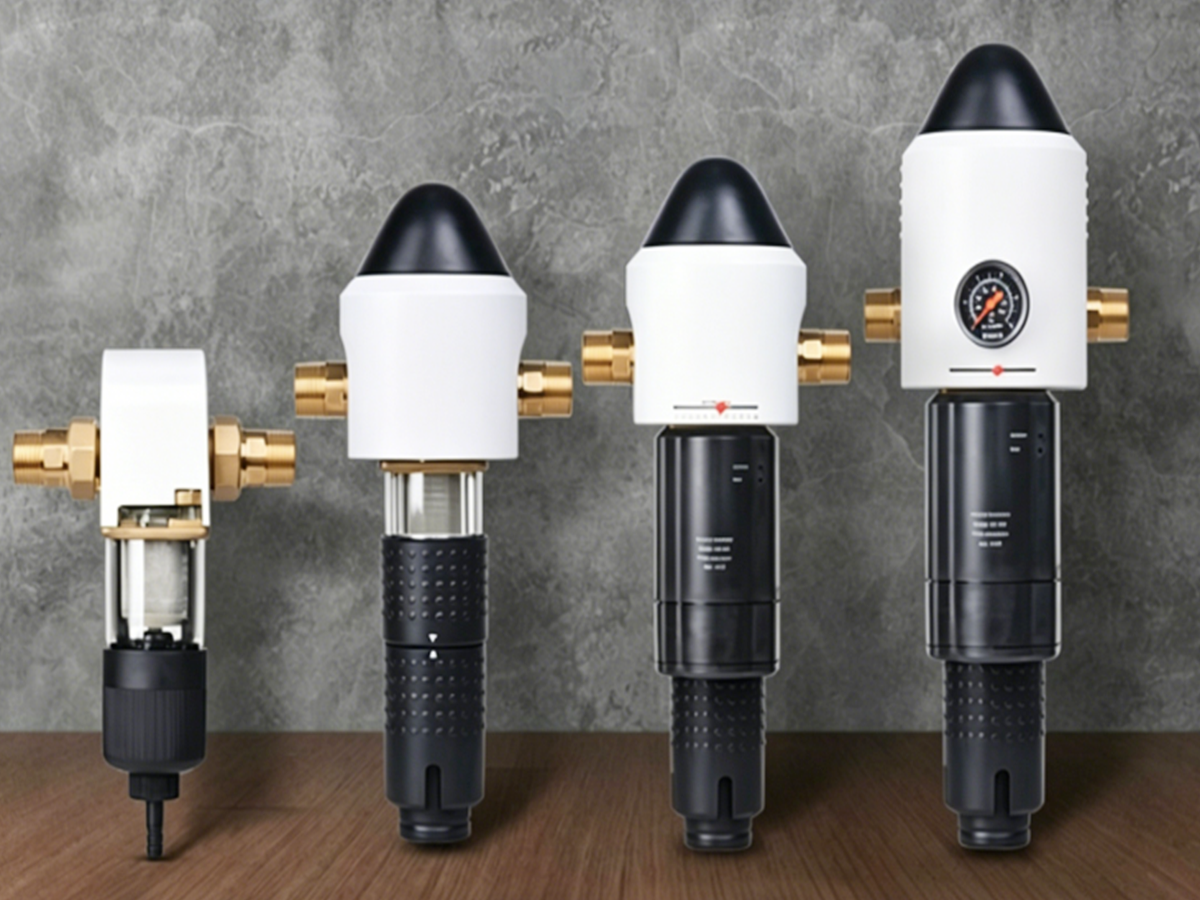
A Pre-Filter (PF Series) is a preliminary water filtration unit installed before one or more downstream treatment processes.
The word “pre” is the key here. The pre-filter is normally not intended to complete the entire water purification process. Instead, it prepares the incoming water for the next stage.
Depending on the filter design and media used, a pre-filter can reduce physical particles such as suspended solids, sand, rust particles, silt, and other larger impurities.
EPA identifies sediment and suspended material as physical contaminants in water. EPA also notes that turbidity and suspended sediment are important considerations in drinking-water treatment and that suspended material may need to be settled or filtered.
That is why we usually treat pre-filtration as a practical first barrier rather than an optional decoration in a water treatment system.
Imagine pouring muddy water into a clean household water system. If you send all of that material directly toward a fine filter, RO membrane, UV chamber, pump, or precision instrument, the downstream equipment has to deal with a problem that could have been reduced earlier.
A pre-filter gives the system a chance to handle larger physical impurities before the water reaches more sensitive treatment components.
WHO technical guidance also describes filtration as an important method for reducing turbidity and particles. It notes that pre-filtration can be used ahead of other treatment processes, while suspended solids can interfere with downstream treatment barriers.
This is the basic reason we recommend looking at pretreatment early when designing a water purification system.
This distinction is important.
A sediment removal filter mainly deals with physical particles. It should not automatically be described as a system that removes dissolved salts, hardness, all microorganisms, or every chemical contaminant.
For example, if the incoming water has high TDS, a pre-filter alone will not solve the problem. Reverse osmosis or another suitable process may be needed.
If hardness is the concern, a softening process may be required.
If microbial control is required, an appropriate disinfection process may need to be added.
In other words, the PF Series has a specific job, and we prefer to describe that job honestly.
The operating principle is easy to understand.
Incoming water enters the pre-filter housing or filtration vessel. As water passes through the selected filtration element or media, larger particles are retained. Cleaner water then continues toward the next treatment stage.
A simplified process is:
Raw Water → PF Series Pre-Filter → Downstream Water Treatment Equipment → Treated Water
The exact structure depends on the PF Series configuration and the project requirements.
The main mechanism is physical separation.
When water passes through a filtration medium, particles larger than the effective passage size can be retained. Other particles may also be captured through different filtration mechanisms depending on the media structure and operating conditions.
It sounds simple because it is. But the design details still matter.
Not every sediment particle is the same size.
Sand grains, rust flakes, clay particles, and fine suspended material behave differently in water. A filter designed for relatively coarse particles should not automatically be expected to perform like a fine cartridge or membrane filter.
This is why we look at the actual water quality before deciding what type of pre-filtration is appropriate.
Water must move through the filter at a suitable flow rate.
If the filter is too small for the required flow, pressure loss may increase as the filter becomes loaded with particles. If the system is designed without enough attention to pressure and flow, the downstream equipment may not receive water under suitable operating conditions.
For this reason, flow rate, inlet pressure, outlet pressure, pipe size, and expected dirt loading should all be considered during system design.
A filter does not have unlimited capacity for captured material.
As particles accumulate, the resistance to water flow can increase. In practical operation, this may appear as a higher pressure difference across the filter.
That is why maintenance is part of the design, not something we think about after installation.
| Water Condition | Possible Concern | Pre-Filtration Consideration |
|---|---|---|
| Visible sand | Particle accumulation | Coarse sediment removal |
| Rust particles | Discoloration and solids | Suitable physical filtration |
| High turbidity | Reduced water clarity | Pre-filtration or additional clarification |
| Fine suspended solids | Downstream filter loading | Appropriate finer filtration stage |
| High dissolved salts | TDS and salinity | Additional treatment such as RO may be required |
| Hardness | Scale formation | Softening or another suitable process |
Source: EPA drinking-water treatment guidance identifies sediment, turbidity, and other physical contaminants as important treatment considerations and notes that different treatment technologies address different water-quality problems.
We design pre-filtration around a simple principle: protect the treatment system without making the system unnecessarily complicated.
The PF Series is intended to intercept larger suspended particles before they move deeper into the treatment line.
This can help reduce the amount of physical material reaching downstream filters, pumps, membrane systems, valves, and other components.
It is particularly useful when the incoming water contains visible sediment or when seasonal changes cause the water to become more turbid.
A pre-filter can be used in many different treatment arrangements.
For residential projects, it may be installed before a whole house water purification system.
For villa projects, it can serve as the first filtration stage before activated carbon, softening, RO, or other equipment.
For industrial applications, it can form part of the pretreatment section before more advanced processes.
This is one of the most practical benefits.
Fine treatment equipment usually costs more and requires more careful operating conditions than a basic sediment filter. Protecting these components from unnecessary particle loading can help simplify system operation.
WHO notes that suspended solids can interfere with downstream treatment barriers, including filtration and disinfection.
We can consider different configurations according to water quality, required flow, installation location, and the treatment system that follows.
We do not recommend using one fixed pre-filter configuration for every customer.
A villa supplied by treated municipal water is very different from an industrial plant drawing water from a less controlled source.
The PF Series can be designed as part of a larger water treatment line.
Depending on the project, it can be connected with cartridge filtration, activated carbon filtration, water softening, ultrafiltration, reverse osmosis, disinfection, storage tanks, pumps, and control systems.
The exact sequence depends on the customer's water-quality requirements.
Maintenance should be straightforward.
Operators need to know when the filter requires cleaning, replacement, or other service. For systems where pressure monitoring is appropriate, a pressure gauge or differential-pressure monitoring arrangement can help indicate when the filter is becoming loaded.
When a customer asks us, “Which pre-filter should I use?”, we do not answer immediately with a model number.
We first ask a few basic questions.
Where does the water come from? How much water is needed? What does the water analysis show? What equipment comes after the pre-filter? How much space is available? How often can the operator perform maintenance?
These questions may sound basic, but they often determine whether a system works smoothly in real life.
Municipal water, groundwater, surface water, well water, and other sources can have very different particle loads.
EPA specifically notes that treatment technology selection depends on factors such as source-water chemistry and turbidity.
So we need to know the source before selecting the filtration arrangement.
Turbidity is a useful indicator of water clarity and suspended material.
It does not tell us everything about water quality, but it gives us an important starting point.
WHO describes turbidity as an indicator that can provide useful information about changes in water quality and notes that suspended particles may affect both water appearance and treatment performance.
Flow rate is one of the most important sizing factors.
A household may need a relatively modest flow, while a commercial building or industrial line may require much more.
The filter should therefore be selected based on the required operating flow rather than simply choosing a housing because it looks physically large enough.
If the next stage is a simple storage tank, the filtration requirements may be different from a system feeding a fine membrane process.
If the PF Series is protecting an RO system, for example, the pretreatment arrangement needs to be considered as part of the complete RO process.
EPA explains that membrane systems such as RO and NF can be used to remove dissolved contaminants but require attention to feed-water conditions and pretreatment.
A filter that is difficult to access may be inconvenient even if it performs well.
We therefore consider where the equipment will be installed and how operators will replace or clean the filtration component.
| Selection Factor | Lower Demand Example | Higher Demand Example | Design Focus |
|---|---|---|---|
| Water flow | Small residential demand | Commercial or industrial flow | Filter size and hydraulic capacity |
| Turbidity | Relatively clear source water | Frequent high turbidity | Pretreatment intensity |
| Sediment loading | Low particle concentration | High particle concentration | Filter capacity and maintenance |
| Downstream process | General household filtration | RO or fine treatment | Protection requirements |
| Maintenance access | Easy access | Limited equipment-room access | Layout and service design |
Source: Engineering comparison based on EPA and WHO guidance concerning turbidity, suspended solids, source-water characteristics, and treatment-process selection. Actual PF Series specifications should be determined from project data rather than from this general table.
We think this is worth explaining clearly because it prevents customers from buying the wrong equipment.
| Water Quality Issue | Can a Sediment Pre-Filter Help? | May Additional Treatment Be Needed? |
|---|---|---|
| Sand | Yes, depending on particle size and filter design | Usually not for the particle itself |
| Rust particles | Yes, for suspended physical particles | Yes, if dissolved iron is also present |
| Silt | Yes, depending on filtration capability | Possibly, for high loading |
| High turbidity | Can reduce suspended material | Additional clarification or filtration may be required |
| Hardness | No | Softening or another process |
| Dissolved salts | No | RO or desalination may be required |
| Taste and odor | Generally not the main function | Activated carbon or other treatment may be needed |
| Microbial contamination | Not a complete disinfection method | Suitable disinfection may be required |
Source: EPA identifies different treatment technologies for different contaminant categories and describes RO, ion exchange, activated carbon, UV, and other processes as serving different treatment purposes.
The Pre-Filter (PF Series) for Sediment Removal is not limited to one type of building.
Because pre-filtration is a basic part of many water treatment processes, the PF Series can be considered for residential, commercial, and industrial applications where physical particle removal is required.
Large villas often use centralized water treatment systems.
The PF Series can be installed at the beginning of the treatment line to reduce sand, rust, and other suspended particles before water reaches downstream filtration or purification equipment.
It can therefore be used together with a VILLA Series Complete Water Purification System where the overall system requires an initial sediment filtration stage.
For a Whole-House Water Filtration System, the pre-filter can be placed near the incoming water line.
This arrangement allows the incoming water to pass through an initial physical filtration stage before being distributed to other treatment equipment.
The actual position depends on the house plumbing and the complete treatment design.
Hotels, offices, restaurants, residential complexes, and other commercial facilities may need centralized water treatment.
Where incoming water contains suspended particles, a pre-filter can be used as part of the initial treatment section.
Industrial water treatment systems often contain several treatment stages.
Depending on the raw-water condition, pre-filtration can help reduce suspended solids before processes such as activated carbon treatment, softening, ultrafiltration, reverse osmosis, or other treatment steps.
For industrial projects, however, we pay closer attention to the water analysis because the consequences of poor pretreatment can be more significant.
RO membranes are designed for a specific separation process. They should not be treated as a general-purpose sediment filter.
Placing appropriate pretreatment ahead of an RO system can help reduce the load placed on the membrane system.
EPA describes RO as a pressure-driven membrane process and notes that pretreatment may be required depending on the source water and treatment objective.
Our company specializes in seawater desalination, so we frequently work with coastal and high-salinity water treatment projects.
A sediment pre-filter can be part of the pretreatment section in a desalination process, but it is important to make one point clear: a sediment filter does not desalinate seawater.
Seawater desalination normally requires a much more complete treatment process, commonly including pretreatment, high-pressure pumping, membrane separation, and post-treatment.
The PF Series can therefore serve as one step within a larger desalination process rather than being presented as a complete seawater treatment system.
We manufacture and configure water treatment equipment according to project requirements. For a pre-filter, the manufacturing process is simpler than a complete RO or desalination system, but we still pay attention to the same basic points: correct configuration, reliable connections, suitable materials, and practical installation.
We begin by confirming the water source and application.
For a simple residential project, this may include basic information about water source, household demand, installation location, and the downstream purification equipment.
For an industrial project, we may need more detailed water-quality data, flow requirements, pressure conditions, process drawings, and interface information.
The filtration arrangement is selected according to the application.
Factors may include required flow, particle characteristics, inlet pressure, installation conditions, downstream equipment, maintenance requirements, and other project-specific considerations.
We avoid treating one standard configuration as suitable for every water source.
After the design is confirmed, the equipment and components are assembled according to the project requirements.
Connections, valves, piping, instruments, filter components, and supporting structures are checked during assembly.
Before delivery, we complete equipment assembly, commissioning, and quality inspection according to the agreed project scope.
For a complete water treatment project, inspection may include checking connections, operating components, instruments, pumps, valves, and control functions where applicable.
We can provide technical information and operating documents according to the project agreement.
These documents are useful because a water treatment system should not become a “black box” that nobody knows how to maintain.
The production period depends on the actual configuration.
Standard pre-filter equipment generally has a shorter delivery cycle, while customized equipment may require additional time for technical confirmation, material preparation, assembly, inspection, and documentation.
For this reason, we confirm the final delivery schedule after the technical requirements are clear.
Transportation can be arranged by land, sea, or multimodal transport depending on the destination and equipment dimensions.
For smaller equipment, suitable protective packaging can be used. Larger or more sensitive equipment can be secured with wooden cases, pallets, or containers and reinforced according to transportation requirements.
| Stage | Main Activity | Purpose |
|---|---|---|
| Requirement confirmation | Review source water and application | Define equipment requirements |
| Technical design | Select filtration arrangement | Match treatment needs |
| Component preparation | Prepare filter and supporting components | Start assembly |
| Assembly | Connect filter, piping, valves and instruments | Create complete unit |
| Inspection | Check equipment and operating functions | Confirm shipment readiness |
| Documentation | Prepare technical and operating information | Support installation and operation |
| Packaging | Protect and reinforce equipment | Reduce transportation risk |
Source: Workflow based on our stated water treatment equipment manufacturing, assembly, commissioning, inspection, documentation, packaging, transportation, and engineering service scope.
A sediment filter is not a complicated product by itself. The difficult part is often knowing where it belongs in the larger treatment process.
This is where our engineering background becomes useful.
Qingdao Yanhui Environmental Protection Technology Co., Ltd. was established in 2015. Our work covers seawater desalination, high-salinity wastewater treatment, concentration and purification, and industrial wastewater treatment.
These projects require us to look at the entire treatment process rather than one component in isolation.
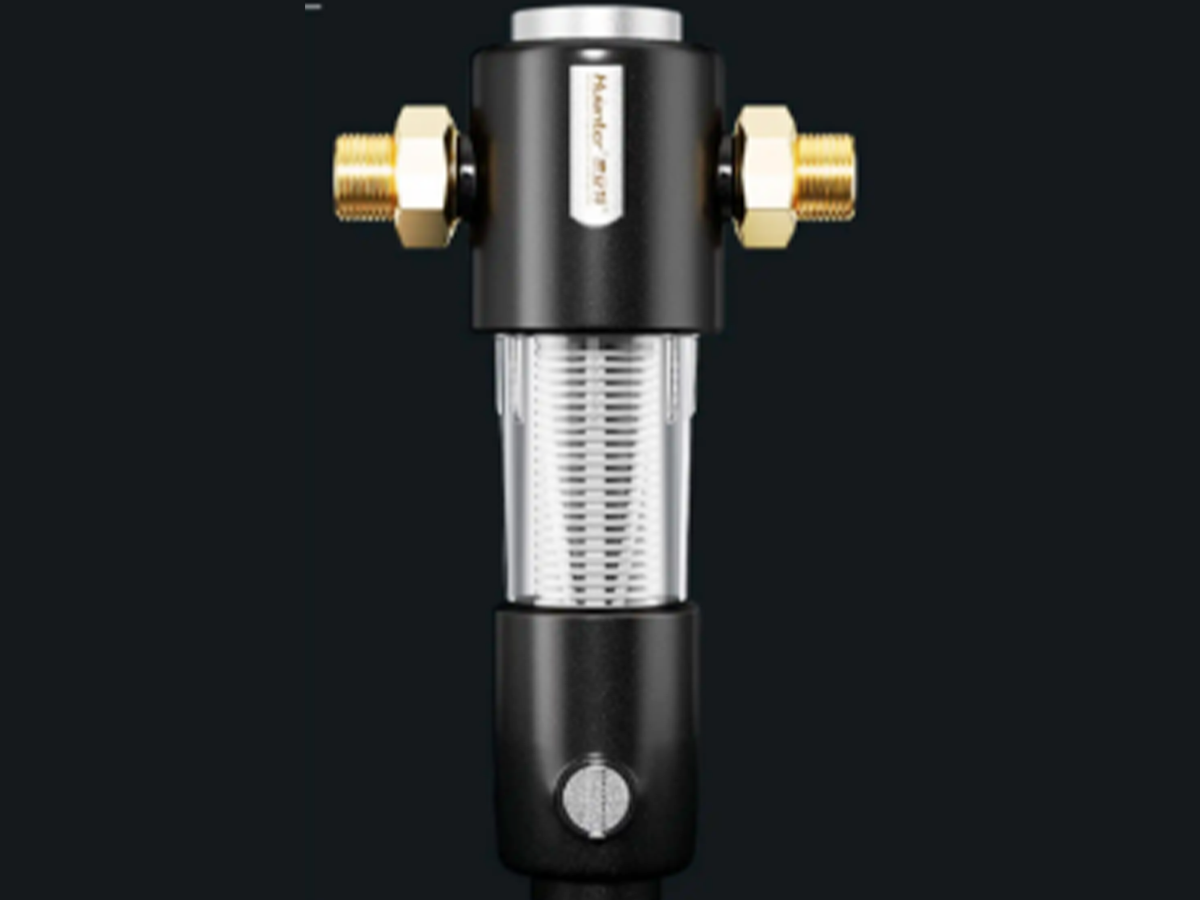
Instead of asking only “Which filter do you want?”, we prefer to ask “What is in your water?”
The answer determines whether sediment filtration is enough or whether additional treatment is needed.
In a larger water treatment system, pretreatment can have a major influence on downstream equipment.
This is particularly important when the next stage involves fine filtration, membrane treatment, or other processes that are more sensitive to suspended material.
Our equipment can be configured according to water quality, flow requirements, installation conditions, and project objectives.
This makes the PF Series suitable for projects ranging from residential water filtration to larger industrial treatment systems.
Our service scope covers R&D, design, manufacturing, installation, commissioning, operation, and maintenance according to project requirements.
For customers who need more than a standalone filter, we can also discuss how the pre-filter should connect with the complete water treatment process.
Our seawater desalination and high-salinity wastewater treatment work means we regularly deal with water that requires careful pretreatment and process design.
A residential pre-filter may be much simpler, but the engineering principle remains the same: understand the water, identify the problem, and select the treatment stage that actually addresses it.
The PF Series is designed primarily for physical sediment and suspended-particle removal. Depending on the specific filtration configuration, it may help reduce sand, rust particles, silt, and other suspended solids.
The exact removal capability depends on the filter design, media, particle characteristics, flow conditions, and water quality.
No. A sediment pre-filter is not a desalination system.
If the water contains high levels of dissolved salts, a process such as reverse osmosis or another appropriate desalination technology may be required.
Yes. A suitable sediment pre-filtration stage can be used as part of RO pretreatment.
The complete pretreatment process should be designed according to the RO feed-water quality and membrane requirements.
Yes. It can be considered for villa and residential water treatment systems where sediment filtration is required.
It can be integrated with other treatment stages such as activated carbon, softening, RO, UV, storage, and pumping depending on the project.
Yes, where the equipment is correctly sized for the household flow and installed in the appropriate position in the incoming water line.
The final selection should consider source-water quality, flow demand, pressure, pipe size, and downstream equipment.
One useful indicator is increased pressure loss across the filter.
Depending on the system, operators may monitor inlet and outlet pressure or differential pressure. Changes in water flow or visible filter loading can also provide useful information.
There is no universal replacement schedule.
Filter life depends on sediment concentration, water consumption, operating time, filter type, and maintenance conditions. A heavily loaded source will require more frequent attention than a relatively clean source.
No.
The PF Series is a pretreatment or initial filtration component. RO performs a different separation function and can reduce many dissolved contaminants that a sediment filter cannot remove.
Yes. The configuration can be discussed according to water quality, flow requirements, installation space, downstream equipment, and other project conditions.
Yes. Our company provides customized water treatment equipment and integrated engineering services. Depending on the project, the PF Series can be incorporated into a larger system involving filtration, softening, RO, desalination, disinfection, storage, pumping, and control equipment.
It can be used as part of a seawater pretreatment process when properly selected, but it cannot desalinate seawater by itself.
For seawater applications, we normally need to consider the complete pretreatment and desalination process, including water quality, suspended solids, salinity, membrane requirements, recovery, and concentrate handling.
Useful information includes the water source, water analysis if available, required flow rate, inlet pressure, downstream equipment, installation space, pipe size, and intended application.
If the water analysis is available, it gives us a much better basis for selecting the appropriate filtration arrangement.
The Pre-Filter (PF Series) for Sediment Removal is designed to perform one clear task: reduce physical particles before they move further into the water treatment system.
That may sound basic, but good pretreatment often makes the entire system easier to manage.
Sand, rust, silt, and suspended solids can create problems for downstream equipment if they are not handled properly. A suitable pre-filter can provide an early barrier and help prepare the water for subsequent treatment stages.
At the same time, we believe in being realistic about what a sediment pre-filter can do. It is not a complete purification system. It does not replace RO when dissolved salts need to be reduced. It does not automatically solve hardness, microbial contamination, or every chemical water-quality problem.
Its value comes from doing its specific job well and fitting correctly into the overall process.
At Qingdao Yanhui Environmental Protection Technology Co., Ltd., we approach the PF Series from that broader engineering perspective. Since 2015, our work has covered seawater desalination, high-salinity wastewater treatment, concentration and purification, and industrial wastewater treatment.
For residential projects, the PF Series can be used as part of a whole house water filtration system, villa water purification system, or residential water treatment system. For industrial projects, it can serve as one stage of a larger pretreatment process.
We can customize the equipment according to water quality, flow demand, installation conditions, and downstream treatment requirements. Before delivery, equipment is assembled, commissioned, and inspected according to the agreed project scope, with technical and operating documentation provided as applicable.
Production time depends on the selected configuration. Standard equipment can generally be arranged on a shorter delivery cycle, while customized projects require additional time for process design, equipment configuration, manufacturing, inspection, and documentation.
Transportation can be arranged by land, sea, or multimodal transport. Depending on equipment dimensions, wooden cases, pallets, containers, and additional reinforcement can be used to protect the equipment during shipment.
For us, the right question is not simply, “Do I need a pre-filter?”
The more useful question is: “What is in my water, what comes after the filter, and what does the complete treatment system need to achieve?”
Once those three points are clear, selecting the right pre-filtration solution becomes much more straightforward.
U.S. Environmental Protection Agency, Overview of Drinking Water Treatment Technologies.
U.S. Environmental Protection Agency, Drinking Water Technologies.
U.S. Environmental Protection Agency, Types of Drinking Water Contaminants.
World Health Organization, Guidelines for Drinking-water Quality and filtration-related technical guidance.
World Health Organization, Water Quality and Health – Review of Turbidity.
Technical note: The technical descriptions in this article are general guidance. Actual filtration performance depends on the PF Series configuration, filter medium, particle characteristics, source-water quality, flow rate, pressure, maintenance, and installation conditions. Final equipment selection should be based on project-specific water analysis and treatment requirements.
This website uses cookies to ensure you get the best experience on our website.
 Portugues
 Pусский
 Français
 العربية
 ไทย
ไทย Indonesia
 Melayu
 Tiếng Việt
 中文
中文 қазақ
қазақ עִברִית
 မြန်မာ
 ພາສາລາວ
 Filipino
 o'zbek
 Кыргызча
 тоҷикӣ
 ខ្មែរ
ខ្មែរ Türkmenler



 Phone
Phone