

Product Title: CWP-3000 Whole-House Central Water Purifier, 3,000 L/h Home and Villa Water Filtration System for Chlorine and Odor Reduction
Meta Description: CWP-3000 is a 3,000 L/h central water purifier designed for small villas and residential properties. Featuring activated carbon and KDF filter media, it helps reduce chlorine, odors and other common impurities in municipal water. The manual control valve provides simple operation and convenient maintenance.
3,000 L/h Stable Flow Rate: The CWP-3000 provides a practical flow rate for daily whole-house water purification in small villas and residential properties.
Activated Carbon and KDF Filter Media: The combined filtration media help reduce residual chlorine, unpleasant odors, certain organic contaminants and other impurities commonly found in municipal water.
Whole-House Water Purification: Installed in the central water treatment system, the unit provides treated water for bathing, washing, laundry, cleaning and other general household applications.
Manual Control Valve: The simple manual valve design makes operation straightforward and supports convenient flushing and routine maintenance.
Quality Filter Media: Selected water treatment media are used to support stable filtration performance and reliable long-term household operation.
Suitable for Small Villas: The compact configuration is suitable for small villas, detached homes and other residential properties requiring central treatment of incoming household water.
| Filter Media | Main Function |
|---|---|
| Activated Carbon | Helps reduce residual chlorine, odors and certain organic contaminants |
| KDF Media | Supports the reduction of certain dissolved contaminants and helps improve water treatment performance |
The CWP-3000 is designed as the central water purification stage in a whole-house water treatment system. It is suitable for small villas and residential properties where municipal or other incoming water requires additional filtration before being distributed to household water points.
Incoming Water → Pre-Filter → CWP-3000 Central Water Purifier → Water Softener / Household Water Points
The CWP-3000 can be combined with a pre-filter and water softener to form a complete whole-house water treatment solution, providing different treatment stages for general household water applications.
Detailed parameter table:
Parameter Items | Parameter values |
Product Model | CWP-3000 |
Rated flow rate | 3000L/H (3T/H) |
Core filter media | High iodine value activated carbon + KDF alloy filter media |
Control method | Manual valve control |
Tank material | Food-grade fiberglass |
Applicable area | 100-180㎡ villas and large-sized residences |
Product Title: CWP-4000 Smart Central Water Purifier, 4,000 L/h Automatic Backwash Whole-House Water Filtration System for Villas
Meta Description: CWP-4000 is a 4,000 L/h smart central water purifier featuring multi-layer filtration, automatic backwashing and automatic regeneration. It helps reduce chlorine, odors, organic contaminants and fine particles in household water, making it suitable for standard detached villas and whole-house water treatment systems.
4,000 L/h High Flow Rate: The high-flow configuration provides stable water treatment for multiple household water points and is suitable for standard detached villas with simultaneous water use.
Multi-Layer Filtration: The composite filter media are designed to help reduce residual chlorine, odors, organic contaminants, fine sediment and certain dissolved impurities according to the selected media configuration.
Automatic Backwash and Regeneration: The smart automatic valve head can be programmed to perform backwashing and regeneration at set intervals, reducing the need for manual operation and helping maintain the filter media.
High-Iodine-Value Activated Carbon: High-quality activated carbon with a high iodine value provides strong adsorption capacity for reducing residual chlorine, odors and certain organic contaminants, helping improve water quality for daily household use.
Enclosed Tank Design: The closed tank helps protect the internal filter media from dust and moisture. The unit can be installed in equipment rooms, utility rooms or basements according to the site layout.
Designed for Whole-House Water Treatment: The CWP-4000 can be combined with a pre-filter, water softener and terminal RO system to form a complete multi-stage water treatment solution for villas.
Filtration → Automatic Backwash → Regeneration → Return to Filtration
The automatic valve head controls the scheduled cleaning cycle according to the configured operating parameters. During backwashing, accumulated particles are flushed from the filter bed, while the regeneration process restores the treatment capability of applicable filter media.
The CWP-4000 is designed for standard detached villas and large residential properties requiring central treatment of household water. It can be used as the central purification stage in a whole-house water treatment system for bathing, washing, laundry, cleaning and other general household applications.
Incoming Water → Pre-Filter → CWP-4000 Central Water Purifier → Water Softener → Household Water Points
For applications requiring purified drinking water, a terminal RO drinking water system can be added after the central treatment stages to provide dedicated purified water for drinking and cooking.
Detailed parameter table:
Parameter Items | Parameter values |
Product Model | CWP-4000 |
Rated flow rate | 4000L/H (4T/H) |
Control method | Intelligent fully automatic valve head |
Filter structure | Multi-layer composite filter (activated carbon + KDF + precision filter layer) |
Applicable area | 180-300㎡ detached villas |
Meta Description: CWP-5000 is a 5,000 L/h high-flow central water purifier with a 304 stainless steel body and high-iodine-value activated carbon. Designed for large villas with multiple bathrooms, swimming pools and multiple water points, it supports comprehensive whole-house water treatment.
5,000 L/h High Flow Rate: Provides high-flow water treatment for villas with multiple bathrooms, swimming pool makeup water and simultaneous use at multiple household water points.
304 Stainless Steel Construction: The integrated stainless steel body offers good corrosion resistance and structural durability while maintaining a clean, modern appearance.
High-Iodine-Value Activated Carbon: Selected activated carbon media provide effective adsorption and help reduce color, odors and various organic contaminants in household water.
Automatic Operation: Automatic backwashing and regeneration functions help maintain stable filtration performance while reducing routine maintenance requirements and water consumption.
Designed for Large Villas: Suitable for high-end residential properties requiring refined whole-house water treatment across multiple bathrooms, swimming pools, entertainment rooms and other water-use areas.
CWP-5000 is designed for large villas and residential properties with relatively high water demand. It can be integrated with a pre-filter and water softener as part of a complete whole-house water treatment system. A terminal RO system can also be added where purified drinking water is required.
Typical Process: Incoming Water → Pre-Filter → CWP-5000 Central Water Purifier → Water Softener → Household Water Points
Detailed parameter table:
Parameter Items | Parameter values |
Product Model | CWP-5000 |
Rated flow rate | 5000L/H (5T/H) |
Body material | 304 stainless steel |
Filter media configuration | High-iodine-value high-quality activated carbon composite filter media |
Applicable Scenarios | High-end villas (300-400㎡) with multiple bathrooms and swimming pools. |
Meta Description: CWP-6000 is a commercial-grade dual-tank central water purifier with a 6,000 L/h flow rate. Its alternating backwash and regeneration design supports continuous water treatment for large villas, private clubs and high-end hospitality properties.
Dual-Tank Parallel Design: Two treatment tanks work together to provide a high flow rate of up to 6,000 L/h, supporting multiple water points and continuous whole-house water supply.
Commercial-Grade Water Treatment: Multi-layer filtration helps reduce common impurities, suspended particles, odors and other contaminants in municipal water for improved whole-house water quality.
Independent Automatic Control: The two tanks can operate alternately during backwashing and regeneration, helping maintain water treatment service while one tank is under maintenance.
Durable Corrosion-Resistant Tanks: High-strength tank construction is designed for long-term, high-frequency operation in large residential and commercial water-use environments.
High-Flow Application: Suitable for large villas, private clubs, guest reception facilities and other properties with multiple bathrooms and high whole-house water demand.
CWP-6000 is designed for large residential and commercial properties requiring high-flow whole-house water treatment. Its dual-tank configuration allows the treatment system to maintain water service during automatic backwashing or regeneration, making it suitable for villas over 400 m², private clubs, guesthouses and other high-demand applications.
Typical Process: Incoming Water → Pre-Filter → CWP-6000 Dual-Tank Central Water Purifier → Water Softener → Household or Commercial Water Points
The CWP-6000 can be integrated with a pre-filter, water softener and terminal RO drinking water system to create a complete multi-stage water treatment solution. The specific configuration can be adjusted according to raw water quality, water consumption, building size and application requirements.
Detailed parameter table:
Parameter Items | Parameter values |
Product Model | CWP-6000 |
Rated flow rate | 6000L/H (6T/H) |
Equipment Structure | Two tanks operating in parallel and alternating modes |
Control Mode | Intelligent independent fully automatic control |
Applicable Scenarios | Large villas over 400 square meters, private clubhouses, and high-end community amenities. |
Central Water Purifier (CWP Series) with Multi-Stage Filtration
When people talk about water purification, they often think about a small filter installed under the kitchen sink. That solution can work for drinking water, but it does not solve every water-quality problem in a villa, large house, commercial building, or other property where water is used at many points.
This is where a central water purification system becomes useful. Our Central Water Purifier (CWP Series) with Multi-Stage Filtration is designed around a simple idea: treat water at a central point before it is distributed to different areas of the building.
We do not believe that every project should use exactly the same combination of filters. Water from a municipal supply is different from well water. Coastal water conditions can be different again. Hard water, high turbidity, unpleasant taste, odor, suspended particles, and dissolved salts all require different treatment approaches.
For this reason, we develop the CWP Series according to actual water conditions, water consumption, installation space, and the customer's treatment goals. Depending on the project, a central water purification system may combine sediment filtration, activated carbon, water softening, reverse osmosis, disinfection, storage, pumps, monitoring instruments, and other treatment stages.
Our experience in water treatment equipment and engineering gives us a practical way to look at these systems. We start with the water rather than starting with a fixed equipment list. That small difference can have a big impact on system performance and maintenance.
A central water purifier is a water treatment system installed at the main water inlet or another suitable central position. Instead of treating water only at one faucet, the system can treat water before it reaches several water-use points.
For a villa, this can mean treating incoming water before it reaches the kitchen, bathrooms, laundry area, water heater, and other household outlets. For a commercial property, the system can be designed around the building's actual water demand and distribution arrangement.
The key word in the product name is multi-stage filtration.
Different treatment stages perform different jobs. A sediment filter may remove larger suspended particles. Activated carbon can help reduce certain taste- and odor-producing compounds and some organic contaminants. A softener can reduce hardness when hardness is the actual problem. Reverse osmosis can be added when dissolved solids and other contaminants require membrane treatment.
According to the U.S. Environmental Protection Agency, filtration systems can use physical barriers and materials such as activated carbon or resins, while reverse osmosis uses pressure to push water through a semi-permeable membrane. EPA also points out that no single treatment technology removes every contaminant, which is one reason different treatment technologies are often combined.
| Treatment Stage | Main Purpose | Typical Role in a Central System |
|---|---|---|
| Pre-filtration | Reduce larger particles and suspended solids | Protect downstream treatment equipment |
| Activated Carbon | Improve taste and odor; adsorb selected organic compounds | Water quality polishing and pretreatment |
| Water Softening | Reduce hardness ions such as calcium and magnesium | Hard-water control |
| Reverse Osmosis | Reduce dissolved solids and many other contaminants | Higher-level purification when required |
| Disinfection | Control microorganisms through an appropriate treatment process | Final or supporting treatment stage |
Source: U.S. EPA, Overview of Drinking Water Treatment Technologies and WaterSense Guide to Selecting Water Treatment Systems. The actual treatment combination should be selected according to source-water testing and project requirements.
This is also why we avoid describing the CWP Series as simply a “filter.” In a properly designed central water purification project, filtration is only one part of the overall treatment process.
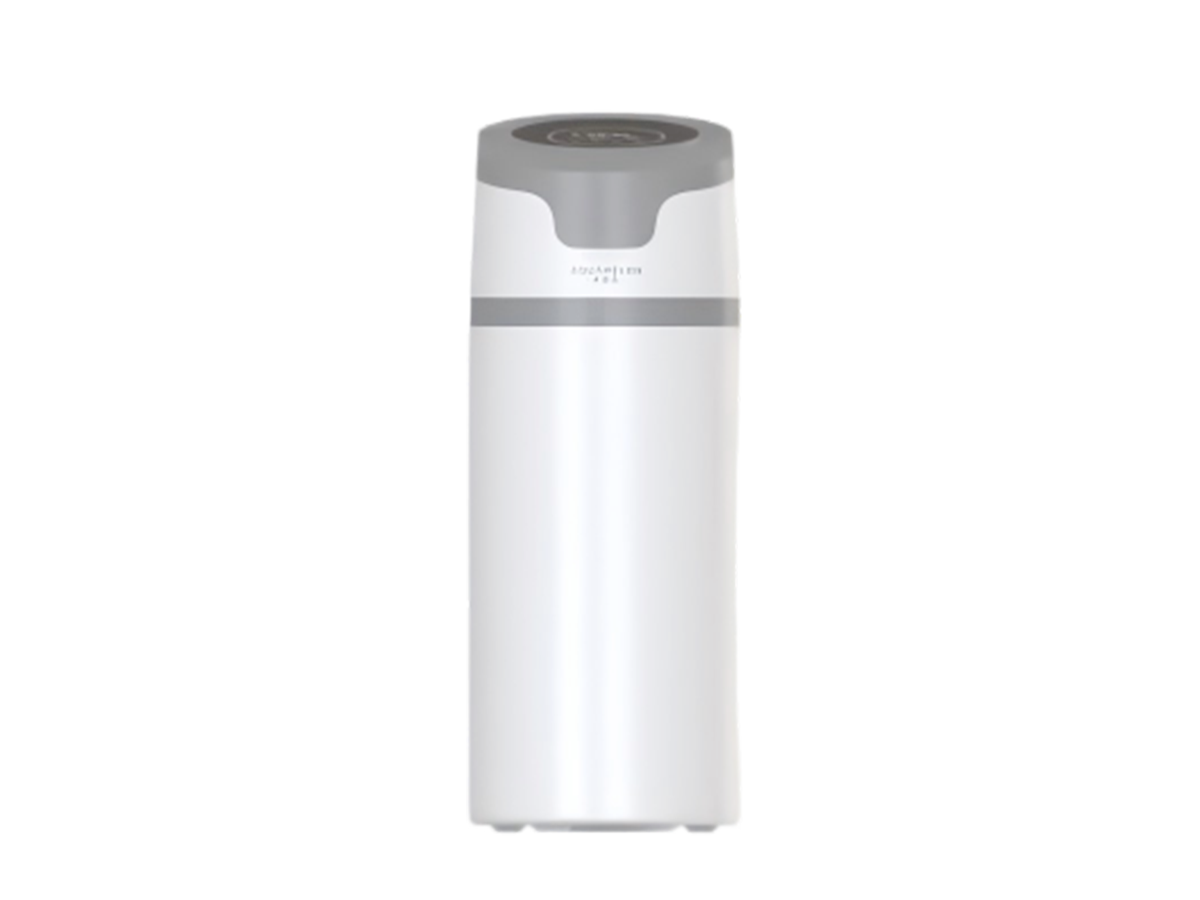
The actual process flow can change from project to project, but the basic concept is straightforward.
Raw water enters the system and first passes through the treatment stages selected for the source-water conditions. Larger particles can be removed before the water reaches more sensitive equipment. If taste, odor, or certain organic compounds are a concern, activated carbon may be included. Where hardness needs to be controlled, a softening stage can be added.
If the water requires deeper purification, reverse osmosis can become part of the system. In RO treatment, a high-pressure pump supplies the pressure needed to push water through a semi-permeable membrane. The membrane separates the incoming water into treated permeate and a concentrate stream containing a higher level of rejected substances.
WHO describes reverse osmosis as a high-pressure membrane process and identifies RO, ultrafiltration, microfiltration, and nanofiltration as important membrane processes used in water treatment.
After the main purification stage, the water may require additional treatment before it is stored or distributed. The exact configuration depends on the intended water quality and how the water will be used.
Raw Water → Pre-Filtration → Activated Carbon → Softening or Other Pretreatment → RO or Other Purification Stage → Disinfection / Polishing → Storage → Water Distribution
This should not be treated as a mandatory process for every CWP Series installation. For some projects, RO may not be necessary. In other cases, additional treatment may be needed.
That is an important point when selecting a whole house water purification system. Adding more equipment does not automatically mean better water treatment. The treatment stages need to match the actual problem.
Membrane systems are particularly sensitive to poor feed-water conditions. EPA notes that pretreatment is frequently required for RO and nanofiltration to help prevent membrane fouling or plugging.
In practical terms, this means we pay attention to the water before it reaches the expensive components of the system.
For example, if incoming water contains a noticeable amount of suspended particles, it makes little sense to send that water directly into a membrane system without considering suitable pretreatment. A properly selected pre-filter can reduce the load on downstream equipment.
The same thinking applies to activated carbon, softening, and other stages. Every component has a job. Our role is to put those jobs together into a treatment process that makes sense for the application.
The most important feature of our CWP Series is its flexible process design. We can combine different treatment technologies according to the water source and the customer's requirements.
For example, a residential project may mainly need sediment removal, activated carbon filtration, and softening. Another project may require RO because the dissolved solids level is a concern. A larger villa or commercial property may require higher flow capacity, automatic controls, storage, and a more complete distribution system.
A central installation allows treatment to happen before water is distributed throughout the property. This is different from installing a small purification unit at only one faucet.
For buildings with multiple water-use points, centralized treatment can make equipment management more organized. It can also provide a practical foundation for integrating pumps, storage tanks, monitoring devices, and other components into one treatment system.
We can adjust equipment selection according to several important factors:
Raw-water source
Water quality analysis
Required water production capacity
Peak and average water demand
Available installation space
Required treatment level
Distribution pressure
Automation requirements
Maintenance preferences
Project budget and operating conditions
This approach is especially useful for villa water purification equipment because villa projects can vary greatly. A small coastal villa, a large residential property, and a multi-building private development may all need different system configurations.
Automation is another area where project requirements matter. A simple system may need basic automatic valve control and pump protection. A more advanced system can incorporate sensors, pressure monitoring, conductivity monitoring, automatic flushing, alarms, and other control functions.
We do not add automation simply because it sounds advanced. The goal is to make the equipment easier to operate and monitor without creating unnecessary complexity.
Water treatment equipment can operate in environments where moisture, dissolved salts, cleaning chemicals, and other factors affect component life. Material selection therefore needs to match the application.
For projects in coastal areas, for example, corrosion resistance becomes particularly important. Depending on the water chemistry and equipment position, suitable piping, valves, pumps, tanks, structural components, and other materials may be selected accordingly.
When a customer asks us for a central water purifier, we do not start by asking only, “How many liters per hour do you want?” Capacity matters, but it is not the only factor.
We first want to understand the water.
Water quality testing can provide information about turbidity, hardness, total dissolved solids, pH, conductivity, iron, manganese, chloride, sulfate, microorganisms, and other parameters depending on the project.
The exact test list should be selected according to the water source and treatment objective. A municipal water supply, private well, surface water source, and coastal water source should not automatically be treated in the same way.
EPA's WaterSense guidance recommends understanding water quality and treatment goals before selecting a treatment technology. It also warns against oversizing treatment systems because larger systems can increase purchase, operating, and maintenance costs.
A central system must provide enough water when several outlets are being used at the same time.
For a villa, we may need to consider showers, kitchen use, toilets, washing machines, water heaters, outdoor water use, and other demand. The design should consider both normal consumption and peak demand rather than using a simple daily average.
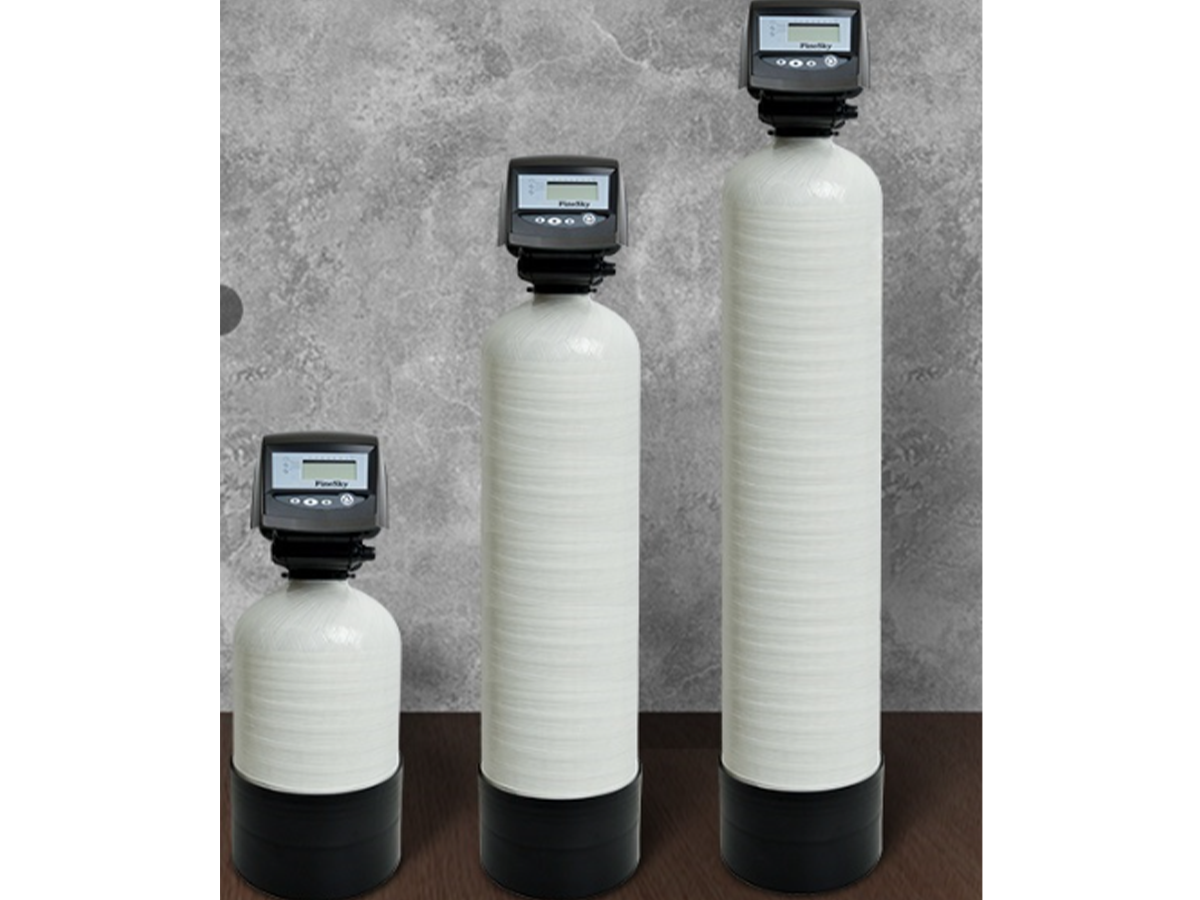
Not every project needs RO water throughout the entire building.
This is an area where our engineering experience is useful. If the customer's actual goal is mainly to reduce sediment and improve taste and odor, a filtration-based system may be more appropriate. If dissolved solids or other contaminants require deeper treatment, RO may be added.
EPA similarly notes that different technologies have different strengths and limitations. For example, filtration can improve taste and odor and address certain contaminants, while RO can remove dissolved solids and a broader range of inorganic and organic contaminants.
| Project Factor | Questions We Consider | Effect on System Design |
|---|---|---|
| Water Source | Municipal, well, surface, or other source? | Determines likely pretreatment needs |
| Water Quality | What contaminants or water-quality issues are present? | Determines suitable treatment stages |
| Flow Demand | How much water is needed during peak use? | Influences equipment capacity and piping |
| Treatment Goal | Filtration, softening, RO, disinfection, or a combination? | Defines the process train |
| Installation Space | Indoor, outdoor, equipment room, basement, etc.? | Influences layout and equipment dimensions |
| Maintenance | Who will operate and maintain the system? | Influences automation and component selection |
Source: Design factors summarized from EPA WaterSense guidance and EPA drinking-water treatment technology information. Actual project design requires site-specific water data.
When RO is selected, we also consider concentrate management.
RO does not turn every drop of feed water into product water. A portion becomes concentrate or reject water. EPA explains that RO systems generate a concentrate stream and that water efficiency should be considered when selecting an RO system.
| Technology | Typical Strength | Important Limitation | Water Use / Waste Consideration |
|---|---|---|---|
| Filtration | Particle removal and selected contaminant reduction | Does not address every dissolved contaminant | Many basic filtration processes do not require a separate reject stream |
| Activated Carbon | Taste, odor, and selected organic compounds | Media capacity is limited and replacement is required | Generally does not operate like RO with a continuous concentrate stream |
| Water Softening | Hardness reduction | Requires regeneration and produces a waste stream | Water and salt consumption depend on system operation |
| Reverse Osmosis | Dissolved solids and broad contaminant reduction | Requires pressure, pretreatment, and concentrate management | Produces reject water during operation |
Source: U.S. EPA WaterSense Guide to Selecting Water Treatment Systems and Overview of Drinking Water Treatment Technologies.
For reference, EPA's current WaterSense specification for point-of-use RO systems sets a water-efficiency threshold of no more than 2.3 gallons of reject water per gallon of treated water for labeled products. This is a specific U.S. WaterSense criterion for point-of-use RO systems, not a performance promise for our CWP Series or for every RO system.
Our Central Water Purifier CWP Series can be configured for different building and water-treatment situations. The final process should always be based on water testing and the intended use of treated water.
Villas are one of the natural application areas for centralized water treatment. A large home can have many water outlets, and treating water at the main inlet can create a more organized treatment arrangement.
Depending on the source water, the system may include pre-filtration, activated carbon, softening, RO, disinfection, storage, or other components.
For a villa near the coast, corrosion resistance and water chemistry may deserve additional attention. For a property using well water, hardness, iron, manganese, turbidity, or other parameters may influence the treatment process.
Hotels have a different demand pattern from private homes. Water may be used simultaneously in guest rooms, kitchens, laundry rooms, bathrooms, and other areas.
In these applications, flow calculation and equipment layout become particularly important. The system may need to work together with storage tanks, booster pumps, hot-water systems, and other building services.
Office buildings, private facilities, clubs, schools, and other commercial properties can also use centralized water treatment where additional treatment is required.
Here, we focus on the actual treatment objective rather than simply installing a large system. The system should be sized around real consumption and peak demand.
Coastal and island projects can present special water-treatment challenges. Source-water quality, salt exposure, limited freshwater availability, transportation, and maintenance access may all affect the equipment configuration.
Our broader experience in Seawater Desalination and industrial water treatment helps us understand these conditions. However, a CWP Series central purifier should not be confused with a Seawater Desalination Plant. If the source water is seawater, a dedicated seawater desalination process may be required instead.
Some industrial sites need treated water for specific production processes rather than ordinary domestic use. In those cases, the CWP concept can be adapted as part of a broader water treatment system, but the required water quality must be defined first.
Our company also works with high-salinity wastewater treatment, concentration and purification, and industrial wastewater treatment. This broader engineering background allows us to approach water treatment as a complete process rather than treating each filter as an isolated product.
For a customized water treatment system, manufacturing is only one part of the project.
Once the process design and equipment configuration are confirmed, we organize component selection, equipment assembly, piping connections, electrical and control integration, inspection, and testing according to the project requirements.
We first confirm the treatment process, required capacity, water-quality targets, installation conditions, and customer specifications.
This stage is important because changing the process after fabrication can create unnecessary cost and delay. We therefore prefer to clarify the main technical requirements before equipment production begins.
The selected filtration vessels, pumps, valves, control components, tanks, membrane equipment, piping, instruments, and other components are assembled according to the confirmed design.
The physical arrangement is also considered. Operators need enough access for inspection, filter replacement, cleaning, maintenance, and troubleshooting.
Before delivery, we complete equipment assembly, commissioning, and quality inspection according to the project requirements. We also prepare relevant technical documents and operating information.
For an engineered water treatment system, we believe the documentation is part of the product. Operators need to understand the basic process, equipment functions, maintenance points, and operating procedures.
There is no single production time that applies to every CWP Series project.
Standard equipment can usually be organized within a shorter delivery cycle when the configuration is already defined. Customized systems take longer because process design, equipment selection, fabrication, control integration, testing, and project-specific documentation must be coordinated.
| Project Stage | Main Work | Typical Output |
|---|---|---|
| Requirement Confirmation | Water source, capacity, application, site conditions | Basic project requirements |
| Process Design | Treatment stages and equipment selection | Process flow and equipment configuration |
| Manufacturing | Component preparation and system assembly | Completed equipment |
| Testing | Inspection, commissioning, control checks | Tested system |
| Documentation | Technical and operating documents | Project documentation package |
| Packaging and Delivery | Protection, reinforcement, loading | Transport-ready equipment |
| Installation and Commissioning | On-site connection and system adjustment | Operational treatment system |
Transportation can be arranged by land, sea, or multimodal transport depending on equipment size and destination. We can use reinforced wooden cases, pallets, or containers according to the equipment structure and shipping conditions.
For international projects, packaging is not something we treat as an afterthought. Pumps, instruments, control cabinets, valves, piping components, and other equipment need suitable protection against movement, impact, moisture, and handling during transportation.
We established Qingdao Yanhui Environmental Protection Technology Co., Ltd. in 2015. Our business is centered on water treatment rather than a single type of household filter.
Our work covers seawater desalination, high-salinity wastewater treatment, concentration and purification, and industrial wastewater treatment. We also provide customized water treatment equipment and integrated engineering services covering R&D, design, manufacturing, installation, commissioning, operation, and maintenance.
That background shapes how we approach the CWP Series.
We do not want customers to buy equipment simply because a specification sheet looks impressive. The correct treatment process depends on the water source and the treatment goal.
For example, if the main problem is sediment, we look at filtration. If hardness is the problem, we consider softening. If taste and odor are important, activated carbon may be appropriate. If dissolved solids require deeper removal, RO may be considered.
This sounds basic, but it is one of the most important principles in practical water treatment.
Water treatment projects rarely have identical conditions. We can adjust the system according to water quality, required production capacity, installation space, automation requirements, and other project conditions.
This flexibility is particularly useful for overseas customers who may have different water sources and building standards.
A water purifier is not just a group of filters connected by pipes. Pumps, valves, tanks, instruments, electrical controls, drainage, maintenance access, and water distribution all affect how the system performs in real use.
Because our company also handles larger water treatment projects, we understand the importance of looking at the complete process.
Our services cover design, equipment manufacturing, installation, commissioning, operation, and maintenance. Depending on the project, we can provide technical documentation and operating information to support the customer after delivery.
Payment terms can be arranged according to the project contract, such as an advance payment, shipment payment, and final balance. The exact terms are confirmed during commercial negotiation.
Yes. The CWP Series can be configured for villas and large residential properties. The actual configuration depends on the water source, water quality, number of users, peak water demand, available installation space, and treatment goals.
No. RO is not automatically required for every project. If the treatment goal can be achieved through filtration, activated carbon, softening, or another suitable process, adding RO may create unnecessary complexity and water reject. We select RO when the water quality and treatment target justify it.
No water treatment technology should be described as a universal solution for every contaminant. Different technologies have different treatment ranges. EPA also emphasizes that treatment technologies vary in what they remove and that no single system removes every contaminant.
This is why we recommend water testing before confirming the final process.
Yes. Customization is an important part of our water treatment work. We can adjust the treatment stages, equipment configuration, capacity, automation, materials, layout, and supporting components according to project requirements.
Start with the water source and water test. Then determine how much water you need, what water-quality problems need to be addressed, where the system will be installed, and how the treated water will be used.
EPA's WaterSense guidance follows a similar logic: identify the water-quality concern and treatment goal first, then select an appropriate treatment technology and consider installation, maintenance, cost, and water efficiency.
There is no universal replacement interval. Filter and membrane life depends on raw-water quality, flow, operating hours, pretreatment, equipment design, and maintenance.
For example, activated carbon has a finite adsorption capacity and eventually needs replacement or regeneration. EPA notes that activated carbon media must be removed and replaced or regenerated when its capacity is exhausted.
It can be designed for drinking-water applications when the source water, treatment process, materials, disinfection method, and applicable local requirements are properly considered. We do not recommend assuming that a generic multi-stage purifier automatically makes any water safe to drink.
Yes. Our company provides integrated water treatment services covering R&D, process design, equipment manufacturing, installation, commissioning, operation, and maintenance. For larger or more complex projects, we can evaluate the complete treatment process rather than supplying only one component.
Depending on equipment size and destination, we can arrange land transportation, sea transportation, or multimodal transport. Equipment may be packed in reinforced wooden cases, on pallets, or inside containers according to its dimensions and structure.
The production cycle depends on the equipment configuration and project size. Standard systems with confirmed specifications generally have a shorter delivery cycle. Customized projects require additional time for process design, equipment configuration, manufacturing, assembly, testing, and documentation.
A good central water purifier should not be judged only by the number of filters installed inside it.
What matters more is whether the treatment process matches the water.
Our Central Water Purifier (CWP Series) with Multi-Stage Filtration is designed as a flexible water treatment platform for villas, residential properties, commercial facilities, and other applications where centralized water treatment is needed.
We can combine different treatment stages according to the actual project: pre-filtration for suspended particles, activated carbon for selected taste and odor concerns, softening for hardness control, reverse osmosis for deeper dissolved-solids reduction, and other suitable treatment or disinfection processes when required.
At the same time, we pay attention to the less visible parts of the project. Equipment layout, pump selection, piping, automation, maintenance access, packaging, transportation, commissioning, and technical documents all matter once the equipment leaves the factory.
Our experience since 2015 is built around water treatment engineering. From seawater desalination to high-salinity wastewater treatment, concentration and purification, industrial wastewater treatment, and customized water treatment equipment, we have developed our approach around real water conditions and practical project requirements.
If you are looking for a Central Water Purifier CWP Series, whole house water purification system, multi-stage water filtration system, or customized villa water purification equipment, we recommend starting with the source-water information and required water capacity.
Once these basic conditions are clear, we can work backward from the required water quality and develop a treatment process that fits the project instead of forcing the project into a fixed equipment package.
Qingdao Yanhui Environmental Protection Technology Co., Ltd. provides customized water treatment equipment and integrated engineering services from design and manufacturing to installation, commissioning, operation, and maintenance. For each project, our goal is simple: make the water treatment process practical, understandable, and suitable for the conditions in which it will actually operate.
U.S. Environmental Protection Agency — Overview of Drinking Water Treatment Technologies.
U.S. Environmental Protection Agency — WaterSense Guide to Selecting Water Treatment Systems.
U.S. Environmental Protection Agency — Point-of-Use Reverse Osmosis Systems.
World Health Organization — Guidelines for Drinking-water Quality, Membrane Processes and Treatment Methods.
U.S. Environmental Protection Agency — Drinking Water Treatment Technology Unit Cost Models.
This website uses cookies to ensure you get the best experience on our website.
 Portugues
 Pусский
 Français
 العربية
 ไทย
ไทย Indonesia
 Melayu
 Tiếng Việt
 中文
中文 қазақ
қазақ עִברִית
 မြန်မာ
 ພາສາລາວ
 Filipino
 o'zbek
 Кыргызча
 тоҷикӣ
 ខ្មែរ
ខ្មែរ Türkmenler



 Phone
Phone