

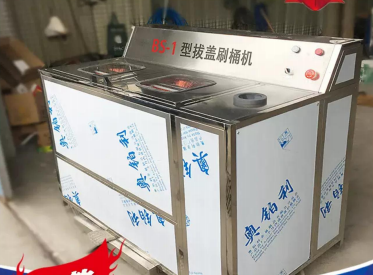
1.Manual Brush
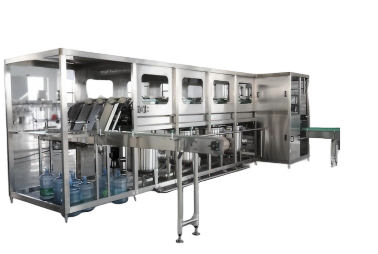
model | QGF-450 |
Filling valve | 3 |
capacity | 450BPH |
Water loss during filling | <1%
|
pressure | 0.4-0.6 MPa |
power | 3.5 kilowatts |
size | 3650*2100*1800 mm |
weight | 2500 kg |
Material | SUS304 stainless steel |
size | 800x800x2500 mm |
weight | 220 kg |
power | 0.75 kilowatts |
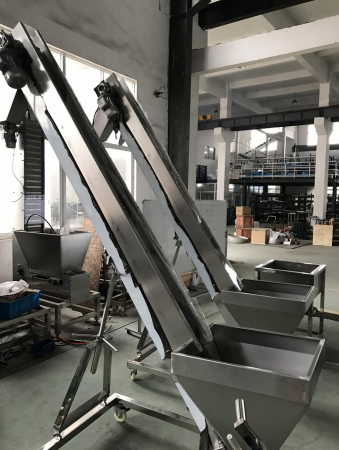
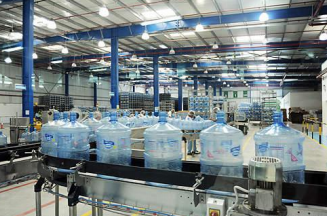
4.10-Meter Conveyor Belt
20L Bottled Water Filling Machine for Large Bottle Water Production
When a water bottling business moves from small bottles to 20L containers, the filling process becomes a little different. The bottle is larger, heavier, and usually needs more careful handling during washing, filling, capping, and transportation. That is why choosing a suitable 20L Bottled Water Filling Machine is not simply about finding a machine that can put water into a large bottle.
We look at the complete process. The empty bottle needs to be handled properly, cleaned before filling, filled to the required level, sealed with a suitable cap, and moved safely to the next stage. For a commercial bottled water plant, these steps also need to work together with water treatment, sanitation, quality inspection, storage, and delivery.
At Qingdao Yanhui Environmental Protection Technology Co., Ltd., we have been engaged in water treatment engineering since 2015. Our main business covers Seawater Desalination, high-salinity wastewater treatment, concentration and purification, and industrial wastewater treatment. We also provide customized water treatment equipment and integrated engineering services covering R&D, design, manufacturing, installation, commissioning, operation, and maintenance.
For a 20L water filling machine project, we therefore pay attention not only to the filling equipment itself, but also to the quality of the water entering the filling line and the conditions under which the finished product will be handled.
A practical 20L bottling system may include bottle loading, bottle washing, rinsing, filling, capping, water-level control, conveyor transfer, labeling, coding, and other processes. The exact configuration depends on the customer's bottle design, production capacity, water type, factory layout, and local requirements.
A 20L Bottled Water Filling Machine is equipment designed to fill large-capacity bottles or containers with drinking water, purified water, mineral water, or other suitable bottled-water products.
Compared with small-bottle filling, 20L water packaging has a different operating rhythm. The bottle itself is much larger, so the equipment needs to consider bottle weight, bottle positioning, washing performance, filling speed, cap handling, and operator convenience.
In many projects, the 20L filling machine is part of a complete production line rather than a standalone machine.
A typical process can look like this:
Empty bottle loading
External bottle inspection
Internal bottle washing
Bottle rinsing
Clean-water filling
Bottle capping
Cap inspection
Labeling or coding
Finished bottle transfer
Secondary handling and storage
Depending on the customer's production requirements, some steps can be combined into an integrated monoblock or automatic filling system, while other operations may remain separate.
A 20L container is not just a larger version of a 500ml bottle.
The bottle is heavier after filling, which changes how it moves through the line. The neck, cap, opening diameter, bottle shape, and material also affect the washing and filling process.
For example, a bottle designed for repeated use may require a stronger washing process than a single-use bottle. If returnable bottles are used, the condition of the incoming bottles can also vary significantly.
That is why we normally ask for the bottle drawings or samples before confirming the final equipment configuration.
A large bottle water filling machine can be used for:
Purified drinking water
Mineral water
Processed drinking water
Commercial bottled water
Office and workplace water supply
Hotel water supply
Household large-bottle water delivery
Water distributor operations
The actual product category and labeling requirements depend on the water source, treatment process, target market, and applicable regulations.
The basic working principle is straightforward. Empty bottles enter the line, are cleaned or rinsed, filled with treated water, capped, and transferred out.
The difficult part is making all of these steps run smoothly and hygienically.
Empty bottles are placed into the production line manually or automatically, depending on the equipment configuration.
For returnable 20L bottles, operators may first check for visible damage, cracks, deformation, excessive dirt, or other conditions that could affect the next process.
Damaged bottles should not simply be sent through the machine. Bottle condition can affect sealing, filling position, and overall product safety.
For large reusable bottles, washing is an important part of the process.
The washing stage may use water, cleaning solutions, rinsing water, or a combination of different stages depending on the bottle condition and plant sanitation procedure.
The purpose is to remove remaining dirt and contaminants before the bottle receives treated water.
The exact washing procedure depends on the bottle type and the production requirements. A machine used for new single-use bottles may have very different washing needs from a line handling returned 20L containers.
After washing, the bottle may be rinsed to remove residual cleaning solution and remaining particles.
The final rinsing stage is especially important because the bottle is about to come into contact with the finished drinking water.
WHO guidance on drinking-water quality takes a broad risk-management approach, covering the water system from source to consumer rather than focusing on only one treatment step.
Once the bottle is prepared, it moves into the filling section.
The filling valve opens and treated water enters the bottle. The system controls the filling process according to the bottle size and target water volume.
For a 20L bottle, filling time is influenced by pump pressure, water flow, valve design, bottle neck size, and the required production speed.
We do not recommend judging a filling machine only by its advertised speed. The actual output should be evaluated together with the water source, bottle design, filling volume, line layout, and operating conditions.
After filling, the bottle moves to the capping section.
The cap needs to be correctly positioned and securely fitted. A poor cap fit can cause leakage, contamination risk, or customer complaints during transportation.
Depending on the cap type, the capping mechanism may use different structures and adjustment methods.
After capping, the finished bottle moves to the discharge area.
Because a filled 20L bottle is relatively heavy, the conveyor and transfer structure need to be designed for the actual bottle weight and production environment.
From there, the bottles may be labeled, coded, packed, stored, or directly loaded for distribution.
When we evaluate a 20L Bottled Water Filling Machine, we pay attention to the complete production process rather than just the filling function.
The machine is designed around large-capacity water bottles, with 20L being a common target package size.
The actual filling volume should be determined according to the bottle specification, product labeling requirements, local measurement regulations, and customer production standard.
A nominal 20L package should not be treated as an automatic guarantee of a specific filling tolerance. The filling system should be tested and calibrated according to the actual project requirements.
Large bottles need stable movement through the line.
The equipment can be configured to handle bottles through washing, rinsing, filling, and capping with less manual movement between stages.
This can help reduce unnecessary handling and make the production process easier to manage.
Automatic filling and capping reduce repetitive manual operations.
For a water plant producing large numbers of 20L bottles every day, this can make the production process more consistent and easier to organize.
Water-contact components need to be selected and maintained appropriately for the intended application.
The bottle-filling area should also be kept clean and protected from unnecessary contamination.
For bottled water production, hygiene is not something that can be solved by the filling machine alone. The water source, treatment system, pipes, storage tanks, filling room, bottles, caps, operators, and finished products all form part of the overall process.
Different plants have different requirements.
Some customers need a relatively simple semi-automatic system. Others require a fully automatic line connected to water treatment, bottle washing, labeling, coding, and packaging equipment.
The machine can therefore be considered as part of a complete production solution rather than a fixed standalone product.
This is one of the most important points we want customers to understand.
A filling machine cannot turn poor-quality water into safe drinking water.
The water needs to be properly treated before it reaches the bottling machine.
Depending on the source water, the upstream treatment system may include processes such as:
Raw water storage
Multimedia filtration
Activated carbon filtration
Water softening
Ultrafiltration
Reverse osmosis
Ultraviolet disinfection
Ozone treatment
Polishing filtration
Final water storage
The exact process depends on the raw-water quality and required finished-water quality.
For seawater or high-salinity sources, desalination may be required before the water can be considered for further drinking-water treatment and bottling.
Our experience in seawater desalination and water treatment allows us to look at the bottling project from the upstream side as well. This is useful when a customer is planning not only a 20L bottled water filling machine, but also the water treatment system feeding the filling line.
The World Health Organization's current drinking-water guidance emphasizes managing risks from source to consumer and using health-based targets, preventive risk management, and independent surveillance.
| Production Area | Main Concern | Why It Matters |
|---|---|---|
| Raw water source | Source contamination and variability | Determines treatment requirements |
| Water treatment | Removal or control of contaminants | Provides suitable water for bottling |
| Storage | Recontamination risk | Protects treated water before filling |
| Bottle preparation | Dirt and microbial contamination | Protects the finished product |
| Filling | Equipment and environmental hygiene | Reduces contamination risk |
| Capping | Seal and closure condition | Protects water after filling |
| Finished product | Quality verification | Confirms product meets applicable requirements |
Source: World Health Organization, Guidelines for Drinking-water Quality, fourth edition incorporating the first, second and third addenda, 2026.
There is no need to make the equipment selection complicated, but there are several questions worth answering before ordering a 20L water filling machine.
The bottle material and shape affect how the machine handles it.
Common large water containers may use PET or other plastic materials, while some markets use returnable bottles designed for repeated use.
We normally recommend providing a bottle sample or drawing before the final machine design.
This question has a major impact on the washing process.
New bottles generally require a different preparation process from returnable bottles that have already been used.
Returnable containers may arrive with different levels of dirt or residue, so the washing and inspection process needs to be designed accordingly.
Is it purified water, mineral water, treated surface water, groundwater, or desalinated water?
The upstream water-treatment system can be completely different depending on the source.
The required output can be described as bottles per hour or liters per hour.
However, it is better to calculate capacity using the actual production target rather than choosing a machine simply because its nominal speed sounds high.
The filling machine needs space not only for the machine itself, but also for bottle loading, operator movement, maintenance, water pipes, electrical connections, drainage, finished-bottle discharge, and other equipment.
A good layout can make daily production much easier.
Some customers prefer manual bottle loading and unloading with automatic filling and capping. Others want a fully automatic production line.
The right level of automation depends on production volume, labor availability, budget, factory space, and future expansion plans.
| Selection Item | Typical Options | Effect on Equipment Design |
|---|---|---|
| Bottle capacity | 20L or customized | Filling volume and bottle handling |
| Bottle material | PET or other suitable materials | Transfer and gripping method |
| Bottle type | New or returnable | Washing and rinsing process |
| Water type | Purified, mineral, treated, desalinated | Upstream treatment requirements |
| Automation | Semi-automatic or automatic | Control and labor requirements |
| Production target | Bottles/hour | Machine capacity and line speed |
| Cap type | Different closure formats | Capping mechanism |
| Factory layout | Different site sizes | Equipment arrangement and conveyor length |
Source: Equipment selection factors are based on general bottled-water production engineering practice. Final parameters should be confirmed according to actual bottle samples, water quality, capacity requirements, and applicable regulations.
When people talk about bottled-water equipment, they often focus on speed. We think hygiene deserves at least as much attention.
After all, the final product is drinking water.
For reusable 20L bottles, the cleaning process may involve several stages.
A typical process could include pre-rinsing, cleaning, intermediate rinsing, and final rinsing. The exact process depends on bottle condition and the plant's sanitation procedures.
The cleaning solution, temperature, contact time, pressure, and rinsing quality may all affect cleaning performance.
The final rinse is particularly important because the bottle is about to receive finished drinking water.
The rinse water should be controlled appropriately for the production process rather than treated as ordinary utility water.
Even if the water has been treated properly, the filling environment still matters.
Dust, dirty surfaces, poor operator hygiene, open product paths, or poorly maintained equipment can create unnecessary contamination risks.
FDA requirements for bottled-water processing in the United States include sanitary processing, bottling, holding, and transportation conditions, as well as source and finished-product quality controls.
The cap is the final physical barrier between the finished water and the outside environment.
Caps should be stored, handled, and fed in a way that reduces contamination risk. The capping machine should also be adjusted so that caps are properly positioned and secured.
WHO notes that the quality of bottles and closures is an important consideration for packaged drinking water.
We prefer to think about a bottled-water plant as one connected system:
Water source → Water treatment → Storage → Bottle washing → Rinsing → Filling → Capping → Finished product inspection → Storage → Distribution
If one stage is poorly managed, the quality of the final product can be affected.
For a customized 20L Bottled Water Filling Machine, the production process normally starts long before the machine is assembled.
We first need to understand the customer's project.
Important information includes:
Water source
Finished-water type
Required production capacity
20L bottle dimensions
Bottle material
New or reusable bottles
Cap specification
Required automation level
Available factory space
Electrical power supply
Local installation conditions
These details help determine whether the customer needs only a filling machine or a complete 20L bottled-water production line.
Once the requirements are clear, the filling, washing, rinsing, capping, conveyor, control, and supporting equipment can be configured.
For projects that also require water treatment, the upstream purification or desalination system can be considered together with the bottling line.
The machine frame, pumps, valves, filling heads, washing components, capping components, conveyors, sensors, and other parts are assembled according to the agreed design.
Alignment is important because bottles need to move through the system without unnecessary vibration, collision, or positioning problems.
The control system is checked to make sure that sensors, motors, pumps, valves, filling actions, washing cycles, alarms, and other functions respond correctly.
We prefer a control interface that operators can understand without excessive complexity.
Where practical, testing with the customer's actual bottles and water is useful.
It can reveal problems that are difficult to see from drawings alone, such as bottle positioning, cap compatibility, filling level, washing performance, conveyor movement, or line speed.
Before shipment, the equipment can undergo mechanical inspection, electrical inspection, operating tests, and other checks according to the project agreement.
Technical documents and operating information can also be prepared for the customer.
Transportation is selected according to the equipment dimensions and destination.
Land transportation, sea transportation, or multimodal transportation can be used. Smaller components can be packed with protective materials, wooden cases, or pallets, while larger equipment can be reinforced according to the shipping method.
The goal is simple: the machine should arrive in good condition and be ready for installation.
After delivery, the equipment needs to be connected to power, water, drainage, air supply if required, and other supporting systems.
Commissioning may include bottle washing adjustment, filling-volume adjustment, capping adjustment, conveyor-speed adjustment, sensor checks, and production testing.
| Project Stage | Typical Work | Key Result |
|---|---|---|
| Project consultation | Discuss water, bottle and capacity requirements | Basic project specification |
| Process design | Define washing, filling and capping process | Equipment configuration |
| Manufacturing | Fabrication and equipment assembly | Completed machine |
| Factory testing | Mechanical, electrical and functional checks | Verified operating functions |
| Inspection | Quality and configuration confirmation | Ready for shipment |
| Delivery | Packaging and logistics | Safe transportation |
| Installation | Connect utilities and production equipment | Installed production line |
| Commissioning | Adjust and test under actual conditions | Production-ready system |
Source: Project workflow reflects practical equipment-engineering procedures. Exact inspection, testing, documentation, packaging, and commissioning requirements should be defined in the equipment contract.
Qingdao Yanhui Environmental Protection Technology Co., Ltd. was established in 2015. Our core technical background is water treatment, with experience in seawater desalination, high-salinity wastewater treatment, concentration and purification, and industrial wastewater treatment.
That background is particularly useful when a customer is planning a complete water production project rather than buying a filling machine alone.
A bottling line is only one part of a drinking-water production system.
If the customer needs purified water, mineral water, or desalinated water, the upstream treatment process must be designed around the actual source water.
For seawater or high-salinity water, our experience with reverse osmosis and Desalination Equipment can be useful when developing the overall project.
We can customize water treatment equipment according to raw-water quality, required production capacity, finished-water requirements, and site conditions.
This can include pretreatment, filtration, RO desalination, purification, disinfection, storage, and related systems depending on the project.
Our service scope covers R&D, design, manufacturing, installation, commissioning, operation, and maintenance for water-treatment projects.
When a customer combines water treatment with a 20L bottling project, we can evaluate how the water-treatment system and filling system should connect.
Production time depends on the equipment configuration and project complexity.
Standard equipment generally requires a simpler production process. Customized systems may require additional time for technical design, equipment selection, fabrication, testing, and configuration confirmation.
We therefore prefer to confirm the delivery period after the technical requirements have been finalized.
Before delivery, equipment can be assembled, tested, and inspected according to the project requirements.
Relevant technical documents and operating information can also be prepared to support installation and operation.
We can arrange transportation by land, sea, or multimodal logistics according to the destination and equipment dimensions.
Packaging can include wooden cases, pallets, protective materials, or reinforced containerized shipping arrangements depending on the equipment size and transportation method.
It is used to fill large-capacity bottles with drinking water, purified water, mineral water, or other suitable bottled-water products. The equipment can also integrate bottle washing, rinsing, capping, conveying, and other functions depending on the configuration.
The machine can be designed for a nominal 20L package, but the actual filling tolerance should be confirmed according to the filling system, bottle specification, measurement requirements, and applicable regulations.
Yes, a suitable configuration can be designed for reusable large bottles. In this case, bottle inspection and washing become particularly important because returned bottles can have different levels of dirt or residue.
A filling machine mainly performs the filling function, while a complete filling line can include bottle loading, washing, rinsing, filling, capping, labeling, coding, conveying, and other equipment.
Yes. Purified water is a common application for large-bottle water filling. The water should be properly treated and meet the applicable requirements before entering the filling process.
Yes, depending on the mineral-water production process and regulatory requirements. The water-treatment process, source protection, storage, filling environment, packaging materials, and labeling should all be considered as part of the complete project.
There is no universal answer. The treatment process depends on the raw-water source and target water quality. It may include filtration, activated carbon, softening, ultrafiltration, reverse osmosis, UV, ozone, or other treatment processes.
For seawater or high-salinity sources, reverse osmosis desalination may be required as part of the upstream process.
Capacity depends on the machine configuration, filling method, bottle type, washing process, capping system, and required production conditions. Rather than using one fixed number, we recommend determining the required bottles per hour first and then selecting the appropriate equipment.
Yes. The configuration can be considered according to bottle dimensions, filling volume, production capacity, washing requirements, cap type, automation level, factory layout, and other project conditions.
Some configurations use pneumatic components and therefore require compressed air. Other designs may use different mechanisms. The actual utility requirements should be confirmed according to the selected equipment configuration.
We recommend providing the water source, water type, required capacity, bottle size and drawing, bottle material, new or reusable bottle information, cap type, desired automation level, factory location, and available power supply.
If possible, a water analysis report and bottle sample are also helpful.
The production cycle depends on the machine configuration and customization level. Standard equipment can normally follow a shorter production process, while customized projects require additional time for engineering design and configuration confirmation.
Equipment can be transported by land, sea, or multimodal logistics. Packaging methods depend on equipment size and transportation requirements and may include wooden cases, pallets, protective packaging, or reinforced shipping arrangements.
Yes. Installation guidance and commissioning support can be provided according to the project scope. The equipment can be tested and adjusted after connection to the customer's actual water, power, drainage, and production systems.
A 20L Bottled Water Filling Machine is only one part of a complete bottled-water production system, but it is an important one.
The machine needs to work with the bottle, the water, the cap, the washing process, the factory layout, and the production target. If these elements are considered separately, problems can appear later during installation or daily operation.
We therefore recommend starting with the complete project rather than choosing equipment only from a product title.
If you are planning a 20L bottled water filling machine, 20L drinking water filling machine, 20L bottle filling and capping machine, or a complete 20L water bottling line, the most useful information to provide is your water source, required production capacity, bottle specification, cap type, and factory conditions.
For projects that also require water purification or desalination, we can evaluate the upstream water-treatment process together with the filling requirements.
Our approach is simple: understand the water first, understand the bottle second, and then determine the equipment configuration.
That usually gives us a much clearer starting point for designing a practical water treatment and bottling solution.
World Health Organization, Guidelines for Drinking-water Quality: Fourth Edition Incorporating the First, Second and Third Addenda, 2026. WHO describes a risk-management framework for drinking-water quality from source to consumer.
World Health Organization, guidance on packaged drinking-water. WHO notes that bottled water can be supplied in various container sizes and highlights the importance of controlling the quality of materials, containers, and closures.
U.S. Food and Drug Administration, Bottled Water/Carbonated Soft Drinks Guidance Documents & Regulatory Information. FDA identifies 21 CFR Part 129 for processing and bottling bottled drinking water and 21 CFR Part 165.110 for bottled water.
U.S. Food and Drug Administration, FDA Regulates the Safety of Bottled Water Beverages. FDA explains sanitary processing, bottling, holding and transportation requirements, together with source-water and finished-product quality controls under its bottled-water framework.
FAO/WHO Codex Alimentarius, General Standard for Bottled/Packaged Drinking Waters (Other than Natural Mineral Waters), CXS 227-2001. The standard covers packaged drinking waters and requirements related to chemical, microbiological and radiological safety.
This website uses cookies to ensure you get the best experience on our website.
 Portugues
 Pусский
 Français
 العربية
 ไทย
ไทย Indonesia
 Melayu
 Tiếng Việt
 中文
中文 қазақ
қазақ עִברִית
 မြန်မာ
 ພາສາລາວ
 Filipino
 o'zbek
 Кыргызча
 тоҷикӣ
 ខ្មែរ
ខ្មែរ Türkmenler



 Phone
Phone