

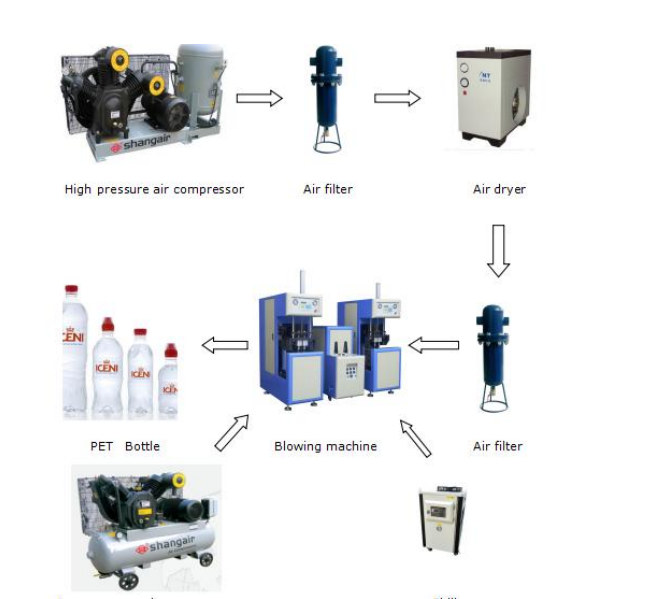
semi-automatic blow molding machine high-pressure air compressor | 0.6M3/3.0Mpa |
High-pressure gas storage tank | 0.6 m3 / 3.0 MPa |
Air-cooled dryer | 2.0 M3 / 3.0 Mpa |
air filter | 2.0 M3 / 3.0MPa |
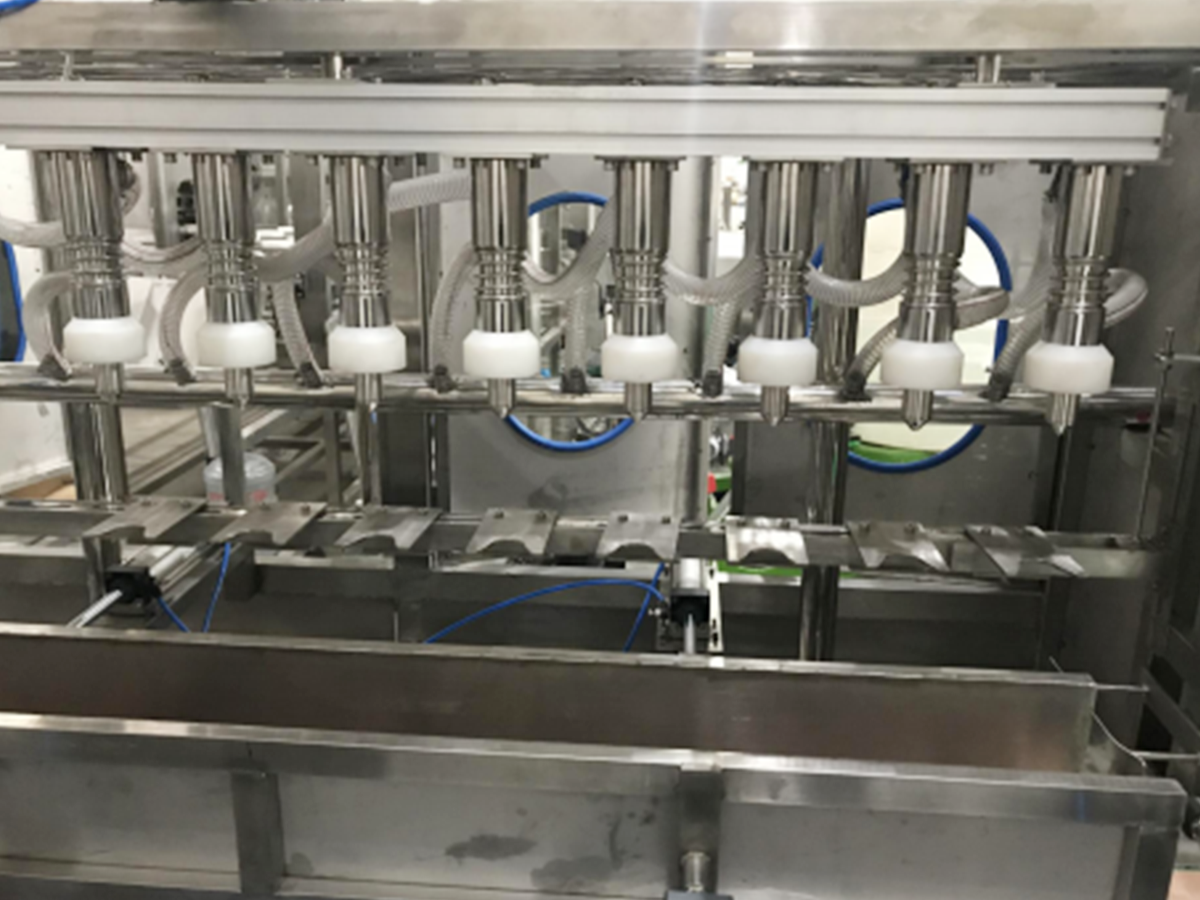
Filling and capping bottle capacity | 600 liters/hour (10 liters) |
Number of times to wash hair: | 6 times |
Filling head | 6 |
Sealing head | 1 |
Bottle conveyor belt height | 1080 mm |
Main motor | 3.7 kilowatts |
size | 3820x1500x2100mm |
weight | 1820 kg |
power supply | 380V or customized |
10L Bottled Water Production Line: Complete Guide to Equipment, Process, Applications and Customization
When I talk with customers about a 10L Bottled Water Production Line, one question usually comes first: “Can this line make the water, fill the bottles, and prepare the finished products for sale in one system?” The short answer is yes, but the real answer depends on the water source, required water quality, bottle design, production capacity, factory layout, and local regulations.
At Qingdao Yanhui Environmental Protection Technology Co., Ltd., I look at a bottled water project as a complete process rather than simply selling a filling machine. The water treatment section, storage tanks, bottle rinsing, filling, capping, labeling, and final packaging all need to work together. If one part is poorly matched, the whole production line can become difficult to operate.
Our company was established in 2015. We specialize in water treatment equipment and integrated engineering services, including research and development, system design, equipment manufacturing, installation, commissioning, operation, and maintenance. Based on the customer's water source and production requirements, we can design a suitable 10L bottled water production line instead of forcing every customer to use exactly the same configuration.
This guide explains how I normally approach a 10L bottled water project, what equipment is commonly included, how the process works, what affects the production cycle, and what customers should check before placing an order.
A 10L Bottled Water Production Line is an integrated system used to treat water and fill it into large 10-liter bottles for drinking-water applications. Compared with small bottle production, the larger bottle size changes the way we need to consider bottle handling, filling speed, packaging, storage, and transportation.
A complete line may include a raw water pretreatment system, water purification equipment, purified-water storage tank, ozone or other suitable disinfection equipment, bottle washing equipment, filling and capping equipment, labeling equipment, date coding equipment, and packaging equipment.
The exact configuration is not fixed. For example, a project using municipal water as the source may require a different treatment process from a project using well water, surface water, or another source. The water analysis is therefore one of the first things I ask for before recommending the equipment.
For many projects, the water treatment process can include several stages:
Raw water tank and feed pump
Quartz sand or multimedia filtration
Activated carbon filtration
Water softening or scale-control equipment when required
Cartridge filtration
Reverse osmosis system
Ultraviolet sterilization or ozone treatment
Purified-water storage tank
10L bottle rinsing system
10L bottle filling and capping machine
Labeling and coding equipment
Finished-product packaging system
Not every project needs all of these units. For example, if the source water has a suitable mineral profile and the final product is intended to retain certain minerals, the treatment process may be designed differently. If the product is purified water, reverse osmosis may be a major part of the treatment system.
WHO identifies reverse osmosis, ultrafiltration, microfiltration, and nanofiltration as important membrane processes in water treatment. The appropriate technology depends on the quality problem that needs to be addressed rather than simply choosing the most complicated system.WHO, Guidelines for Drinking-water Quality, Annex 5
That is why I do not recommend selecting a 10L water filling machine first and thinking about water treatment later. The product water requirements should guide the entire system design.
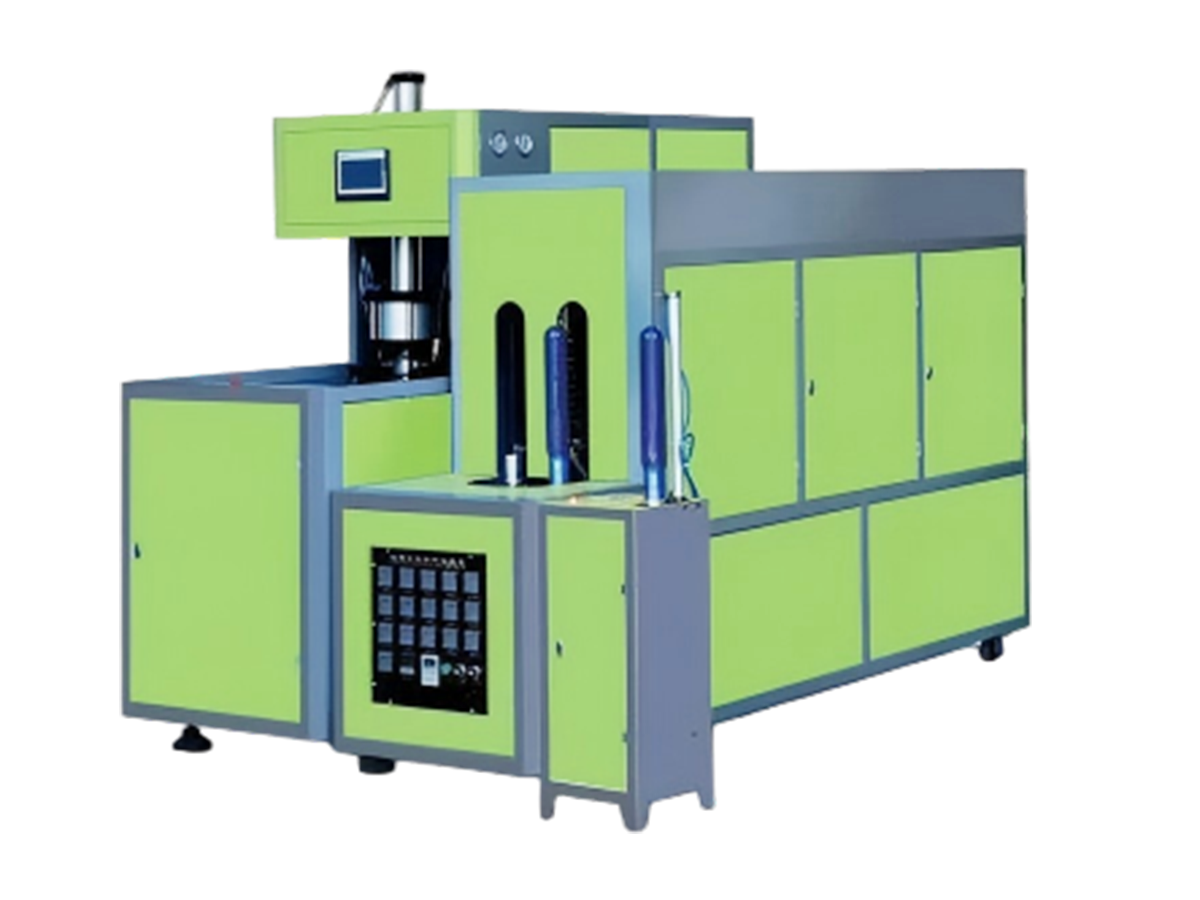
The basic working process is quite easy to understand. Raw water first enters the treatment section. After the unwanted particles, organic matter, hardness, dissolved salts, or other target substances are reduced according to the project requirements, the treated water is stored in a clean water tank. It then moves to the final filling section.
The general process can be described as:
Raw Water → Pretreatment → Filtration → RO or Other Treatment → Disinfection → Purified Water Tank → Bottle Rinsing → Filling → Capping → Labeling → Coding → Packaging → Finished Product
Raw water quality has a direct influence on the design of the equipment. Before I select the treatment equipment, I normally recommend testing important parameters such as turbidity, TDS, hardness, pH, iron, manganese, organic matter, microbial indicators, and other contaminants that may be relevant to the source.
For example, sand filtration can help reduce suspended particles, while activated carbon is commonly used to reduce certain organic compounds, chlorine, taste, and odor. If hardness is high, a softening or other scale-control approach may be considered.
Reverse osmosis, often called RO, is widely used when the project needs significant reduction of dissolved substances. In simple terms, water is pushed through a special membrane under pressure. Water passes through the membrane while many dissolved substances are rejected into a concentrated stream.
WHO notes that typical reverse-osmosis operating pressure can be around 15–50 bar depending on the application. The actual pressure for a specific project depends on the water quality, membrane type, temperature, recovery, and system design.
I do not recommend treating the pressure value as a universal setting. A properly designed system should be based on actual feed-water conditions and the selected membrane.
After the main purification stage, the water may pass through additional filtration or disinfection equipment before entering the clean-water tank. Depending on the product requirements, technologies such as ultraviolet treatment or ozone can be included.
FDA information on bottled water also lists processes such as reverse osmosis, absolute 1-micron filtration, distillation, and ozonation among treatment methods used for bottled water. The specific treatment depends on the water category and product requirements.
Once the water is ready, clean 10L bottles enter the filling area. Depending on the bottle design and line configuration, bottles can be rinsed, filled, and capped through an integrated or connected system.
The goal is not simply to fill 10 liters of water into a bottle. The equipment needs to control filling accuracy, bottle positioning, cap placement, contact with the product, and production hygiene.
After capping, the bottles can move through labeling, date coding, inspection, and packaging. Large bottles are heavier than small bottles, so the conveyor and handling system should be designed for the actual bottle weight and shape.
When customers ask me for the “complete machine,” I normally explain that a bottled water line is actually a combination of several systems. The final configuration depends on the project, but the following table shows a common structure.
| Production Section | Typical Equipment | Main Purpose |
|---|---|---|
| Raw Water Section | Raw water tank, feed pump | Receive and supply source water |
| Pretreatment | Sand filter, activated carbon filter, softener | Reduce particles, chlorine, hardness and related impurities |
| Fine Treatment | Cartridge filter, RO system, UF or other membrane system | Improve water quality according to the target specification |
| Disinfection | UV, ozone or suitable disinfection equipment | Control microbial risks |
| Water Storage | Purified water tank | Provide stable water supply for filling |
| Bottle Handling | Bottle conveyor and bottle positioning system | Move and position bottles |
| Filling | 10L filling machine | Fill treated water into bottles |
| Capping | Automatic or semi-automatic capper | Seal filled bottles |
| Labeling | Labeling machine | Apply product labels |
| Coding | Inkjet or other coding system | Print production or batch information |
| Packaging | Film wrapping or other packaging equipment | Prepare finished products for handling and shipment |
Source note: The table above is a practical equipment configuration rather than a mandatory standard. Final equipment selection should be based on water analysis, product category, bottle design, production capacity, local regulations, and factory conditions. WHO emphasizes a whole-system approach to drinking-water safety, while FDA requires bottled-water processing and bottling to be conducted under sanitary conditions for products within its regulatory scope.
There is no single technical specification that fits every 10L bottled water factory. In my experience, the most important parameters to confirm before equipment selection are the following:
Raw water source
Raw water analysis report
Required finished-water quality
10L bottle dimensions and material
Required production capacity
Number of working hours per day
Factory floor space
Available electrical power
Available water pressure
Preferred filling method
Label type and bottle design
Packaging requirements
Destination-country regulations
For a customer who needs a complete project, I normally prefer to confirm these points before preparing the final technical proposal. This avoids the common situation where the customer purchases a filling machine and later discovers that the water treatment system, bottle size, or factory layout does not match.
Production capacity is one of the first numbers customers look at, but I always recommend looking at the complete production process rather than focusing only on the filling machine speed.
For example, a filling machine may theoretically handle a certain number of bottles per hour, but the actual output can be affected by bottle feeding, rinsing, capping, labeling, operator handling, water treatment capacity, tank volume, cleaning procedures, and downstream packaging.
For this reason, I normally use the term planned production capacity rather than promising a single output number before the complete configuration is confirmed.
| Project Factor | What I Check | Why It Matters |
|---|---|---|
| Water Source | Municipal, well, surface or other source | Determines pretreatment and purification requirements |
| Water Quality | TDS, hardness, turbidity, pH, microbial and chemical indicators | Helps determine the treatment process |
| Bottle | 10L size, neck, material, dimensions and weight | Affects rinsing, filling, capping and conveying |
| Target Output | Bottles per hour or liters per day | Determines equipment capacity |
| Factory Layout | Available length, width, height and service space | Affects equipment arrangement |
| Product Standard | Destination market and applicable regulations | Determines quality and labeling requirements |
Source note: WHO's current drinking-water guidance focuses on managing risks from source to consumer and supports health-based targets and risk-based management. Codex CXS 227-2001 provides a general standard for bottled or packaged drinking waters other than natural mineral waters.
In bottled water production, hygiene cannot be treated as an afterthought. The clean-water side of the system, storage tank, pipes, valves, filling equipment, bottle-contact surfaces, and working environment all need suitable cleaning and sanitation procedures.
FDA guidance states that bottled water must be processed, bottled, held, and transported under sanitary conditions within its regulatory framework. It also requires quality-control practices and testing of source and finished water for relevant contaminants.
That is why I pay attention not only to the water treatment equipment but also to the filling area, material selection, drainage, equipment accessibility, cleaning points, and operating procedures.
A good production line should make routine cleaning easier, not harder.
The 10L format is useful when customers need more water per container but still want a manageable packaged-water product. It can be used in several commercial and institutional markets.
A 10L bottled water production line can be used by water companies producing packaged drinking water for local distribution. Depending on local market demand, the bottles can be supplied to households, offices, shops, restaurants, hotels, and other customers.
Hotels and resorts often need reliable drinking-water supplies for guests and staff. A larger bottle can be useful for locations where frequent small-bottle handling is inconvenient.
Office buildings, factories, schools, and other facilities may use large-volume bottled water as part of their daily drinking-water supply. The exact packaging model depends on local market habits and distribution systems.
For locations where centralized drinking-water infrastructure is limited, a packaged-water production system can provide another supply option. The design must still start with the local water source and applicable drinking-water requirements.
Food-service businesses may require packaged water for direct consumption or customer service. In such cases, consistent product quality, clean packaging, and reliable delivery become important parts of the business model.
The actual use of a 10L bottled water production line should always be considered together with local regulations, source-water conditions, packaging rules, and market demand.
One part of our work that I consider especially important is the project process. A water production line is not something I recommend designing from a product catalog alone.
We first discuss the expected output, bottle specifications, water source, finished-water requirements, factory conditions, and destination market.
If the customer has a water analysis report, I use it as an important reference for treatment-system design. If the report is incomplete, additional testing may be recommended before final equipment selection.
Based on the water quality and target product, we determine the suitable pretreatment, membrane treatment, filtration, disinfection, storage, and other process stages.
The goal is not to add as many machines as possible. The goal is to use a reasonable process that addresses the actual water-quality problems.
After the water treatment section is confirmed, we match the filling system with the 10L bottle. Bottle dimensions, neck size, cap type, label style, production capacity, and packaging requirements all influence the equipment selection.
After the technical configuration is confirmed, equipment manufacturing and assembly are arranged according to the project plan. For customized systems, the production schedule depends on the complexity of the process and the selected components.
Before shipment, the equipment is assembled and checked. Depending on the project, we carry out equipment commissioning, functional inspection, piping checks, electrical checks, and other quality-control activities.
Technical documents and operating information are prepared according to the project requirements. Transportation can be arranged by road, sea, or multimodal transport depending on the destination and equipment dimensions.
For larger equipment, we can use reinforced wooden cases, pallets, or containerized packaging. The packaging method is selected according to the equipment size, weight, structure, and transportation route.
There is no universal production time for every 10L bottled water production line. Standard equipment generally has a shorter delivery period, while customized projects require additional time for process design, equipment configuration, component confirmation, manufacturing, testing, and preparation.
Payment arrangements can be agreed upon in the project contract. Depending on the project, the structure may include an advance payment, shipment payment, and final balance.
I believe this approach is more practical than giving every customer the same delivery promise before the project details are confirmed.
When customers choose a supplier for a complete water production line, the question should not only be “How much does the machine cost?” The more important question is whether the supplier understands the relationship between water treatment, filling equipment, factory conditions, installation, commissioning, and long-term operation.
At Qingdao Yanhui Environmental Protection Technology Co., Ltd., our main business is water treatment equipment and integrated engineering. We have been working in this field since 2015, covering research and development, design, manufacturing, installation, commissioning, operation, and maintenance.
This experience allows us to look at the project from the water-treatment side as well as the equipment side.
We do not assume that every customer needs the same RO capacity, filter configuration, tank size, or filling machine. We can customize the system according to water quality, required water production, bottle specifications, site conditions, and project budget.
A customer can work with us on the water treatment system and related production-line equipment instead of coordinating several unrelated suppliers for every part of the project.
Our approach is to match the equipment with the real project. If a process does not add value to the customer's application, I would rather discuss a simpler configuration than add unnecessary equipment.
Before shipment, equipment is assembled, commissioned, and inspected according to the project requirements. Technical documents and operating information can also be provided for installation and operation.
For export projects, equipment can be prepared for road transportation, sea transportation, or multimodal logistics. Packaging is selected according to the equipment dimensions and transportation conditions.
For me, a successful project is not simply equipment leaving the factory. It is equipment that arrives safely, can be installed correctly, and can be operated by the customer's team after commissioning.
A complete line may include raw water pretreatment, purification equipment, storage tanks, disinfection equipment, bottle rinsing, 10L water filling, capping, labeling, coding, conveying, and packaging equipment. The exact configuration depends on the customer's water source, water quality, production capacity, bottle design, and local requirements.
Yes. We can customize the system according to raw-water quality, required production capacity, 10L bottle specifications, factory layout, electrical conditions, treatment requirements, and destination market.
Not necessarily. Whether RO is required depends on the source-water quality and the target product specification. If dissolved salts or other substances need substantial reduction, RO may be appropriate. If the source water has different treatment requirements, another process may be more suitable.
The system can be designed for different water sources, including municipal water and other suitable raw-water sources. A water analysis report is recommended because the treatment process should be based on actual water quality rather than simply the name of the water source.
Production capacity depends on the filling equipment, water treatment capacity, working hours, bottle handling system, and required operating conditions. We normally confirm the target output in bottles per hour or liters per day before selecting the equipment configuration.
Yes. The treatment system can be configured for purified drinking water according to the required product specification. Reverse osmosis, filtration, and suitable disinfection processes can be combined according to the raw-water analysis and target quality.
It can be configured for different bottled-water applications, but mineral water has specific definitions in different markets. For example, FDA defines mineral water in the United States based partly on its underground source and total dissolved solids, while other markets may use different rules. The final process and product labeling should follow the regulations of the destination country.
The filling system can be designed according to the customer's bottle material, bottle shape, neck size, cap type, and dimensions. Before final equipment selection, I recommend providing the bottle drawings or samples whenever possible.
The production period depends on whether the project uses standard equipment or customized equipment. Standard configurations can generally be arranged more quickly, while customized projects require additional time for process design, configuration confirmation, manufacturing, testing, and delivery preparation.
Equipment can be transported by road, sea, or multimodal transportation. Depending on equipment dimensions and the destination, we can use wooden cases, pallets, or reinforced container packaging to protect the equipment during transportation.
Depending on the project, we can provide technical documents, equipment information, operating instructions, and other project-related files required for installation, commissioning, and operation.
I recommend starting with five basic pieces of information: raw-water source, water analysis report, required finished-water quality, expected production capacity, and 10L bottle specifications. With these details, we can develop a more practical equipment configuration and project proposal.
A 10L bottle may look simple, but a reliable bottled water production line involves much more than a filling machine. The water source, treatment process, storage, bottle handling, filling, capping, labeling, packaging, hygiene, factory layout, and delivery all need to fit together.
My approach is straightforward: first understand the water, then understand the product, and finally build the equipment around the actual production conditions.
For a new bottled water plant, this can help avoid unnecessary equipment and reduce problems during installation. For an existing water company, a customized 10L Bottled Water Filling Line can be designed around current production needs and available factory space.
International guidance also supports this system-based way of thinking. The latest WHO drinking-water guidelines provide a framework for managing drinking-water risks from source to consumer, while Codex provides a general standard for bottled or packaged drinking waters other than natural mineral waters.
At Qingdao Yanhui Environmental Protection Technology Co., Ltd., we combine water-treatment engineering with equipment manufacturing and project services. If you are planning a 10L Bottled Water Production Line, we can evaluate the water source, production target, bottle specifications, site conditions, and treatment requirements before preparing the equipment configuration.
Recommended project information to send us:
Raw water source
Raw water analysis report
Required production capacity
10L bottle drawing or sample
Target drinking-water quality
Factory dimensions or layout
Destination country
Preferred automation level
With these details, the proposed system can be designed around your actual project instead of relying on a generic equipment list.
World Health Organization, Guidelines for Drinking-water Quality: Fourth Edition Incorporating the First, Second and Third Addenda, 2026.
World Health Organization, Treatment Methods and Performance – Membrane Processes.
U.S. Food and Drug Administration, Bottled Water Everywhere: Keeping it Safe.
U.S. Food and Drug Administration, FDA Regulates the Safety of Bottled Water Beverages.
FAO/WHO Codex Alimentarius, CXS 227-2001 General Standard for Bottled/Packaged Drinking Waters.
ISO, ISO 22000 Food Safety Management Systems.
This website uses cookies to ensure you get the best experience on our website.
 Portugues
 Pусский
 Français
 العربية
 ไทย
ไทย Indonesia
 Melayu
 Tiếng Việt
 中文
中文 қазақ
қазақ עִברִית
 မြန်မာ
 ພາສາລາວ
 Filipino
 o'zbek
 Кыргызча
 тоҷикӣ
 ខ្មែរ
ខ្មែរ Türkmenler



 Phone
Phone