
 Portugues
 Pусский
 Français
 العربية
 ไทย
ไทย Indonesia
 Melayu
 Tiếng Việt
 中文
中文 қазақ
қазақ עִברִית
 မြန်မာ
 ພາສາລາວ
 Filipino
 o'zbek
 Кыргызча
 тоҷикӣ
 ខ្មែរ
ខ្មែរ Türkmenler


Seawater Desalination Plant & Large-Scale Project Construction
When a Seawater Desalination project is large enough to support a community, industrial site, island, coastal development, or municipal water network, the equipment itself is only one part of the job. In my experience, the real work starts much earlier: understanding the seawater, confirming the required freshwater quality, calculating the daily production capacity, selecting the right pretreatment process, designing the reverse osmosis system, and making sure the whole plant can operate steadily after installation.
At Qingdao Yanhui Environmental Protection Technology Co., Ltd., we have focused on water treatment engineering since 2015. Our work covers seawater desalination, high-salinity wastewater treatment, concentration and purification, and industrial wastewater treatment. For a large-scale seawater desalination plant, we provide more than a single machine. We can support the project from research and process design through equipment manufacturing, installation, commissioning, operation, and maintenance.
I do not treat every seawater desalination project as a standard package. Seawater conditions can be very different from one location to another. Temperature, salinity, turbidity, algae, suspended solids, organic matter, seasonal changes, intake conditions, available space, electricity supply, freshwater requirements, and brine disposal arrangements all affect the final design. That is why I prefer to start with the actual project conditions and then build the system around them.
A modern seawater desalination plant normally uses several treatment stages rather than relying on reverse osmosis alone. Pretreatment protects the membranes, high-pressure equipment supplies the pressure needed for separation, reverse osmosis membranes remove dissolved salts, and post-treatment adjusts the produced water for its final use. Depending on the project, the plant can also include automatic control, energy recovery, chemical dosing, remineralization, disinfection, storage, and other supporting systems.
This page explains how I approach large-scale seawater desalination project construction, what the main equipment does, where these plants are used, how we manufacture and deliver them, and what buyers should check before placing an order.
1. What Is a Large-Scale Seawater Desalination Plant?
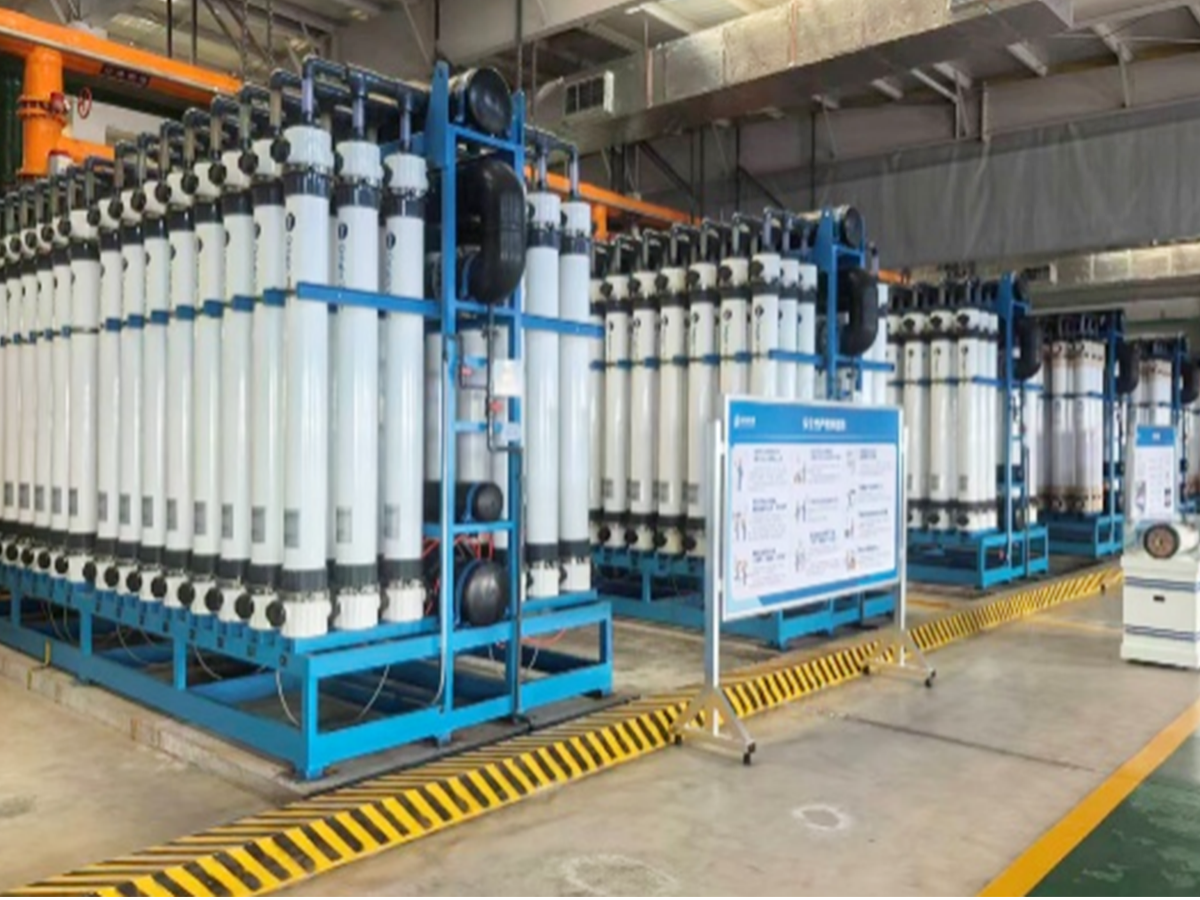
In simple terms, a seawater desalination plant takes seawater and turns part of it into freshwater by removing dissolved salts and other unwanted substances. For large projects, the process is usually organized as a complete treatment system rather than a standalone desalination machine.
The most common membrane technology for modern seawater desalination is reverse osmosis, or SWRO. WHO describes reverse osmosis as a process in which pressure is applied to the higher-concentration side of a semipermeable membrane, forcing water through the membrane while retaining much of the dissolved material. WHO also identifies reverse osmosis as a common application for seawater and brackish-water desalination.
The basic plant normally contains an intake system, pretreatment equipment, high-pressure pumps, reverse osmosis membrane assemblies, energy recovery equipment where appropriate, post-treatment, chemical dosing, electrical and control systems, freshwater storage or transfer equipment, and a concentrate management system.
For a large project, I also look at the parts that are sometimes ignored during the initial quotation. These include pipe routing, equipment access, foundation requirements, maintenance space, spare parts, instrumentation, cleaning arrangements, drainage, ventilation, electrical load, operator access, and future expansion. A plant may look good on a drawing but still be difficult to maintain if these details are not considered early.
The size of the global desalination industry also shows why plant engineering matters. According to the International Energy Agency, around 21,000 desalination plants operate in about 150 countries, and desalination demand is expected to continue increasing. The IEA also reports that reverse osmosis and other membrane technologies now account for more than 80% of global installed desalination capacity.
| Indicator | Reported figure | Source |
|---|---|---|
| Desalination plants operating worldwide | About 21,000 | International Energy Agency |
| Countries with desalination plants | About 150 | International Energy Agency |
| Global share of membrane-based desalination capacity | More than 80% | International Energy Agency, 2026 |
| Largest modern desalination plants | Around 1 million m³/day | International Energy Agency, 2026 |
Source: International Energy Agency, “Energy and Water” and “Wired for water: How electrification is transforming desalination,” 2026. Figures are global industry-level references and should not be interpreted as the design capacity of an individual Yanhui project.
2. How Does a Seawater Desalination Plant Work?
The easiest way to understand a seawater reverse osmosis plant is to follow the water from the sea to the final freshwater outlet.
Seawater Intake
The first step is taking seawater into the plant. The intake design depends heavily on the site. A coastal industrial plant may use an open-ocean intake, while another project may use a different intake arrangement depending on local geography and environmental requirements.
At this stage, I pay attention to seasonal seawater changes rather than looking at only one laboratory sample. Storms, tides, algae growth, suspended solids, and changes in temperature can affect downstream treatment. The intake system therefore needs to be designed around the real source-water conditions.
Pretreatment
Pretreatment is one of the most important parts of a Seawater Desalination System. The purpose is not simply to make the water look cleaner. It is mainly there to protect the reverse osmosis membranes and keep the system stable.
Depending on the raw water, pretreatment may include screening, coagulation, clarification, media filtration, ultrafiltration, cartridge filtration, chemical dosing, or other processes. The exact combination is selected after reviewing the seawater quality and required operating conditions.
I always tell customers that saving money on pretreatment can become expensive later. A cheaper pretreatment system may allow more fouling or scaling to reach the RO membranes, increasing cleaning frequency and reducing membrane performance.
High-Pressure Pumping
After pretreatment, the water is sent to the high-pressure section. Reverse osmosis requires enough pressure to overcome the natural osmotic pressure of the saline water and drive water through the membrane.
WHO reports typical reverse osmosis operating pressures in the range of approximately 15–50 bar depending on the application. Seawater systems normally operate toward the higher-pressure side of this range because seawater has much higher salinity than many brackish-water sources.
Reverse Osmosis Separation
Inside the RO pressure vessels, water passes through semipermeable membranes. A portion becomes permeate, which is the treated water, while the remaining stream becomes concentrated seawater, often called brine or concentrate.
This is the heart of the desalination process, but it should not be viewed as an isolated component. Pump selection, membrane selection, pretreatment quality, recovery, temperature, salinity, cleaning procedures, and control settings all influence actual performance.
Post-Treatment
RO permeate is not automatically ready for every final application. If the water is intended for drinking water supply, further treatment may be needed to meet local requirements. Depending on the destination, post-treatment may include remineralization, pH adjustment, disinfection, blending, or other conditioning.
WHO specifically notes that desalinated water can have low concentrations of minerals such as calcium and magnesium and may need stabilization before distribution. For potable-water projects, I therefore recommend designing the final treatment according to the applicable local drinking-water requirements rather than using one fixed formula for every country.
Concentrate Management
Desalination does not make the salt disappear. The removed salts remain in the concentrate stream. A responsible project therefore needs to consider concentrate collection and discharge from the beginning.
The appropriate solution depends on local environmental regulations, coastal conditions, discharge location, dilution opportunities, and project requirements. The IEA also highlights brine management as an issue that needs careful attention because poorly managed concentrated brine can affect ecosystems.
3. Main Features of Our Seawater Desalination Plant
When I design a Large-Scale Seawater Desalination System, I focus on practical operation rather than simply adding equipment. The system needs to be stable, understandable to operators, accessible for maintenance, and suitable for the local water source.
Corrosion-Resistant Construction
Seawater is a difficult environment for equipment because of its salt content. Material selection therefore matters from the beginning. Depending on the equipment position and water chemistry, corrosion-resistant materials and suitable coatings or components may be selected for pumps, piping, pressure vessels, valves, fasteners, tanks, and other wetted parts.
I do not recommend choosing materials only by price. The right material depends on where it is used, what fluid it contacts, pressure, temperature, chemical exposure, maintenance conditions, and expected service life.
Stable Operation
Large plants are expected to operate for long periods, so stability is more important than simply achieving a short-term laboratory result. Stable pretreatment, proper instrumentation, controlled pressure, reliable pumps, membrane monitoring, and regular maintenance all contribute to steady production.
High Automation
A modern desalination plant can use PLC-based control, online pressure monitoring, flow meters, conductivity or salinity monitoring, tank-level control, automatic alarms, pump protection, chemical dosing control, and other instrumentation.
Automation does not mean that an operator is no longer needed. It means that routine control can be made easier and abnormal conditions can be identified earlier. For a large plant, this can make a real difference in day-to-day operation.
Flexible Customization
There is no single seawater desalination plant that fits every site. I can customize the treatment configuration according to raw-water quality, freshwater production capacity, required product-water quality, installation space, electricity conditions, operating environment, and project budget.
Modular Project Design
Where suitable, a large plant can be divided into treatment trains or modules. This makes equipment arrangement, maintenance, future expansion, and capacity planning easier. The final layout depends on the project rather than following a fixed template.
| Design factor | What we normally review | Why it matters |
|---|---|---|
| Raw seawater | Salinity, temperature, turbidity, suspended solids, organics, algae | Determines pretreatment and RO design |
| Freshwater capacity | Daily production requirement and peak demand | Determines plant size and number of treatment trains |
| Product-water quality | Industrial, process, utility, or potable-water requirements | Determines post-treatment requirements |
| Site conditions | Available area, elevation, access, climate, power supply | Affects layout, pumps, piping, and installation |
| Concentrate discharge | Discharge location and applicable environmental requirements | Influences brine management design |
Source: Engineering design framework based on standard seawater reverse osmosis process considerations and WHO desalination guidance. Site-specific values must be confirmed through water analysis, process design, and applicable local regulations. WHO emphasizes source-water management, treatment, final-water management, and risk assessment for desalinated drinking water.
4. Energy Use and Technical Performance: What Should Buyers Really Compare?
Energy consumption is one of the first questions I receive from customers planning a large seawater desalination project. It is also one of the areas where I recommend avoiding simple comparisons between two suppliers.
Two systems may have the same nominal water capacity but different seawater temperature, salinity, recovery, pretreatment configuration, pump efficiency, membrane arrangement, and energy-recovery equipment. Those differences can affect actual power consumption.
The U.S. Department of Energy reported a current typical energy intensity of about 3.3 kWh/m³ for U.S. seawater reverse osmosis systems in its 2017 bandwidth study, including energy recovery. The same study used 2.7 kWh/m³ for the RO unit operation at the Carlsbad facility and 4.0 kWh/m³ as a representative value for a seawater RO unit at 50% recovery and 35,000 ppm TDS. These figures are useful benchmarks, not guaranteed values for every plant.
More recently, the IEA reported that seawater reverse osmosis systems, including intake, treatment, brine disposal, and controls, typically use around 9–22 MJ/m³, equivalent to approximately 2.5–6 kWh/m³, depending on plant conditions and technology. The IEA also notes that modern state-of-the-art plants can require less energy.
| Reference | Technology / scope | Energy figure | Important note |
|---|---|---|---|
| U.S. Department of Energy | Seawater RO, current typical U.S. system | About 3.3 kWh/m³ | Includes energy recovery; based on 2016 U.S. municipal potable-water production analysis |
| U.S. Department of Energy | Carlsbad RO unit operation | About 2.7 kWh/m³ | RO unit operation figure reported by the study |
| U.S. Department of Energy | Representative seawater RO unit | About 4.0 kWh/m³ | Based on 50% recovery and 35,000 ppm TDS |
| International Energy Agency | Seawater RO, broader system scope | About 2.5–6 kWh/m³ | Includes core desalination and other steps such as intake, treatment, brine disposal and controls |
Sources: U.S. Department of Energy, “Bandwidth Study on Energy Use and Potential Energy Savings Opportunities in U.S. Seawater Desalination Systems”; International Energy Agency, 2026 desalination analysis. The values are reference ranges and should not be used as a project guarantee without a site-specific process calculation. :
For this reason, when I prepare a technical proposal, I prefer to show customers the assumptions behind the performance figures. If the customer provides seawater analysis, required production, operating temperature, recovery target, and final-water requirements, the design can be much more meaningful than a simple statement such as “low energy consumption.”
5. Where Can a Large-Scale Seawater Desalination Plant Be Used?
A large-scale seawater desalination plant is useful wherever a dependable freshwater source is needed and conventional freshwater resources are limited, unreliable, or too far away.
Municipal Water Supply
Coastal cities and water-stressed regions can use desalinated seawater as part of their municipal water supply. For potable-water applications, the complete treatment chain must be designed around the relevant local drinking-water regulations and health requirements.
WHO's current drinking-water guidance provides a risk-management framework for protecting public health and supporting national drinking-water regulations. For desalinated drinking water, WHO also recommends attention to source-water quality, treatment performance, final-water management, and monitoring.
Island Water Supply
Islands often face a simple problem: there may be plenty of seawater but not enough reliable freshwater. A properly designed desalination plant can provide a local freshwater source without depending entirely on water transported from elsewhere.
Coastal Hotels and Resorts
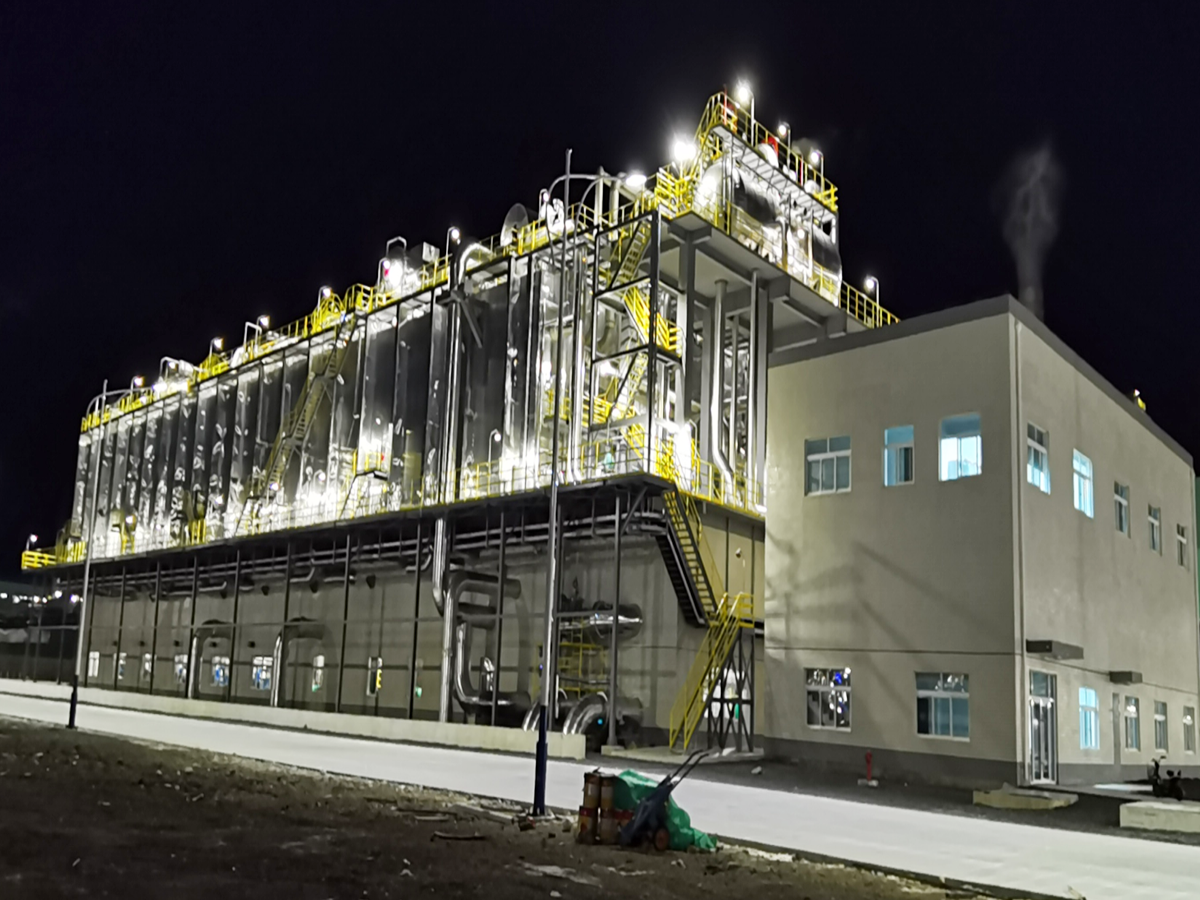
Hotels and resorts need water every day for guests, kitchens, cleaning, cooling systems, landscaping, and other operations. For remote coastal properties, a dedicated seawater desalination system can reduce dependence on limited local freshwater resources.
Industrial Production
Industrial plants can require large quantities of treated water for process use, boiler systems, cooling, washing, and other purposes. The exact water-quality requirement varies significantly by industry, so the desalination system should be matched to the actual process rather than assuming that all industrial users need the same water.
Ships and Offshore Platforms
Marine applications are another natural use for seawater desalination. Ships, offshore platforms, and other marine facilities can require freshwater while operating far from conventional municipal supplies. Space, vibration, corrosion, power availability, and maintenance access become particularly important design considerations in these environments.
Fisheries and Aquaculture
Fishery and aquaculture projects may need treated freshwater for specific production, cleaning, processing, or support operations. The actual treatment configuration depends on the species, process, source-water quality, and final water requirements.
The IEA's 2026 analysis shows that desalination is increasingly used across municipal and industrial applications, including refining, power generation, mining, irrigation, and island water supply. It also notes that among the countries and territories with the highest desalination production per person, many are small islands.
6. How We Design and Build a Large Desalination Project
For me, a good desalination project starts with questions rather than equipment.
Step 1: Understand the Water Source
We first review available seawater analysis. If possible, I want to know salinity or TDS, temperature, turbidity, suspended solids, pH, hardness, organic matter, microbial conditions, and other parameters that may influence pretreatment and membrane operation.
If the project is large, seasonal information is also valuable. Designing a plant around an unusually clean seawater sample can create problems later if the source becomes more turbid or algae-rich during another season.
Step 2: Confirm the Required Water
Next, we confirm how much water the customer actually needs. A project may require a continuous daily flow, a peak flow, storage for several hours, or several independent production trains. We also confirm whether the final water is for drinking, industrial production, cleaning, cooling, boiler feed, or another use.
Step 3: Build the Process Flow
We then select the appropriate process sequence. A typical seawater RO plant may follow a route such as:
Seawater intake → Pretreatment → Cartridge filtration → High-pressure pumping → RO membrane system → Post-treatment → Disinfection → Freshwater storage or distribution
The actual flow can be more complicated depending on the water source and project requirements.
Step 4: Equipment Selection
Equipment selection covers pumps, membranes, pressure vessels, filters, dosing systems, valves, instruments, electrical cabinets, PLC controls, tanks, piping, energy-recovery equipment, and supporting components.
For large systems, I also consider redundancy. If the plant must continue operating when one train is undergoing maintenance, the system can be arranged with multiple treatment trains rather than one oversized train.
Step 5: Manufacturing and Assembly
Once the design is confirmed, equipment is manufactured and assembled according to the approved configuration. Piping, electrical components, instruments, pumps, filters, membrane housings, and control systems are checked against the design requirements.
Step 6: Factory Inspection and Testing
Before delivery, we complete assembly checks, equipment inspection, control-system checks, and commissioning-related tests as applicable. Technical documents and operating instructions are prepared so the customer has the information needed for installation and operation.
Step 7: Installation and Commissioning
Depending on the contract, our engineering service can include installation guidance, commissioning, operator support, and technical training. During commissioning, operating parameters are checked and adjusted according to actual site conditions.
Step 8: Operation and Maintenance
A desalination plant needs ongoing care. Membranes need monitoring and cleaning when required. Filters need replacement or backwashing according to their type. Pumps, valves, instruments, chemical systems, and electrical equipment also require routine inspection.
This is why I see the project as a complete life cycle rather than a simple equipment sale.
7. Manufacturing, Delivery, Packaging and Project Support
Production time for a seawater desalination plant depends on the project size and equipment configuration. A standard equipment package can normally move through production more quickly than a customized plant because the engineering work and component selection are more straightforward. A large customized project requires additional time for process design, drawing approval, procurement, fabrication, assembly, testing, and commissioning preparation.
I prefer to confirm the delivery schedule after the technical configuration has been finalized rather than giving a fixed production time before the design is clear. This gives the customer a more realistic project schedule.
Factory Assembly
Before shipment, we assemble and inspect the equipment according to the project requirements. Where practical, equipment can be preassembled into modules to reduce installation work at the customer's site.
Technical Documents
Depending on the project scope, documentation can include equipment specifications, process flow information, equipment lists, electrical information, operating instructions, maintenance guidance, inspection records, and other technical documents required by the contract.
Payment Terms
For project-based equipment, payment is normally agreed in the commercial contract. Depending on the project, terms may be structured around an advance payment, progress or shipment payment, and final payment. The exact arrangement should be confirmed before production begins.
Transportation
Large Desalination Equipment may be transported by road, sea, or multimodal transportation. The final method depends on the destination, equipment dimensions, weight, delivery schedule, and local logistics conditions.
Packaging
Packaging is selected according to the equipment. Depending on size and shipping requirements, we can use reinforced wooden cases, pallets, protective materials, or containers. Large components need additional fixing and protection so that pumps, control cabinets, instruments, piping, and other parts remain secure during handling and transportation.
For international projects, shipping preparation is also part of the planning process. Equipment dimensions, lifting points, container loading, customs documentation, destination unloading, and installation access should be considered before final packing.
8. Why Work With Qingdao Yanhui Environmental Protection Technology Co., Ltd.?
I believe the most useful thing a water-treatment supplier can provide is not simply a machine. It is the ability to understand the customer's water problem and turn it into a workable engineering solution.
Qingdao Yanhui Environmental Protection Technology Co., Ltd. was established in 2015. Our business focuses on seawater desalination, high-salinity wastewater treatment, concentration and purification, and industrial wastewater treatment. This gives us experience across different types of difficult water rather than limiting our work to one standard product.
Engineering-Based Customization
We design equipment around project conditions. Water quality, capacity, site conditions, final-water requirements, automation level, materials, transportation, and maintenance requirements can all be considered during the design stage.
Complete Project Service
Our service scope covers R&D, design, manufacturing, installation, commissioning, operation, and maintenance. For customers who need more than equipment supply, this integrated approach can make communication between design, manufacturing, and site installation easier.
Practical Communication
I prefer technical communication that is clear and useful. If a proposed configuration is unnecessary for a particular project, I would rather explain why than simply add more equipment. If a water analysis shows a potential membrane-fouling problem, that should be discussed before the order rather than after the plant is running.
Focus on Long-Term Operation
A desalination plant is a long-term investment. The purchase price is only one part of the total cost. Energy use, membrane replacement, chemical consumption, cleaning frequency, spare parts, maintenance labor, downtime, and concentrate management can all affect the real operating cost.
That is why our design approach considers the complete operating process. We want the equipment to be practical not only on the day it is delivered, but also after months and years of operation.
For drinking-water projects, we also encourage customers to check the applicable national and local requirements. WHO's latest drinking-water guidance emphasizes health-based targets, risk management, monitoring, and independent surveillance rather than treating water quality as a single laboratory test.
9. Frequently Asked Questions About Large-Scale Seawater Desalination
What technology is commonly used for a large seawater desalination plant?
Reverse osmosis is currently the most common technology for new membrane-based seawater desalination projects. It uses high pressure to push seawater through semipermeable membranes and separate freshwater from concentrated salts. Thermal desalination technologies such as MSF and MED are also used in certain regions and project conditions. The best choice depends on energy availability, water quality, project scale, local conditions, and technical requirements.
Can the seawater desalination plant be customized?
Yes. We customize the system according to raw-water quality, required freshwater capacity, final-water quality, site conditions, equipment layout, automation requirements, and other project conditions. Customization can include pretreatment, RO trains, pumps, materials, control systems, post-treatment, storage, and other supporting equipment.
What information do you need for a quotation?
The most useful information includes the seawater analysis, required freshwater production capacity, intended water use, preferred operating schedule, installation location, available power supply, site space, and any local water-quality or environmental requirements. If some information is not available, we can first discuss the basic project conditions and identify what needs to be confirmed.
How long does manufacturing take?
There is no single production period for every project. Standard equipment generally has a shorter delivery cycle, while customized Large-Scale Desalination Plants require additional time for engineering design, equipment selection, procurement, fabrication, assembly, inspection, and testing. We confirm the actual schedule after the technical configuration is approved.
What is the energy consumption of seawater reverse osmosis?
It varies by project. As reference points, the U.S. Department of Energy reported approximately 3.3 kWh/m³ as a current typical energy intensity for U.S. seawater RO systems in its study, while the IEA's broader 2026 analysis gives approximately 2.5–6 kWh/m³ for seawater RO depending on system scope and technology. A project-specific calculation is required for a reliable quotation.
Does seawater desalination remove all salts?
Reverse osmosis removes a very high proportion of dissolved salts, but the exact water quality depends on membrane selection, operating conditions, feed-water quality, recovery, and system design. The final water may also require post-treatment depending on its intended use.
Is the RO water ready for drinking immediately?
Not necessarily. Potable-water projects need a complete treatment and water-safety design. Depending on the source and local regulations, desalinated water may require stabilization, remineralization, disinfection, blending, or other post-treatment. WHO specifically discusses the need to manage desalinated drinking water for chemical and microbial safety and to consider the characteristics of the final water.
How is the concentrated seawater handled?
The concentrate, or brine, must be managed according to the site and applicable environmental requirements. Options can involve controlled discharge or other approved concentrate-management approaches. The correct method depends on local regulations, marine conditions, discharge location, dilution, and project design.
Can you provide installation and commissioning?
Yes. Our integrated engineering service can cover installation guidance, commissioning, operation support, and maintenance according to the project contract. For large plants, commissioning is particularly important because actual seawater conditions may require operating parameters to be fine-tuned after startup.
Can the equipment be shipped internationally?
Yes. International delivery can be arranged using road transportation, sea freight, or multimodal transportation depending on the destination and equipment size. Packaging can be selected as wooden cases, pallets, reinforced containers, or other suitable methods to protect the equipment during transportation.
10. A Practical Approach to Your Next Seawater Desalination Project
If you are planning a large-scale seawater desalination plant, I recommend starting with the water and the application rather than starting with a product model.
Tell us where the seawater comes from, how much freshwater you need per day, what you intend to use the water for, and what water-quality requirements you have. If a seawater analysis is available, send it together with the project information. From there, we can evaluate the pretreatment requirements, RO configuration, expected operating conditions, equipment arrangement, automation level, and other project details.
For a coastal hotel, the design may be quite different from a municipal water project. For an industrial plant, the final-water specification may be more important than the nominal capacity. For an island project, transportation, installation space, energy supply, spare parts, and operator training may become major considerations. For an offshore platform, corrosion resistance, compact layout, vibration, and remote operation can matter even more.
That is the reason I do not recommend choosing a seawater desalination plant from capacity alone. A reliable system is a combination of the right process, suitable equipment, proper materials, good controls, practical maintenance, and a clear operating plan.
At Qingdao Yanhui Environmental Protection Technology Co., Ltd., we can support the project from initial technical discussion through design, manufacturing, installation, commissioning, operation, and maintenance. Whether you are developing a municipal water supply project, an industrial water system, a coastal hotel, an island water project, or another large seawater desalination application, we can develop the equipment and engineering configuration around your actual requirements.
Seawater desalination is not simply about removing salt. It is about producing the right water, at the right capacity, with a system that can be operated and maintained reliably for the long term.



 Phone
Phone