
 Portugues
 Pусский
 Français
 العربية
 ไทย
ไทย Indonesia
 Melayu
 Tiếng Việt
 中文
中文 қазақ
қазақ עִברִית
 မြန်မာ
 ພາສາລາວ
 Filipino
 o'zbek
 Кыргызча
 тоҷикӣ
 ខ្មែរ
ខ្មែរ Türkmenler


RO Series Reverse Osmosis Drinking Water System – Point-of-Use RO Purifier for Villas
When I discuss drinking water treatment with villa owners, hotel operators, or project contractors, I usually start with one simple question: What is in the source water? It sounds obvious, but it is one of the most important questions in the whole project.
A drinking water system should not be selected only because the product looks compact or because the word “RO” sounds familiar. The right system depends on the incoming water quality, required production capacity, installation space, daily water consumption, pressure conditions, and the actual purpose of the treated water.
At Qingdao Yanhui Environmental Protection Technology Co., Ltd., we have been working in the water treatment field since 2015. Our business covers Seawater Desalination, high-salinity wastewater treatment, concentration and purification, industrial wastewater treatment, and customized water treatment equipment. We also provide engineering services covering R&D, process design, manufacturing, installation, commissioning, operation, and maintenance.
The RO Series Reverse Osmosis Drinking Water System is developed for customers who need a dedicated drinking water purification solution in villas, large residences, hotels, guest facilities, and similar applications. It is a point-of-use RO water purifier, meaning that it treats water for a specific drinking-water outlet rather than attempting to treat every water point in an entire building.
I consider this distinction important. In a villa, you may not need reverse osmosis water for toilets, garden irrigation, floor cleaning, or general washing. You may simply want properly treated water for drinking and cooking. A point-of-use reverse osmosis system can make sense in this situation because treatment is focused on where high-quality drinking water is actually needed.
1. What the RO Series Drinking Water System Is Designed to Do
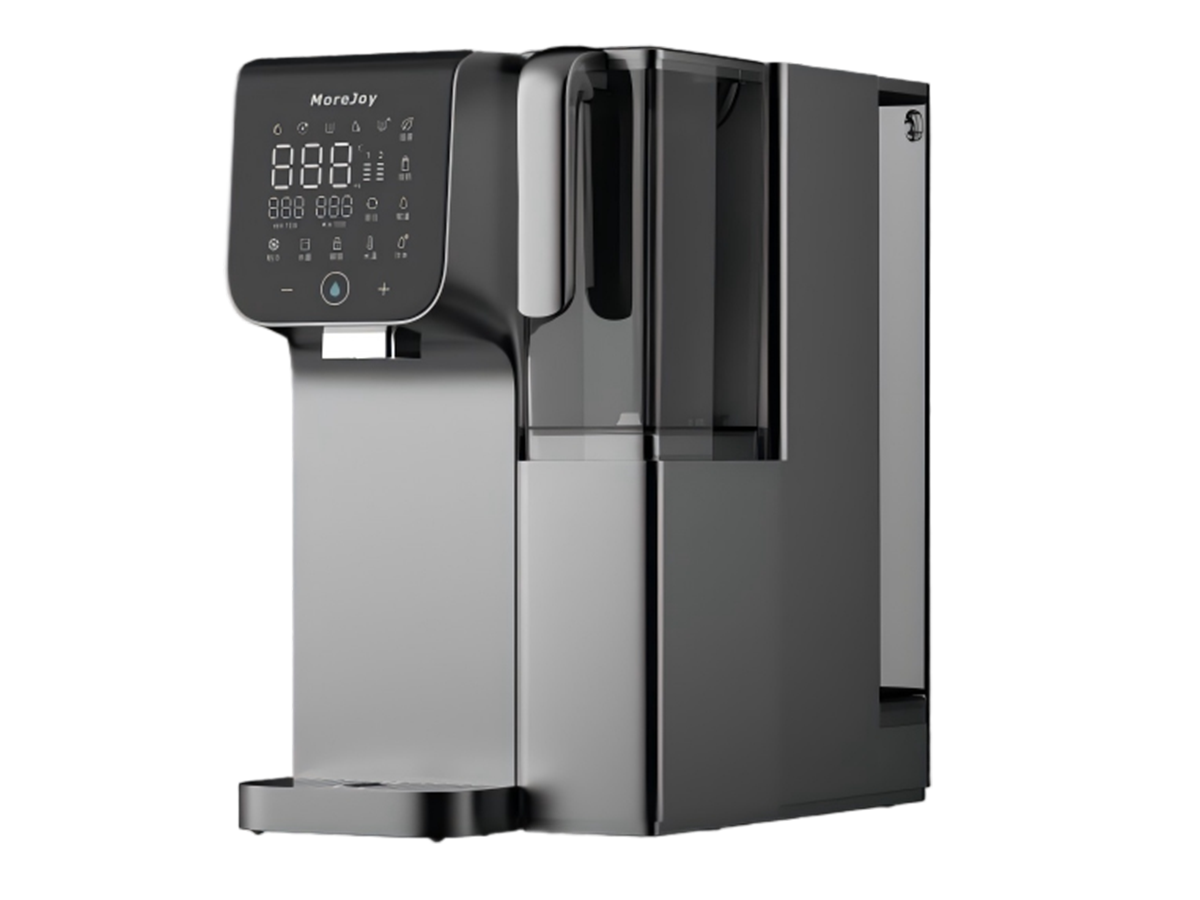
The RO Series is designed around a fairly simple idea: take suitable feed water, pass it through a series of treatment stages, and use a reverse osmosis membrane to reduce many dissolved substances before the treated water reaches the dedicated drinking-water outlet.
Reverse osmosis is a membrane separation process. Water is pushed under pressure through a semi-permeable membrane. A portion passes through the membrane as treated water, while the remaining stream carries away a higher concentration of rejected substances. The U.S. Environmental Protection Agency describes RO and nanofiltration as membrane processes that can remove a broad range of contaminants, including many inorganic substances, dissolved solids, radionuclides, and synthetic organic chemicals.
The U.S. Centers for Disease Control and Prevention also explains that reverse osmosis can remove or reduce certain contaminants, but the exact substances removed depend on the system and its specific performance claims. That is why I always recommend checking the actual water analysis and the manufacturer's treatment specifications instead of assuming that every RO system removes every contaminant.
For a villa, this approach can be very practical. A family may want purified water from a kitchen faucet, a separate drinking-water station, or a dedicated outlet connected to a refrigerator or food preparation area. Rather than installing a large whole-house purification system, a point-of-use RO unit can focus treatment where it is most useful.
The system can be configured with pretreatment, RO membrane, post-treatment and other components according to the raw water conditions. The exact process is not fixed for every project. If the feed water contains high levels of suspended solids, chlorine, hardness, iron, or other substances that could affect membrane performance, suitable pretreatment may be required.
This is one reason I do not like the idea of selling a “standard RO system” without asking about the source water. Municipal water, groundwater, well water, rainwater after storage, and water from other treatment systems can have very different characteristics. A membrane that works well under one condition may need additional protection under another.
Point-of-Use RO vs. Whole-House Water Treatment
A point-of-use system treats water at or near the place where it will be consumed. The CDC defines point-of-use systems as systems that treat water and deliver it to a single tap, such as a kitchen sink, while point-of-entry systems treat most or all water entering a home.
This makes the RO Series particularly suitable when the customer's main goal is drinking and cooking water rather than complete building-wide treatment.
| Treatment Type | Main Purpose | Typical Installation Concept | Suitable Application |
|---|---|---|---|
| Point-of-Use RO | Reduce many dissolved substances and selected contaminants | Near kitchen or drinking-water outlet | Drinking and cooking water |
| Whole-House Softener | Reduce hardness minerals such as calcium and magnesium | Main water inlet | Whole-building hardness control |
| Activated Carbon Filter | Reduce selected chemicals, taste and odor compounds | Point-of-use or main inlet | Water conditioning and pretreatment |
| UV Treatment | Disinfection using ultraviolet light | Point-of-use or treatment train | Microbial control where applicable |
Source: U.S. CDC, “About Home Water Treatment Systems.” Actual performance varies by equipment configuration, water quality, maintenance, and verified product claims.
This comparison is not meant to say that one technology is better than another. They solve different problems. In some villa projects, we may recommend a combination of a central water softener and a point-of-use RO system. The softener handles hardness throughout the property, while the RO system provides a more highly treated water stream for drinking and cooking.
2. How Our Point-of-Use Reverse Osmosis Purifier Works
The working process of the RO Series can be understood without complicated technical language. Water enters the system, passes through suitable pretreatment stages, reaches the RO membrane under pressure, and then goes through the final treatment stage before reaching the drinking-water outlet.
Stage 1: Feed Water Inlet
The incoming water first enters the RO purification system. At this stage, we pay attention to the feed pressure, temperature, water quality, and available flow. These conditions affect the performance of the entire system.
Stage 2: Pretreatment
Pretreatment protects the RO membrane. Depending on the raw water, this may include sediment filtration, activated carbon filtration, or other treatment stages.
Sediment filtration is mainly used to remove suspended particles that could otherwise reach downstream components. Activated carbon can be used to reduce certain chlorine and organic compounds, depending on the media and water conditions. The exact pretreatment arrangement should be selected from the actual water analysis.
Stage 3: Reverse Osmosis Membrane
The heart of the system is the reverse osmosis membrane. A high-pressure pump or suitable pressure source provides the driving force required to push water through the semi-permeable membrane.
The membrane allows water to pass while rejecting a large portion of many dissolved substances. The EPA explains that the portion passing through the membrane is called permeate or product water, while the portion that does not pass through is concentrate or reject water.
This is also where customers sometimes misunderstand RO systems. Not all incoming water becomes drinking water. Some water is rejected as concentrate because it carries a higher level of the substances removed by the membrane.
Stage 4: Treated Water Storage or Direct Delivery
Depending on the design, treated water may be stored in a small tank or supplied through the system according to the required configuration. Storage is useful when the user needs water quickly at different times of the day, while direct-flow arrangements can be considered for applications with suitable demand and system capacity.
Stage 5: Post-Treatment
Some applications require a final carbon filter or another polishing stage before the water reaches the outlet. The purpose is to improve the final water condition and user experience according to the project design.
I want to emphasize one point here: the number of “stages” printed on a product label is not enough to judge whether an RO system is good. A six-stage system is not automatically better than a four-stage system. What matters is whether each stage has a clear purpose and whether the complete treatment train matches the source water.
| Stage | Typical Component | Main Function |
|---|---|---|
| 1 | PP or sediment filter | Reduce suspended particles |
| 2 | Activated carbon | Reduce selected chlorine, taste and odor compounds |
| 3 | RO membrane | Reduce many dissolved substances and selected contaminants |
| 4 | Post-treatment filter | Final polishing according to application |
Source: General treatment configuration based on reverse osmosis system engineering practice; contaminant-treatment descriptions are consistent with U.S. CDC and EPA guidance. Actual CWS/RO Series configurations vary according to raw water quality and project requirements.
3. Main Features of the RO Series for Villas
When I design or review a drinking water system, I do not only look at membrane performance. I also look at how the equipment will be used six months or one year after installation. A good residential RO system should be practical enough for normal users to operate and maintain.
Compact Point-of-Use Design
The RO Series is designed around a point-of-use application. This means the system can be installed near the kitchen, drinking-water station, or another suitable location rather than occupying a large mechanical room.
This can be especially useful for villas where the owner wants better drinking water without treating every cubic meter of water used around the property.
Reverse Osmosis Membrane Treatment
RO membrane technology gives the system the ability to reduce a wide range of dissolved substances. According to the CDC, RO can remove parasites, bacteria and viruses, and can also remove some chemicals such as lead, copper, chromium, chloride and sodium. It may also reduce substances including arsenic, fluoride, radium, sulfate, calcium, magnesium, potassium, nitrate and phosphorus. However, the CDC stresses that users should check the specific system label for the contaminants the system is designed to remove.
Configurable Pretreatment
We can configure pretreatment based on the feed water. This is important because membrane systems perform better when the water entering the membrane has been properly prepared.
Automatic Control Options
Depending on the model and project requirements, the RO Series can be configured with automatic control functions for pump operation, flushing, water production and other operating steps. The exact control method depends on the equipment configuration.
Flexible Installation
Villa kitchens are not all designed the same way. Some have generous cabinet space, while others have a dedicated water treatment room. We can review the available space before finalizing the equipment arrangement.
Customized Water Production Capacity
Water demand is different from one customer to another. A private residence with four people does not have the same drinking-water demand as a villa used for large family gatherings or guest accommodation.
For this reason, we select the membrane and supporting components according to the required output rather than simply choosing a random standard capacity.
Suitable for Integration
The RO Series can also be considered as part of a larger residential water treatment system. For example, a project may use a central softener for hardness control, carbon filtration for selected compounds, and a point-of-use RO purifier for drinking water.
This modular approach is often more sensible than forcing one piece of equipment to handle every water problem in the building.
4. Technical Advantages We Focus on During Design
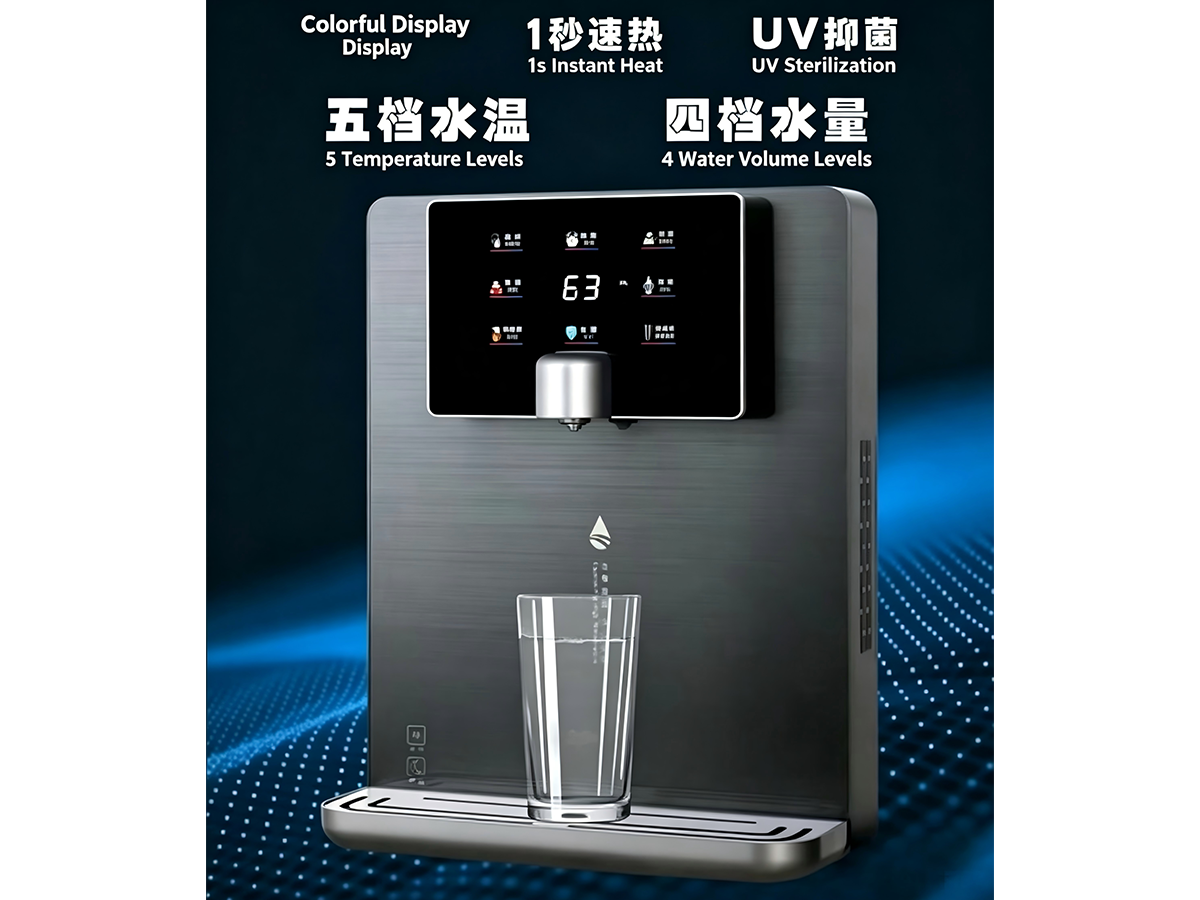
The biggest technical advantage of an RO drinking water system is its ability to handle many dissolved substances that ordinary sediment filters cannot remove. But from our side as a manufacturer, the real challenge is making the entire system work together properly.
Correct Membrane Selection
The membrane is selected according to feed water quality, required production rate, pressure conditions, temperature, expected recovery, and other design factors. Using the wrong membrane can create unnecessary operating problems.
Protection Against Membrane Fouling
Membrane fouling is one of the common concerns in RO operation. Suspended solids, organic matter, hardness-related deposits and other substances can affect membrane performance if the feed water is not properly prepared.
This is why pretreatment should be considered part of the RO system rather than an optional decoration. The exact solution depends on the water source.
Balanced Recovery
Recovery describes how much of the feed water becomes product water. Higher recovery can reduce reject water, but pushing recovery too far may increase the concentration of rejected substances and raise the risk of scaling or fouling.
We therefore consider recovery together with water chemistry, membrane type, operating pressure and required output rather than chasing one number.
Stable Pressure
Reverse osmosis requires suitable pressure. If the pressure is too low, production may fall. If pressure is too high, the system and membrane may experience unnecessary stress. A properly selected pump, pressure control arrangement and safety protection are therefore important parts of the design.
Water Quality Monitoring
Depending on the project, conductivity or TDS monitoring can be added to help operators understand the condition of the product water. Monitoring is particularly useful when the equipment is used continuously or when the customer has a defined water-quality target.
Standards and Verified Claims
NSF/ANSI 58 is an important reference standard for residential reverse osmosis drinking water treatment systems. NSF states that the standard covers areas including materials that contact drinking water, structural integrity, TDS reduction performance, efficiency, recovery, contaminant reduction claims, and information provided to end users.
I consider this distinction very important for product marketing. A manufacturer should not simply say that an RO purifier “removes everything.” Specific contaminant reduction claims need to be supported by appropriate testing or certification where applicable. NSF/ANSI 58 includes optional claims for substances such as arsenic, nitrate/nitrite, lead, fluoride, copper, barium, chromium and other contaminants.
| Factor | Why It Matters | What We Review |
|---|---|---|
| Feed water quality | Determines pretreatment and membrane requirements | TDS, hardness, pH, turbidity, chlorine and other available data |
| Membrane capacity | Determines potential product-water output | Required daily demand and peak usage |
| Operating pressure | Directly affects RO performance | Available pressure and pump requirements |
| Recovery | Balances product water and reject water | Water chemistry and operating conditions |
| Maintenance | Affects long-term performance | Filter replacement, flushing and membrane condition |
| Contaminant claims | Prevents unrealistic expectations | Manufacturer specifications and applicable test standards |
Source: Qingdao Yanhui Environmental Protection Technology Co., Ltd. design practice, with technical reference to U.S. EPA, CDC and NSF guidance on reverse osmosis treatment.
5. Where the RO Series Point-of-Use Purifier Can Be Used
Private Villas
This is one of the most natural applications. A villa may have multiple bathrooms and many water-use points, but only a few places where drinking-quality treated water is actually needed. A point-of-use RO system can focus treatment on the kitchen or drinking station.
Large Residential Homes
Large homes with higher drinking-water demand can use a customized RO system with suitable membrane capacity, storage volume and control components.
Luxury Rental Properties
Vacation villas and rental properties can benefit from a centralized drinking-water treatment point because guests may not be familiar with the local water quality. The equipment can also be arranged so that basic operating information is easy for property managers to understand.
Small Hotels and Guesthouses
A hotel or guesthouse may use an RO system to supply treated water for selected kitchens, beverage preparation areas or drinking stations. Larger projects may require a commercial RO system rather than a small residential configuration.
Office and Staff Facilities
Offices, private clubs and staff facilities can use point-of-use RO systems where drinking water is required at a specific location.
Coastal and Island Properties
Coastal properties often have more complicated water conditions. However, I want to make one distinction clear: a small point-of-use RO purifier should not automatically be treated as a Seawater Desalination System.
The EPA notes that RO can be used for removing salts from brackish water or seawater, but seawater desalination requires a system specifically designed for the much higher salinity and operating conditions involved.
For an island villa with seawater as the source, we would normally evaluate a dedicated seawater desalination process first and then consider whether an additional drinking-water polishing stage is required.
Commercial Drinking Water Stations
In commercial environments, the system can be integrated into a larger water treatment arrangement according to required flow and water quality. The final equipment size should always be based on actual demand.
6. How We Manufacture and Deliver the RO Drinking Water System
Manufacturing a water purifier is not simply a matter of connecting filters and a membrane together. The equipment needs to be assembled in a logical order, tested, checked for leaks, and prepared so that the customer can actually operate it after delivery.
Water Quality Review
We first review the customer's raw water information. If a water analysis is available, we examine the key parameters that may affect RO operation. If the customer only has basic information, we identify what additional data may be useful.
Process Design
Based on the water quality and required capacity, we determine the basic treatment process. Depending on the project, this may include sediment filtration, carbon filtration, RO membrane treatment, post-treatment and monitoring.
Component Selection
The membrane, pump, filter housings, control components, valves, tubing or piping, storage tank and electrical components are selected according to the approved configuration.
For drinking water applications, materials in contact with treated water deserve particular attention. NSF/ANSI 58 specifically addresses materials and structural requirements for applicable residential RO systems.
Assembly
Components are assembled according to the approved design. We pay attention to flow direction, connection quality, component accessibility and overall layout. A compact machine is useful only if routine maintenance can still be performed without unnecessary difficulty.
Testing
Before shipment, we conduct equipment checks and testing according to the project requirements. This can include checking connections, control functions, pump operation, water flow, flushing functions and other relevant operating conditions.
Technical Documentation
We can provide equipment information and operating documentation according to the agreed project scope. For customized systems, documentation can be prepared around the actual equipment configuration rather than a generic product model.
Packaging and Transportation
For domestic and international delivery, the packaging method is selected according to equipment size, weight and transportation conditions. Wooden cases, pallets or reinforced container packaging can be used where appropriate.
For export projects, we normally consider transportation during the equipment preparation stage. This helps reduce the chance of damage to pumps, control components, pipes, housings and other parts during handling.
Production Cycle
The production cycle depends on the equipment configuration. Standard systems can normally be produced within a shorter cycle, while customized RO projects require additional time for water analysis, process design, component confirmation, manufacturing and testing.
Rather than giving every customer the same delivery promise, we confirm the production schedule after the technical configuration is agreed. This is a more practical way to manage B2B water treatment projects.
7. Why Choose Qingdao Yanhui for a Customized RO Water Purification Project?
There are many companies selling RO equipment. So when a customer asks me why they should work with us, I do not think the answer should be “because our machine looks better.” A water treatment project is about matching equipment to water conditions and keeping the system working after installation.
Qingdao Yanhui Environmental Protection Technology Co., Ltd. was established in 2015. Our main business covers seawater desalination, high-salinity wastewater treatment, concentration and purification, industrial wastewater treatment, and customized water treatment equipment.
This gives us experience across different water conditions. We are not only familiar with small residential RO systems. We also work with more demanding industrial and engineering applications where water quality, process selection and equipment integration are important.
Our service scope covers R&D, design, manufacturing, installation, commissioning, operation and maintenance. For an overseas customer, this means the project can be discussed as a complete treatment solution rather than as an isolated product purchase.
We can also customize equipment according to raw water quality, required production capacity, site conditions and installation requirements. If the customer needs a standard point-of-use RO purifier, we can work from the standard configuration. If the project requires additional pretreatment, a special installation arrangement, or integration with another water treatment system, we can evaluate that during the engineering stage.
Another point I consider important is honest technical communication. If RO is not the right technology for a particular water problem, we would rather explain that than force an RO system into the project.
For example, if a customer has very hard water but only wants to solve scale throughout the entire villa, a central water softener may be more appropriate for that part of the system. If the customer wants low-TDS drinking water, an RO purifier may be suitable. If the source is seawater, a dedicated seawater desalination system is usually required.
In some projects, the best solution is a combination of technologies. A villa may use a central softener for general water treatment and a point-of-use RO system for drinking water. This allows each system to perform the job it was designed to do.
We also understand that B2B buyers need clear delivery information. Production time is confirmed according to the project configuration. Before shipment, the equipment is assembled, tested and inspected according to the agreed requirements. Technical documents and operating instructions can be provided as part of the delivery package.
Payment terms can be arranged according to the project contract and may include advance payment, shipment payment and final payment. Transportation can use land freight, sea freight or multimodal transport depending on the destination. Packaging may include wooden cases, pallets or reinforced containers according to equipment dimensions and transportation conditions.
In short, our approach is quite simple: understand the water, understand the application, design the process, build the equipment, test it, and support the customer after delivery.
8. RO Series Reverse Osmosis Drinking Water System FAQ
What is a point-of-use RO water purifier?
A point-of-use RO water purifier treats water at a specific location, such as a kitchen sink or dedicated drinking-water station. It is different from a whole-house water treatment system, which treats most or all of the water entering the building.
What does reverse osmosis remove from drinking water?
RO can reduce many dissolved substances and selected contaminants. The CDC states that RO can remove some chemicals such as lead, copper, chromium, chloride and sodium and may reduce substances including arsenic, fluoride, radium, sulfate, calcium, magnesium and nitrate. The exact reduction depends on the system, membrane and operating conditions, so specific contaminant claims should be checked against verified product information.
Can the RO Series be used for villa drinking water?
Yes. The system is specifically designed around point-of-use drinking-water applications and can be configured for villa kitchens, drinking-water stations and similar residential applications.
Can I use RO water for the whole villa?
It is technically possible to design larger RO systems for whole-building water treatment, but that is a different application from a point-of-use drinking-water purifier. For a typical villa, it may be more practical to use a central treatment system for general water and a point-of-use RO system for drinking and cooking water.
Does RO remove bacteria and viruses?
The CDC states that reverse osmosis can remove parasites, bacteria and viruses. However, drinking-water safety depends on the complete system, source water, maintenance, installation and verified performance. RO should not be treated as a substitute for proper system design and maintenance.
Does the RO system remove all contaminants?
No. I would not recommend making such a claim. Different RO systems have different membranes, pretreatment stages and verified contaminant-reduction capabilities. NSF/ANSI 58 provides specific test procedures and claim categories for applicable RO drinking-water systems.
Does RO reduce TDS?
Yes, reverse osmosis is commonly used to reduce total dissolved solids. NSF identifies TDS reduction as a required performance area within NSF/ANSI 58 for applicable RO drinking-water treatment systems. The actual reduction depends on the membrane, feed water and operating conditions.
Does an RO purifier waste water?
Conventional RO systems produce a product-water stream and a concentrate or reject stream. The amount of reject water depends on system design, membrane characteristics, feed water quality and operating conditions. The EPA explains this basic separation process in its overview of RO and nanofiltration technologies.
How often should RO filters be replaced?
There is no single replacement schedule that fits every installation. Filter life depends on feed water quality, daily water use, pretreatment and operating conditions. We recommend following the equipment instructions and checking actual water quality and system performance rather than replacing every component blindly on the same schedule.
How long can an RO membrane last?
Membrane service life depends heavily on pretreatment, feed water quality, operating pressure, temperature, cleaning and usage. A membrane that receives properly treated feed water generally has a better operating environment than one exposed to high fouling or scaling conditions.
Can the RO Series be customized?
Yes. We can evaluate membrane capacity, pretreatment, storage, control components, monitoring and installation arrangement according to the project requirements. Customized solutions are particularly useful when the raw water or installation conditions are different from a standard residential application.
What water information should I provide before ordering?
If available, provide a raw water analysis including TDS, hardness, pH, turbidity, chlorine, iron, manganese and other relevant parameters. It is also useful to provide daily drinking-water demand, peak demand, feed pressure, water source, installation location and local power conditions.
Can the system be used with well water?
It may be possible, but well water should be tested first. Groundwater can contain hardness, iron, manganese, suspended solids, dissolved gases or other substances that may require pretreatment. The final RO configuration should be based on the actual analysis.
Can the RO Series be used with seawater?
The standard point-of-use RO purifier should not automatically be treated as a seawater desalination system. Seawater has much higher salinity and requires specialized membranes, pumps, materials and operating conditions. Our company also designs and manufactures dedicated Seawater Desalination Equipment for marine and coastal applications.
Can the RO system be combined with a water softener?
Yes. In some villa projects, this is a practical combination. A central water softener can reduce hardness for the building's general water supply, while a point-of-use RO system can provide further treatment for drinking and cooking water. The exact arrangement depends on raw water quality and the customer's treatment objectives.
What is the production time?
Production time depends on whether the equipment is standard or customized, the required capacity, selected components and engineering requirements. Standard configurations generally have a shorter production cycle. Customized systems require additional time for technical design, component confirmation, manufacturing and testing.
How is the RO equipment shipped?
We can arrange land transportation, sea freight or multimodal transportation according to the project location. Packaging may use wooden cases, pallets or reinforced containers depending on the equipment dimensions, weight and transportation conditions.
Do you provide installation and commissioning support?
Yes. Our service scope includes installation, commissioning, operation and maintenance support according to the project requirements. The specific support arrangement can be agreed according to the equipment configuration and installation location.
Conclusion: A Practical RO Drinking Water Solution for Villa Applications
From my experience in water treatment, the most useful drinking water system is not necessarily the one with the longest list of features. It is the one that matches the water and the way the customer actually uses it.
The RO Series Reverse Osmosis Drinking Water System is designed for exactly this type of application. It provides a focused point-of-use RO purification solution for villas, homes, guest facilities, and selected commercial drinking-water applications.
Its reverse osmosis membrane can reduce many dissolved substances and selected contaminants, while configurable pretreatment and post-treatment stages allow the system to be adapted to different water conditions. The compact point-of-use concept also means that customers do not have to treat every liter of water in the building when their main requirement is better drinking and cooking water.
At the same time, I always recommend treating RO as part of a complete water treatment plan rather than as a magic box. Source water testing, correct pretreatment, suitable membrane selection, proper pressure, reasonable recovery, routine maintenance and verified performance claims all matter.
At Qingdao Yanhui Environmental Protection Technology Co., Ltd., we can take this work from the initial water analysis through process design, equipment manufacturing, testing, delivery, installation and commissioning. For customized projects, we can adjust the system according to water quality, production capacity, site conditions and the customer's actual drinking-water requirements.
If you are looking for a Villa Reverse Osmosis Water System, residential RO drinking water purifier, point-of-use RO water purification system, or customized RO drinking water treatment equipment, we recommend starting with the raw water data and required water flow. Once these details are clear, it becomes much easier to select the right membrane, pretreatment, capacity and equipment configuration.
For a project inquiry, please provide: raw water source, available water analysis, required drinking-water capacity, daily consumption, peak demand, feed pressure, installation space, power conditions, destination country, and any special water-quality target. Our engineering team can then evaluate the appropriate RO Series configuration and prepare a practical technical proposal.



 Phone
Phone