
 Portugues
 Pусский
 Français
 العربية
 ไทย
ไทย Indonesia
 Melayu
 Tiếng Việt
 中文
中文 қазақ
қазақ עִברִית
 မြန်မာ
 ພາສາລາວ
 Filipino
 o'zbek
 Кыргызча
 тоҷикӣ
 ខ្មែរ
ខ្មែរ Türkmenler


Mineral Water Production Equipment
When I talk about Mineral Water Production Equipment, I am not talking about one machine standing alone. A practical mineral water production system is a complete process that takes water from its source, removes unwanted particles and contaminants where required, protects the water from secondary contamination, and finally sends it into clean bottles or other approved containers.
At Qingdao Yanhui Environmental Protection Technology Co., Ltd., we have been working in water treatment engineering since 2015. Our business covers water treatment equipment, Seawater Desalination, high-salinity wastewater treatment, concentration and purification, and industrial wastewater treatment. For bottled water projects, we can develop equipment around the actual water source, required production capacity, product-water quality, plant layout, and customer's operating needs.
One point is worth making before choosing any equipment: mineral water and purified water are not automatically the same thing. The source, mineral content, treatment process, labeling rules, and local regulations all matter. The Codex standard for natural mineral waters, for example, describes natural mineral water as water obtained from protected underground sources with characteristic mineral content and relatively constant composition. :contentReference[oaicite:0]{index=0}
So, when I design a Mineral Water Production Line, I first ask where the water comes from and what the finished product is supposed to be. A spring, groundwater source, municipal water supply, and another treated-water source can require very different processes.
The equipment can include raw-water tanks, pumps, pretreatment filters, activated carbon filtration, softening where appropriate, precision filtration, membrane treatment, ultraviolet or ozone disinfection, clean-water storage, filling and capping equipment, bottle handling, labeling, and other packaging equipment. Not every project needs every stage. The correct configuration is determined by the water analysis and the final product requirements.
1. What Is Mineral Water Production Equipment?
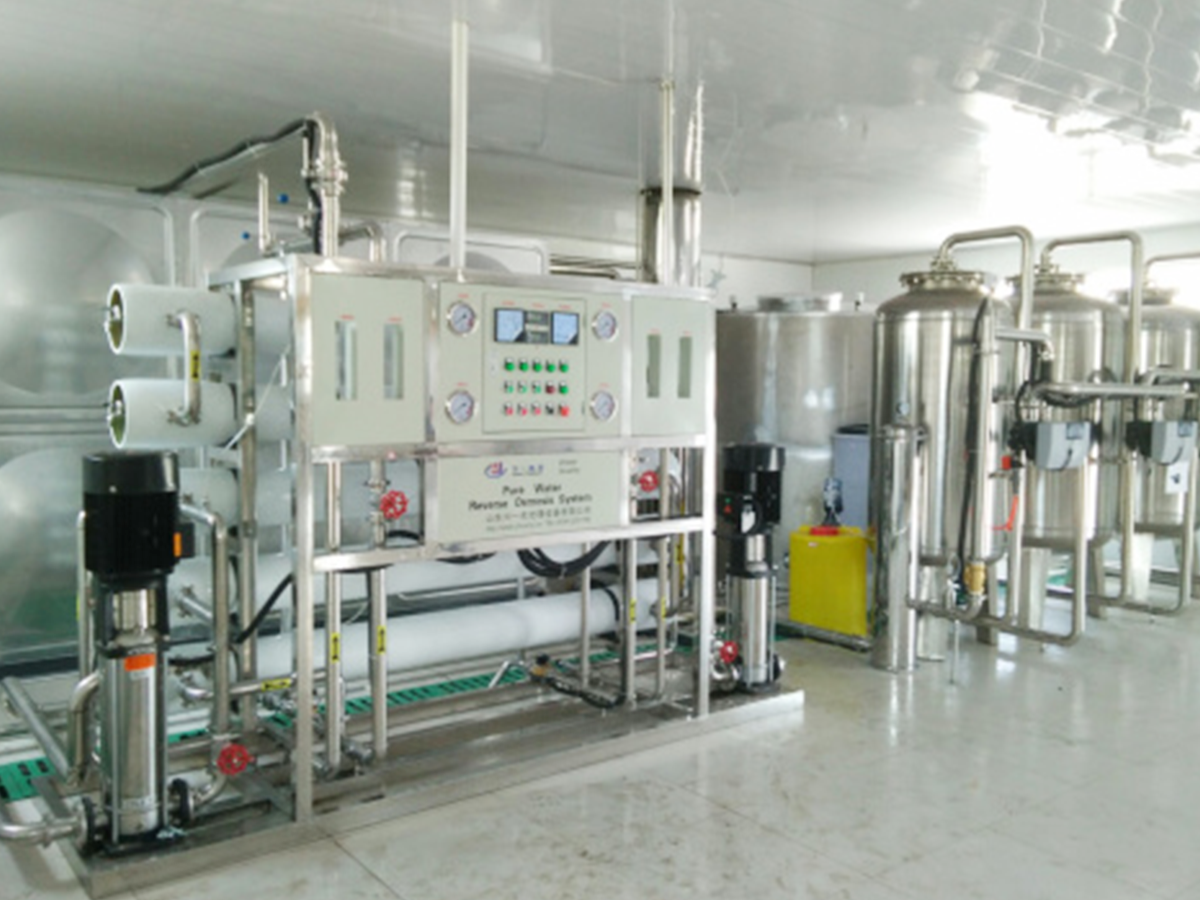
In simple terms, mineral water production equipment is the group of machines used to prepare water for commercial packaging and sale. The system can cover water treatment, disinfection, storage, bottle preparation, filling, capping, and packaging.
For a small bottled water factory, the equipment may be relatively compact. For a larger beverage plant, the production line can be arranged into several sections and designed for continuous operation. The difference is not just the number of machines. Pump capacity, filtration area, storage volume, filling speed, electrical load, pipe size, control system, and maintenance requirements all change with the production target.
I normally divide a complete project into four practical areas:
Water source and pretreatment: bringing source water into the plant and removing particles or substances that may affect later treatment.
Water purification and disinfection: treating the water according to its quality and intended use.
Bottling: preparing containers and filling the finished water under controlled sanitary conditions.
Packaging and storage: capping, labeling, packing, and moving finished products to storage or distribution.
This structure is useful because it makes the project easier to understand. If there is a problem with water quality, we can look at the treatment section. If filling capacity is too low, we can examine the bottling section. If bottles are not being supplied smoothly, the problem may be in the bottle-making or conveying section.
In other words, I prefer to look at the complete production flow rather than simply recommending a machine because its name sounds suitable.
Mineral Water Equipment vs. Purified Water Equipment
This distinction is especially important for international buyers. In the United States, the FDA defines mineral water as bottled water from an underground source containing at least 250 parts per million of total dissolved solids, with the minerals and trace elements coming from the source rather than being added later. FDA also regulates bottled water production under sanitary and quality requirements. :contentReference[oaicite:1]{index=1}
Codex uses a different framework for natural mineral water. Its standard focuses on factors such as the natural underground source, characteristic mineral composition, stable composition, and protection of the source from pollution. :contentReference[oaicite:2]{index=2}
This is why I recommend confirming the target market before finalizing the equipment. A system designed for one country's bottled-water category may need changes when the product is sold in another country.
2. How Does a Mineral Water Production Line Work?
A typical mineral water production line follows a fairly easy-to-understand path. The exact equipment changes according to the source water, but the basic logic remains the same.
Raw Water → Pretreatment → Filtration/Treatment → Disinfection → Clean Water Tank → Bottle Preparation → Filling → Capping → Labeling → Packaging → Finished Product
Raw Water Collection
The first step is bringing water from the approved source into the production system. Depending on the project, the source may be groundwater, spring water, municipal water, or another permitted source.
Before selecting equipment, I want to see a water analysis whenever possible. Parameters such as turbidity, pH, hardness, TDS, iron, manganese, microbial indicators, organic matter, and other local regulatory parameters can affect the treatment design.
Source-water protection is also important. Treatment equipment cannot compensate for every problem caused by poor source management. For natural mineral water in particular, the source itself is part of the product story and must be protected carefully.
Pretreatment and Filtration
Pretreatment removes larger particles and protects the downstream equipment. Depending on the source water, this may involve sand filtration, multimedia filtration, activated carbon, cartridge filtration, softening, ultrafiltration, or other suitable processes.
Activated carbon can be used for certain organic compounds, taste, odor, and chlorine-related treatment needs. Filtration can reduce suspended particles. A softener may be considered when hardness creates a scaling problem. However, I do not recommend adding these components simply because they are common in water plants.
Every filter has a purpose. If there is no clear reason for a particular treatment stage, adding it can increase the purchase price, maintenance work, and operating cost without providing a useful benefit.
Membrane Treatment
Some bottled water projects use membrane processes such as ultrafiltration or reverse osmosis. Whether they are appropriate depends on the product definition and source-water chemistry.
This is where mineral water projects need careful process planning. If the business is selling natural mineral water, removing the natural mineral content may conflict with the intended product characteristics or applicable definition. On the other hand, if the project is actually producing purified drinking water, reverse osmosis may be an important treatment step.
WHO treatment guidance emphasizes selecting treatment according to the contaminants and water-quality objectives that need to be addressed rather than applying one treatment process to every water source. :contentReference[oaicite:3]{index=3}
Disinfection
Disinfection is used to control microorganisms. Depending on the project, ultraviolet treatment, ozone, or another suitable disinfection process may be used.
FDA notes that bottled water producers operate under sanitary production requirements and may use processes including ozonation, reverse osmosis, distillation, and filtration depending on the type of bottled water and its source. :contentReference[oaicite:4]{index=4}
For me, the important point is that disinfection should be considered together with the entire sanitary design. A clean water treatment process can still have problems if tanks, pipes, filling areas, bottles, caps, or operators introduce contamination later.
Filling and Capping
Once the water reaches the finished-water stage, it is transferred to the filling system. The filler places the required amount of water into each bottle, and the capper closes the container.
Filling equipment can be configured for different bottle sizes and production speeds. For higher-capacity plants, automated bottle feeding, filling, capping, conveying, labeling, and packaging can be connected into one continuous line.
Labeling and Packaging
After filling and capping, bottles can pass through labeling equipment and then into secondary packaging. Depending on the product, packaging can include shrink film, cartons, trays, or other approved formats.
The final layout depends on the customer's bottle size, package format, production volume, available space, labor plan, and local market requirements.
3. Main Equipment in a Mineral Water Production System
When a customer asks me for a mineral water production machine, I first clarify which part of the line they actually need. Some customers only need water treatment equipment. Others need a complete bottled mineral water production line including bottle blowing and packaging.
| Equipment | Main function | Typical project consideration |
|---|---|---|
| Raw Water Pump | Transfers source water into the treatment system | Flow, pressure, source location, operating hours |
| Multimedia Filter | Reduces suspended particles and turbidity | Raw-water quality and required filtration rate |
| Activated Carbon Filter | Helps reduce certain organic compounds, taste, odor, or residual oxidants | Source-water characteristics and downstream equipment |
| Precision / Cartridge Filter | Provides finer particle filtration | Required filtration rating and flow rate |
| UV or Ozone System | Microbial control | Water quality, product type, local requirements |
| Clean Water Tank | Provides buffer storage before bottling | Production rate and filling-line demand |
| Water Filling Machine | Fills bottles with treated water | Bottle size, filling speed, hygiene requirements |
| Capping Machine | Closes filled bottles | Cap type and bottle specification |
| Bottle Blowing Machine | Forms PET preforms into bottles | Bottle shape, volume, production speed |
| Labeling Machine | Applies product labels | Label material, bottle shape, production speed |
Source: Equipment functions summarized from standard bottled-water treatment and packaging practice. Specific equipment configuration is project-dependent and should be confirmed by source-water testing, production requirements, and applicable local regulations. FDA describes common bottled-water treatment processes and sanitary production requirements.
Bottle Blowing Equipment
For customers who want to produce PET bottles in-house, a bottle blowing machine can be connected to the filling line. PET preforms are heated and formed into bottles using controlled pressure.
Producing bottles on site can reduce dependence on finished empty bottles and may give the factory more control over bottle shape and supply. But it also means the plant needs to consider compressed air, heating power, molds, bottle storage, and maintenance.
Filling Equipment
The filling machine is one of the most visible parts of a bottled water factory, but it should not be selected by speed alone. The filler needs to match the bottle size, cap type, water properties, production target, and hygiene requirements.
For higher-speed lines, the filler, capper, conveyor, labeling machine, and packaging equipment should be designed to work together. Otherwise, one slow machine can become the bottleneck for the entire production line.
Water Treatment Equipment
The treatment section should be designed around the source water. For some mineral water sources, the goal is to preserve the water's natural characteristics while controlling unwanted contaminants. For other bottled-water products, deeper purification may be required.
This difference is one reason I always recommend a water analysis before finalizing the equipment configuration.
4. Technical Features and Practical Advantages
A good commercial mineral water production equipment system should be easy to understand and easy to maintain. Fancy specifications are not very useful if the operator cannot find a spare part or understand an alarm.
Stable Water Treatment
The treatment system is designed to provide stable water quality within the defined operating conditions. Filters, pumps, tanks, instruments, and disinfection equipment work together rather than independently.
Flexible Capacity
Production capacity can be planned according to the customer's daily or hourly requirement. Small bottled water plants may use a compact line, while larger beverage factories may use multiple treatment and filling sections.
I prefer to leave reasonable room for future expansion when the site and budget allow it. It is often easier to plan expansion during the initial design than to rebuild the plant later.
High Automation
Automated control can reduce repetitive manual work and help operators monitor pumps, tank levels, pressure, flow, disinfection equipment, and other key points.
PLC control and sensors can also provide alarms when operating values move outside the defined range. This does not remove the need for skilled operators, but it makes routine operation more organized.
Hygienic Design
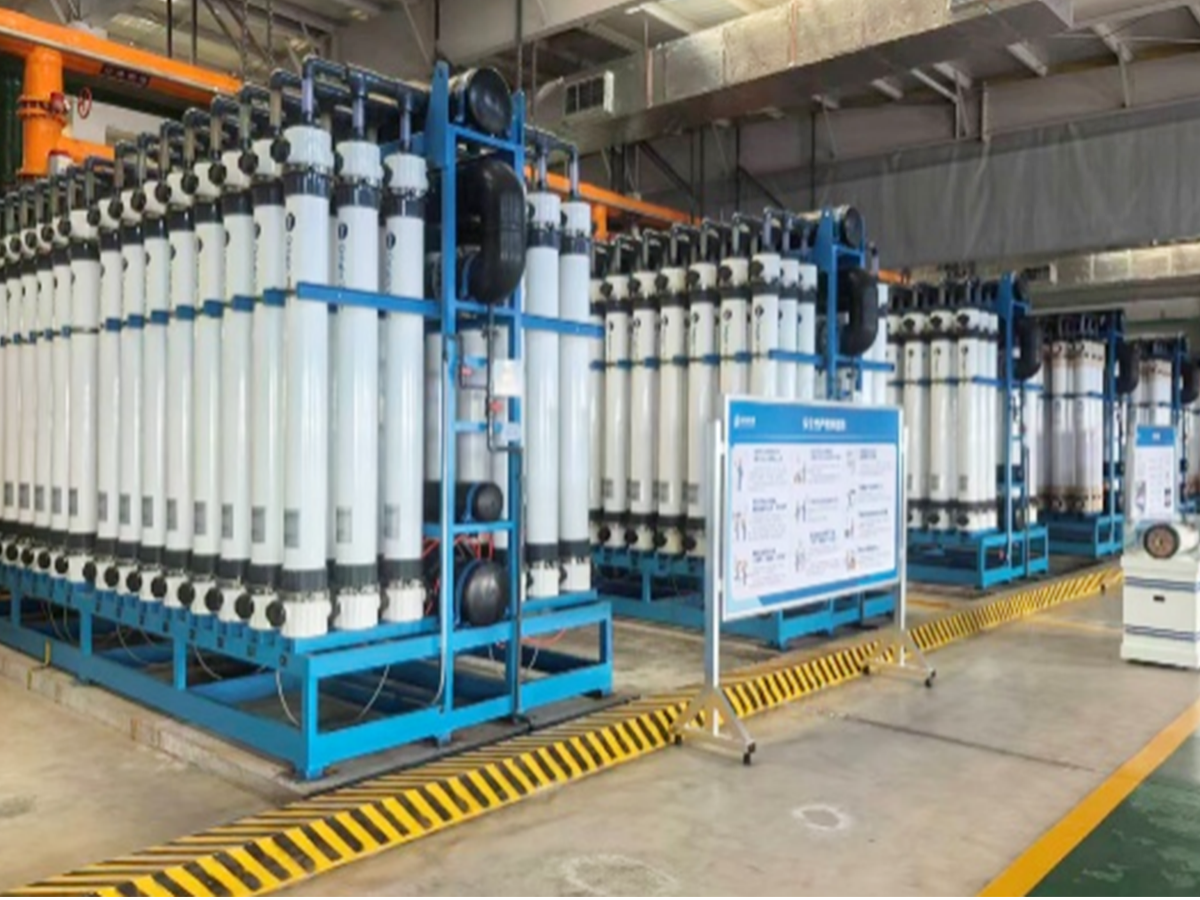
Bottled water equipment must be considered as part of a food-related production environment. Contact surfaces, tanks, pipes, valves, filling areas, bottle handling, cleaning procedures, and operator practices all matter.
FDA states that bottled water must be produced under sanitary conditions and that its rules include requirements covering source water, processing, bottling operations, and quality. :contentReference[oaicite:6]{index=6}
Corrosion Resistance
Material selection depends on the water chemistry and equipment location. Stainless steel is commonly considered for many water-contact components, but the appropriate grade and construction depend on the actual application.
I avoid making a simple claim that one material is always best. The right choice depends on water chemistry, cleaning chemicals, temperature, pressure, sanitary requirements, budget, and expected service life.
Customized Layout
Every factory has a different building. Some plants have plenty of space, while others need a compact arrangement. We can consider equipment dimensions, operator access, maintenance clearance, pipe routing, electrical cabinets, drainage, bottle flow, and finished-product movement during layout planning.
| Factor | Example information | Effect on the system |
|---|---|---|
| Water source | Spring, groundwater, municipal supply, other approved source | Determines the starting treatment process |
| Water analysis | Turbidity, hardness, TDS, iron, manganese, microbial indicators | Determines filtration and purification requirements |
| Product type | Natural mineral water, purified water, drinking water | Affects treatment and labeling strategy |
| Production target | Bottles per hour or daily output | Determines treatment and filling capacity |
| Bottle specification | Volume, neck size, shape, PET preform | Affects bottle blowing, filling, and capping equipment |
| Factory layout | Available floor area and equipment access | Determines line arrangement and piping |
| Automation requirement | Manual, semi-automatic, or automatic | Affects controls, sensors, labor, and cost |
Source: Engineering planning framework based on bottled-water production practice and official bottled-water safety guidance. Product definitions and regulatory requirements vary by market; the final system should be designed against the destination country's rules.
5. How We Manufacture and Deliver Mineral Water Production Equipment
Manufacturing a water production system is not simply a matter of buying several machines and putting them together. For a customized project, we normally begin with technical information and gradually turn it into a complete equipment configuration.
Step 1: Project Discussion
I first want to understand the customer's source water, product type, production capacity, bottle specifications, factory conditions, and intended market.
If the customer wants a complete mineral water bottling line, I also ask about the desired bottle volume, packaging method, production speed, labeling requirements, and whether PET bottle production should be included.
Step 2: Water Testing
A water analysis is one of the most useful documents for equipment selection. Without it, we may only be able to provide a preliminary process recommendation.
I do not recommend guessing at water treatment requirements from the source name alone. Two groundwater sources can behave very differently. Two springs in different regions can also have very different mineral and microbial characteristics.
Step 3: Process Design
Based on the available information, we develop the process flow. The design may include filtration, disinfection, membrane treatment, storage, filling, and packaging according to the project.
For natural mineral water, we pay particular attention to which treatment steps are appropriate because excessive treatment can change the characteristics of the source water.
Step 4: Equipment Configuration
After the process is confirmed, we select pumps, filters, tanks, pipes, valves, instruments, control equipment, filling equipment, capping equipment, conveyors, bottle blowing equipment, labeling equipment, and other components where required.
Step 5: Fabrication and Assembly
The equipment is manufactured and assembled according to the approved configuration. For larger projects, modules can be assembled and checked before shipment where practical.
Step 6: Inspection and Testing
Before delivery, we complete equipment assembly checks, control-system checks, visual inspection, and relevant commissioning or testing procedures. The actual inspection scope depends on the project contract and equipment configuration.
Step 7: Delivery and Installation
Depending on the equipment size and destination, transportation may use road freight, sea freight, or multimodal transportation. Large equipment may require reinforced packaging and container loading.
We can also provide installation guidance and commissioning support according to the agreed project scope.
Step 8: Operation and Maintenance
Once the plant is running, routine maintenance becomes important. Filters need cleaning or replacement, pumps need inspection, UV lamps have service requirements, ozone systems need attention, instruments should be checked, and filling equipment requires regular cleaning and adjustment.
Good maintenance is not complicated when it is planned. The problem usually comes when maintenance is delayed until something breaks.
6. Where Is Mineral Water Production Equipment Used?
Mineral water production equipment can be used in many types of bottled-water businesses. The equipment configuration changes with the product and production target.
Bottled Water Plants
This is the most direct application. A complete line can combine water treatment, disinfection, bottle blowing, filling, capping, labeling, and packaging.
Spring Water Projects
Spring-water projects need special attention to source protection and water characteristics. The treatment process should be selected carefully so that unnecessary treatment does not change the intended product characteristics.
Commercial Drinking Water Plants
Commercial water plants may produce bottled drinking water for supermarkets, restaurants, offices, hotels, and distributors. Depending on the local product category, the treatment process may be deeper than that used for natural mineral water.
Hotels and Resorts
Hotels and resorts may produce bottled water for guests or internal use where permitted by local regulations. A compact water treatment and filling system can be considered when there is a suitable water source and a clear production requirement.
Industrial and Private-Label Bottled Water
Some businesses produce water under their own brands while outsourcing or operating the treatment and bottling process. In these cases, bottle design, label requirements, packaging format, and production flexibility can be important.
Remote and Developing Areas
In areas where access to packaged drinking water is limited, a properly designed local production system can provide a controlled source of bottled water. However, source protection, sanitation, testing, storage, and distribution still need to be managed properly.
I always recommend checking the regulations of the destination market before building the plant. The term “mineral water” does not have exactly the same legal meaning everywhere. Codex maintains separate standards for natural mineral waters and for bottled or packaged drinking waters other than natural mineral waters. :contentReference[oaicite:8]{index=8}
7. Why Choose Qingdao Yanhui for Your Mineral Water Production Project?
At Qingdao Yanhui Environmental Protection Technology Co., Ltd., our main strength is water-treatment engineering. We do not only sell a standard water machine. We work with customers to understand the water source, required treatment, production capacity, and actual operating conditions.
Since 2015, our business has covered several difficult water-treatment areas, including seawater desalination, high-salinity wastewater treatment, concentration and purification, and industrial wastewater treatment. This background is useful when a bottled-water project has a complicated source-water condition or needs a customized process.
We Start With the Water
This sounds simple, but it is important. I would rather review a water analysis first than promise a fixed equipment package based only on the words “mineral water.”
Once we understand the source, we can discuss what should be removed, what should remain, and what the finished water needs to meet.
We Can Customize the System
The system can be designed according to water quality, production capacity, factory layout, bottle specifications, automation requirements, and project budget.
Standard equipment can help shorten the project cycle when the application is straightforward. Customized systems require more engineering work, but they can make more sense when the water source or production process is unusual.
We Cover More Than Equipment Manufacturing
Our service scope covers R&D, process design, equipment manufacturing, installation, commissioning, operation, and maintenance. This integrated approach helps us stay involved when a project moves from drawing to production and then to actual operation.
We Consider Delivery From the Beginning
Equipment delivery is part of the project, especially for international customers. We consider equipment dimensions, packaging, loading, transportation, and site access before shipment.
Depending on the equipment and destination, we can arrange road transportation, sea freight, or multimodal transportation. Wooden cases, pallets, protective packaging, and container reinforcement can be selected according to the equipment size and transportation conditions.
We Do Not Treat Every Project as a Standard Package
This is probably the most important point I would make to a buyer. A good water treatment system is not defined by how many components it contains.
If a customer does not need reverse osmosis, there is no reason to add RO just because it is common in the bottled-water industry. If the source water requires deeper treatment, we need to address that issue instead of trying to save money by leaving it out.
The equipment should serve the water and the product—not the other way around.
8. Mineral Water Production Equipment FAQ
What is included in a complete mineral water production line?
A complete line can include raw-water pumps, pretreatment filters, purification equipment where required, disinfection equipment, clean-water tanks, filling machines, capping machines, conveyors, labeling equipment, bottle blowing machines, and packaging equipment. The exact configuration depends on the source water and production requirements.
Do I need reverse osmosis for mineral water?
Not necessarily. This depends on the source water and the product definition. Natural mineral water is characterized by its source and mineral composition, so excessive demineralization may not be appropriate. Purified water is different and may use reverse osmosis as part of its treatment. We recommend testing the source water before deciding.
Can you customize mineral water production equipment?
Yes. We can customize the system according to water quality, production capacity, bottle size, factory layout, automation level, final-water requirements, and other project conditions.
Can the production line include a bottle blowing machine?
Yes. If the customer wants to manufacture PET bottles from preforms, a bottle blowing machine can be included in the complete production line. The mold, bottle shape, bottle volume, compressed-air system, heating requirements, and desired production speed need to be confirmed during design.
What information should I provide before requesting a quotation?
The most useful information includes source-water analysis, daily or hourly production capacity, product type, bottle volume, bottle material, desired filling speed, factory dimensions, local power supply, destination country, automation requirements, and packaging format.
How long does it take to manufacture the equipment?
The production period depends on the equipment configuration and project scale. Standard equipment generally has a shorter delivery cycle. Customized projects need additional time for process design, equipment selection, procurement, manufacturing, assembly, inspection, and testing. We confirm the specific schedule after the technical configuration is approved.
Can you provide installation and commissioning?
Yes. Installation guidance and commissioning support can be included according to the project contract. For larger projects, commissioning is important because the actual water source, site conditions, and production environment need to be checked after installation.
How do you package the equipment for international transportation?
Packaging depends on the equipment. We can use wooden cases, pallets, protective materials, or reinforced containers. Larger equipment may need special fixing and lifting arrangements. The packaging plan is determined according to equipment dimensions, weight, fragility, and transportation method.
What payment methods are available?
Project payment terms are agreed in the commercial contract. Depending on the project, payment may be divided into an advance payment, shipment or progress payment, and final payment. The exact terms depend on the equipment scope and contract.
Can the equipment be used for purified water as well?
Some components can be shared between bottled mineral water and purified-water projects, but the complete process should not be assumed to be identical. Purified water may require reverse osmosis, additional filtration, or other treatment depending on the source. We can design the system around the actual water product the customer plans to manufacture.
How should the equipment be maintained?
Maintenance normally includes filter inspection and replacement, pump inspection, disinfection-system maintenance, instrument checks, tank and pipe cleaning, filling-machine cleaning, and regular inspection of electrical and mechanical components. The exact maintenance schedule should follow the equipment configuration and operating conditions.
What is the difference between mineral water production equipment and Mineral Water Bottling Equipment?
Mineral water production equipment usually refers to the water treatment and preparation section, while mineral water bottling equipment normally refers to filling, capping, conveying, labeling, and related packaging equipment. A complete production line can combine both sections.
Conclusion: Build the Equipment Around the Water
When I look at a mineral water project, I do not start with the filling machine. I start with the water.
Where does it come from? What minerals does it contain? What unwanted substances are present? What does the local regulation say? What kind of bottled-water product does the customer want to sell? How many bottles need to be produced every hour? What bottle size will be used? How much space is available? How much automation does the factory need?
Once these questions are clear, the equipment selection becomes much easier.
Our Mineral Water Production Equipment can be configured for different water sources, production capacities, bottle specifications, and plant layouts. We can support water treatment equipment, mineral water production systems, bottling equipment, filling lines, bottle blowing machines, and related engineering services.
For customers who need a complete project, our service can cover R&D, design, manufacturing, installation, commissioning, operation, and maintenance. We also consider delivery, packaging, transportation, technical documentation, and after-sales support as part of the project rather than treating them as separate issues.
Most importantly, I recommend making the water analysis and product requirements clear before the final equipment order. This simple step can prevent many problems later and helps ensure that the treatment process, filling capacity, equipment materials, automation level, and overall investment are matched to the real application.
If you are planning a mineral water plant, bottled water factory, or customized mineral water production line, send us your source-water analysis, required production capacity, bottle specifications, and project location. We can then work from the actual conditions and develop a practical equipment configuration for your project.



 Phone
Phone